


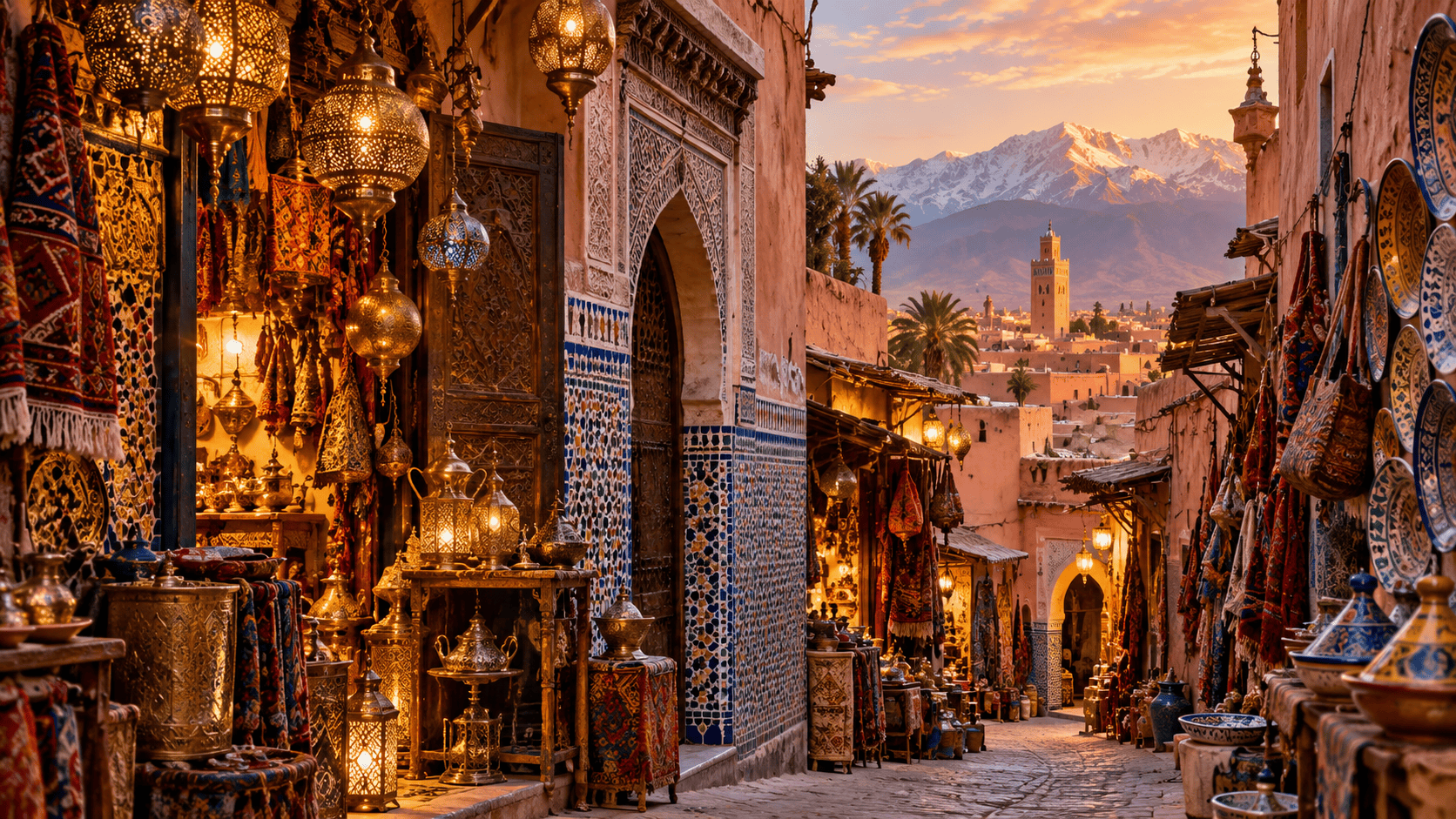
What is a souk? A souk is a market, but in Morocco that simple definition barely captures the experience. A souk can be a permanent maze of craft shops in the Marrakech Medina, a covered food market in Fes, a weekly rural market where families buy livestock and household supplies, or a cluster of specialist lanes where generations of artisans work with leather, wood, metal and textiles.
For travelers, Moroccan souks are part shopping district, part social space and part working economy. They are also where visitors most quickly discover that “just looking” is treated as the opening sentence of a negotiation. This guide explains how Morocco markets work, where to find the most famous souks, what to buy, how to bargain respectfully and how to explore without turning a cultural experience into a competitive sport.
Quick answer: A souk is a traditional market. Morocco’s best-known souks are in Marrakech and Fes, but nearly every city has local markets. Bargaining is common for many crafts, while food, pharmacies and fixed-price stores often have set prices.
Table of Contents
- What is a souk?
- Marrakech souks
- Fes souks
- Markets in other Moroccan cities
- What to buy
- How to bargain
- How to judge price and quality
- How not to get lost
- Souk safety
- Photography and etiquette
- Weekly rural souks
- FAQ
What Is a Souk in Morocco?
The Arabic word suq refers to a market. In English and French travel writing, “souk” is the common spelling. Historically, markets developed around trade routes, city gates, mosques, workshops and caravan activity. Different crafts often clustered together, which is why older medinas still contain lanes associated with leather, metalwork, spices, textiles or wood.
Urban souks are not preserved museums. Residents still buy clothing, tools, food, household goods and services there. Tourism has changed the product mix in famous cities, but many markets continue to serve local life alongside souvenir shopping.
Marrakech Souks: The Most Famous Market Maze
The souks north of Jemaa el-Fnaa form one of Morocco’s most famous commercial areas. Souk Semmarine is a major artery, but the experience becomes more interesting when you wander into specialist lanes filled with lamps, rugs, leather slippers, woodwork, baskets, spices and textiles.
Marrakech is also where visitors feel the strongest sales energy. Shopkeepers may invite you inside, offer tea and begin a negotiation quickly. There is nothing wrong with declining. A friendly “no, thank you” and continued walking is enough. If you do want to buy, slow down, compare quality and avoid agreeing to the first price because you feel socially trapped by a glass of mint tea.
Combine the souks with our things to do in Marrakech guide and Morocco tours from Marrakech if the city is the start of a longer trip.
Fes Souks and Craft Quarters
Fes el-Bali has an even denser historic street pattern. Its souks feel closely connected to traditional crafts because workshops, tanneries, food sellers, religious institutions and residential lanes sit within the same old city. Leather, brassware, ceramics, embroidery and woodwork are prominent.
A guide can be useful in Fes because navigation is genuinely difficult, not because every visitor needs to be escorted from one shop to another. If you hire a guide, use a licensed professional and make clear whether you want shopping stops.
Our Morocco tours from Fes and best riads in Fes pages can help if you are planning several days in the city.
Morocco Markets Beyond Marrakech and Fes
Essaouira offers a smaller, breezier medina where market lanes are easier to navigate. Chefchaouen has compact shopping streets selling textiles, woven goods and souvenirs in the blue-painted old town. Taroudant is known for a walled-city atmosphere with markets serving both local shoppers and visitors.
Casablanca’s markets feel more urban and practical. The Central Market mixes produce, flowers, fish and restaurants, while Habous has arcaded streets with books, pastries, crafts and traditional products. Rabat and Meknes also have medina markets without the same tourist pressure as central Marrakech.
What Should You Buy in a Moroccan Souk?
Rugs are among the highest-value purchases, but they require patience because material, knotting, age and origin affect price. Leather bags and babouches are common, as are ceramics from regions such as Fes and Safi. Hand-hammered metal lamps, tea trays, carved wood, woven baskets and embroidered textiles are also popular.
Spices are visually irresistible, but buy products you can identify and use. Saffron, cumin, ras el hanout and preserved foods are common, while cosmetic products such as argan oil should come from a trustworthy seller with clear labeling.
Remember airline baggage restrictions. A giant lantern may look brilliant under a medina ceiling and significantly less brilliant when you are arguing with a check-in desk over dimensions.
How to Bargain in Morocco Without Being Rude
Bargaining is common in many traditional craft shops, but the goal is a price both sides accept, not humiliation. Begin by deciding what the item is worth to you. Ask the price, make a reasonable counteroffer and move gradually. If you cannot agree, thank the seller and leave.
Do not bargain aggressively over tiny amounts with a craftsperson whose work you genuinely value. Equally, do not feel obligated to buy simply because a seller spent time showing you products. Tea is hospitality and sales technique at the same time. Human civilization has somehow survived both facts.
Fixed-price cooperatives and boutiques can be useful if you dislike negotiation. Food stalls, cafés, pharmacies and many everyday shops also operate with set prices.
How to Judge Quality and Avoid Overpaying
There is no universal “correct tourist price” for handmade goods. Compare several shops before buying expensive items. Ask about material, dimensions, origin and whether a piece is handmade. For rugs, learn the difference between wool and synthetic fibers and examine the reverse of the weave.
For leather, smell alone is not a quality test. Check stitching, zippers and lining. For ceramics, examine edges and glaze. For argan products, look for transparent packaging information rather than marketing claims about miracle cures.
How Not to Get Lost in a Moroccan Souk
Getting slightly lost is part of the medina experience; becoming stressed and following the first stranger who promises a shortcut is optional. Save your accommodation location offline, note major gates and landmarks, and keep enough battery for navigation.
In Marrakech, Jemaa el-Fnaa is a useful reference point. In Fes, the street network is more complex and GPS can struggle in narrow lanes. A licensed guide is worthwhile if orientation matters more to you than wandering.
Are Moroccan Souks Safe?
Busy souks are generally visited by thousands of people every day, but crowds create opportunities for pickpocketing. Keep bags closed and in front of you. Watch for motorcycles, bicycles, carts and donkeys in lanes that look pedestrian-only.
Do not carry your passport and all bank cards in the same easy-to-reach pocket. If someone becomes excessively persistent, move into a busier area rather than continuing an argument. Our broader Morocco travel tips cover common visitor situations.
Photography, Craftspeople and Souk Etiquette
Wide street scenes are generally easy to photograph, but ask before taking close portraits. Artisans may not want cameras pointed at them while they work. Some staged performers or vendors may expect payment for photos, so clarify before shooting.
Respect religious spaces embedded in the medina and avoid blocking narrow lanes for long photo sessions. Dress comfortably and modestly, especially when visiting traditional neighborhoods beyond the main tourist circuit.
Weekly Rural Souks
Outside major cities, weekly souks remain important regional gathering places. A market may happen on one specific day and draw farmers, traders, livestock sellers, food vendors and families from surrounding villages. These markets can be culturally fascinating but are less arranged for tourists.
If you visit with a guide, observe rather than treating people as scenery. Ask before photographing livestock sellers or families, keep pathways clear and buy something locally if appropriate. Rural souks show the economic role of markets more clearly than souvenir-heavy medina streets.
Frequently Asked Questions
What is a souk?
A souk is a market or commercial area. In Morocco, souks may be permanent urban market streets, covered craft quarters or weekly rural markets serving surrounding communities.
What are the best souks in Morocco?
Marrakech and Fes have the most famous medina souks for visitors, while Essaouira, Taroudant, Chefchaouen and many smaller towns offer more compact market experiences.
Do you have to bargain in Moroccan souks?
Bargaining is common for many crafts and souvenirs, but not for every product. Fixed-price stores, food stalls and modern shops may display non-negotiable prices. Bargain politely and only when you are genuinely interested.
Are Marrakech souks safe?
They are heavily visited and generally manageable, but the lanes are busy. Keep valuables secure, watch for scooters and carts, and avoid following unsolicited guides into unfamiliar areas.
What should I buy in Morocco?
Popular purchases include rugs, leather goods, ceramics, metalwork, baskets, textiles, spices and argan products. Quality varies, so compare items and buy from sellers you trust.
Can I take photos in a souk?
You can photograph many market scenes, but ask before taking close portraits of vendors or craftspeople. Some sellers may request payment for staged photos.
What time do Moroccan souks open?
Hours vary by city, season and individual shop. Urban medina shops often operate from morning into evening, while weekly rural souks follow specific market days.
What is Souk Semmarine?
Souk Semmarine is one of the best-known market arteries in the Marrakech Medina, branching into lanes specializing in textiles, leather, metalwork, lamps, spices and other crafts.
Additional Practical Planning Notes
Cash, Cards and Receipts
Cash remains useful in traditional markets, especially for smaller purchases. Higher-end shops may accept cards. For expensive goods, ask for a written receipt describing the item, material and price. This is particularly useful for rugs, jewelry or goods that may need customs documentation.
Shipping Purchases Home
Large shops may offer international shipping for rugs, furniture or metalwork. Ask who pays customs charges, whether insurance is included and how damage claims work. Photograph the item before packing and keep copies of receipts and shipping documents.
Food Markets and Hygiene
Food souks are excellent places to understand seasonal produce, olives, dates, spices and local eating habits. Choose busy stalls, wash fruit when needed and be realistic about your own stomach. A market can be authentic without requiring you to prove courage through questionable mayonnaise.
How to Use This Guide in Your Morocco Itinerary
Do not treat a single article as a substitute for checking opening hours, weather, road conditions or current regulations close to the date of travel. Morocco changes by region and season. Build the topic into the wider route, compare distances honestly and leave margin for meals, prayer times, traffic and spontaneous stops. Travelers who schedule every hour usually discover that the country has not signed their spreadsheet.
Local Guides and Independent Travel
Independent travel works well in many Moroccan cities and on major roads, while a local guide adds value when interpretation matters. Choose licensed or well-reviewed professionals, agree on price and scope in advance, and clarify whether shopping stops are part of the tour. A good guide should improve your understanding rather than simply accelerate your movement between souvenir shops.
Photography and Respect
Ask before taking close photographs of people, especially children, craftspeople at work and residents in small communities. Religious spaces may restrict photography or entry. A landscape may be public, but a doorway, courtyard or family moment is not automatically content. Respect makes better travel and usually better photographs too.
Budgeting and Cash
Keep small cash available for cafés, tips, taxis and minor purchases, but avoid carrying your entire travel budget. ATMs are common in cities, less dependable in remote areas and sometimes subject to withdrawal fees. Carry a backup card stored separately and tell your bank about travel if necessary.
Final Planning Advice
The best Morocco trips balance preparation with flexibility. Reserve important accommodation and long transfers, understand the cultural context, then leave enough room to change pace. The places travelers remember most are often not the ones that occupied the largest box in the itinerary.
