


Morocco has a long and visible leatherworking tradition, and Fes is one of the places where visitors can explore tanneries, workshops, and shops selling bags, babouches, wallets, belts, poufs, jackets, and other leather products. Yet a product’s location, smell, colour, or price does not prove what material it contains. If you want to buy genuine Moroccan leather, the most useful approach is to ask specific questions and inspect the item’s construction rather than rely on a single supposed authenticity test.
This guide explains the limits of common leather tests, the parts of a finished item worth examining, and the questions to ask before you pay. It also covers care, shipping, and how the tannery experience relates to a finished product. The goal is not to make every shopper a leather expert in one afternoon. It is to help you distinguish clear product information from vague marketing, compare similar items fairly, and choose a product whose materials and workmanship match your expectations.
Quick answer: No single smell or touch test proves leather quality; inspect the material description, seams, edges, lining, hardware, intended use, and care guidance.
What does “genuine leather” actually tell you?
The phrase “genuine leather” is often used broadly in retail and may not tell you the full grade, surface treatment, or construction of an item. A seller may use it to distinguish animal leather from synthetic material, but the phrase alone does not explain whether the surface is coated, corrected, split, embossed, or combined with other materials. Ask what type of leather is used and which parts of the product contain it. A clear answer is more helpful than a label alone.
Be cautious about claims that a product is “full grain,” “top grain,” or “vegetable tanned” unless the seller can explain what the term means for that item. These terms describe different aspects of leather and should not be treated as interchangeable. Some products combine leather with textile lining, synthetic reinforcement, or coated panels. That does not automatically make a product bad, but you should know what you are paying for and whether the construction suits your needs.
Inspect the surface without damaging the item
Look at the surface in good light. Natural leather may show variation in grain, pores, scars, or texture, while coated or embossed surfaces may appear more uniform. However, modern finishing can change appearance, and synthetic materials can imitate grain. Texture alone cannot reliably prove the material. Do not scratch, cut, burn, or wet a shop item to test it. These tests can damage the product and may still produce misleading results.
Examine several areas: the front panel, underside, edges, folds, and places where the material bends. Look for peeling, flaking, bubbles, uneven coating, or cracks that may indicate a weak finish or poor storage. A uniform surface is not automatically synthetic, and natural variation is not automatically proof of quality. Use the surface as one clue among several, alongside the seller’s description, stitching, edge finishing, and the way the product is constructed.
Check stitching, seams, and stress points
Stitching often reveals more about a finished leather product than its decorative pattern. Inspect the points where handles join a bag, where a strap meets a buckle, around zipper ends, and at the corners of wallets or pouches. Stitches should be reasonably consistent for the item’s style, with no obvious gaps, loose loops, or unraveling. Pull gently on a handle only if the seller allows it, and avoid stressing the product unnecessarily. A bag can use good leather and still fail because its construction is weak.
Look at how the edges are finished. They may be folded, painted, burnished, bound, or left raw depending on the design. What matters is whether the finish is appropriate and secure. If edge paint is already peeling or layers are separating on a new item, ask for another example or choose a different product. For wallets and belts, check holes, folds, and buckle attachment. For babouches, examine sole attachment and stitching around the upper, then try them on if possible.
Lining, hardware, and practical design
A bag’s lining should be securely attached and should not bunch up or pull away when you open the bag. Check the pockets, zipper, clasps, buckles, magnetic closures, and strap adjustments. Metal hardware should move smoothly and should not have sharp edges that could damage the leather. A beautiful exterior cannot compensate for a zipper that jams or a strap that is poorly anchored. Think about how you will use the item: a travel bag needs secure closures and comfortable straps, while a small evening bag may prioritize weight and appearance.
Ask whether the lining and hardware are included in the seller’s material description. Some products combine genuine leather with textile or synthetic components, which can be reasonable if disclosed. If you need a laptop bag, check the internal dimensions and padding instead of guessing from the exterior. For a wallet, inspect card slots and folded edges. For a belt, check buckle attachment and the holes most likely to receive wear. Product suitability is a combination of material, design, and workmanship.
What the tannery can and cannot prove
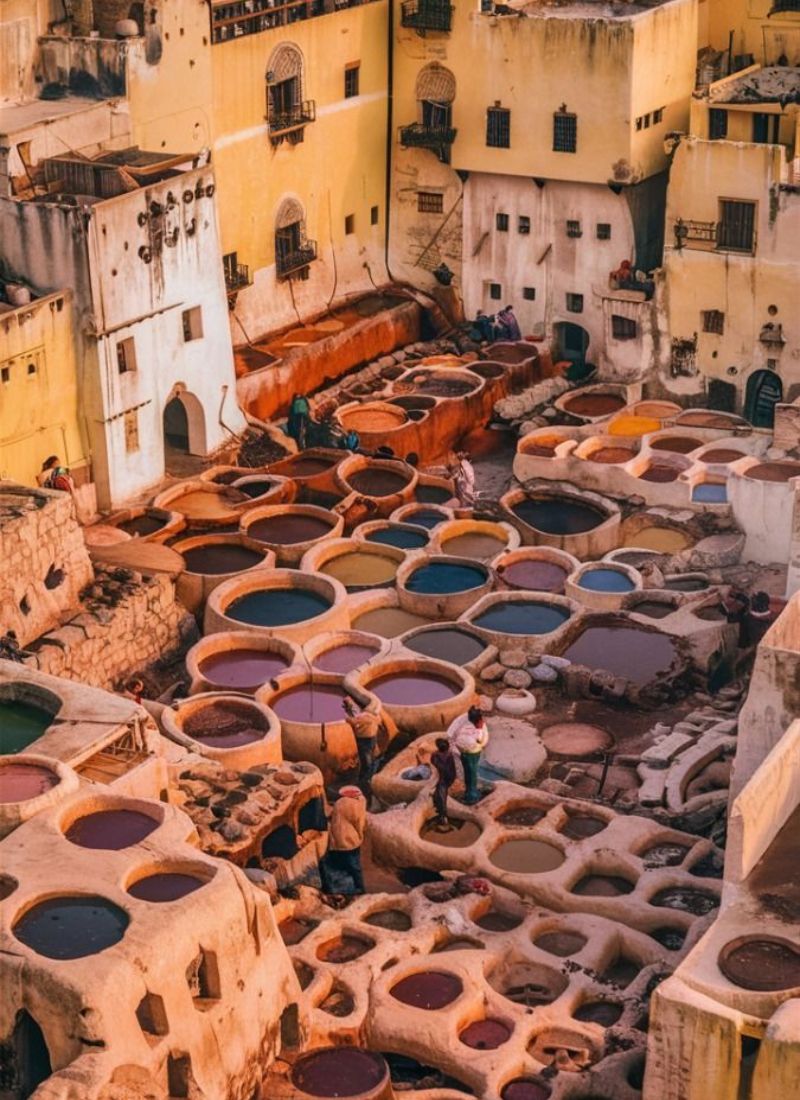
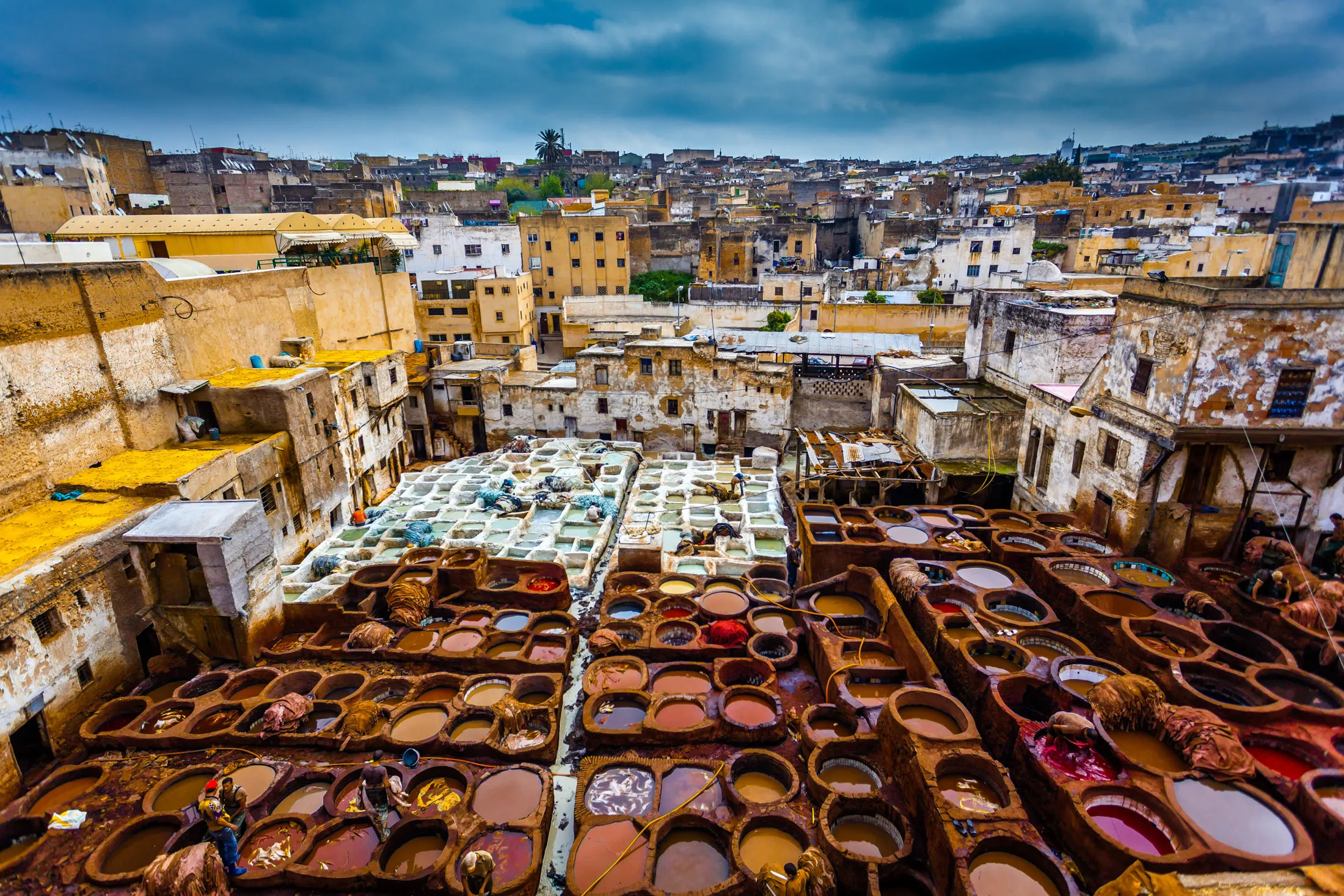
A visit to a traditional tannery in Fes can provide context for how hides are processed, but it does not prove that a particular bag or wallet in a nearby shop was made from hides treated at that location. The supply chain can involve several workshops and traders, and sellers may stock goods from different sources. Ask where the finished product was made and what the seller knows about its material. If exact provenance matters, request details in writing rather than relying on proximity to a famous tannery.
Traditional leatherwork is part of Fes’s craft identity, but production methods and finishing vary. A product made using modern tools can still be locally crafted, and an item that looks traditional may have been manufactured elsewhere. Do not treat “handmade” as a single quality grade. A hand-finished item can still have weak stitching, while a well-designed product may use some machine stitching. Evaluate the item on its own construction and ask the seller to distinguish what is handmade from what is purchased or assembled.
Leather quality checklist
| Feature | What to inspect | Why it matters |
|---|---|---|
| Material description | Ask what type of leather and which parts use it | The label alone may be too broad |
| Surface and finish | Peeling, cracking, uneven coating, edge quality | Finishing affects appearance and wear |
| Stitching | Handles, straps, corners, zipper ends | Stress points often fail first |
| Lining and hardware | Pocket seams, zippers, buckles, clasps | These affect everyday usability |
| Fit and comfort | Babouche sole, jacket fit, strap comfort | Good material cannot fix a poor fit |
| Care and receipt | Cleaning advice, product description, seller details | Useful for maintenance and disputes |
Smell, flexibility, and other common myths
Smell is not a dependable authenticity test. Tanning and finishing can leave strong odours, but leather may also be treated, aired, or coated, and synthetic materials can be scented. Flexibility is similarly ambiguous: different types of leather vary in thickness and firmness, while synthetic products may be designed to bend like leather. Avoid online tricks that recommend burning a sample, scraping the surface, or applying household chemicals. Such tests can damage the item and may not tell you what you need to know.
A better method is to combine the seller’s material description with careful inspection and realistic expectations. Ask whether the leather is coated, how it should be conditioned, and whether it will darken or soften with use. If the seller cannot explain a technical term, ask for simpler language or compare with another shop. A lack of specialist vocabulary does not automatically mean the seller is dishonest, but vague answers paired with extravagant claims should encourage you to slow down.

Comparing price and value
Price depends on material, size, design complexity, labour, hardware, lining, finish, shop overhead, and how the product is made. A small wallet and a large lined backpack are not comparable simply because both are leather. A low price can reflect a smaller product, simpler construction, different material, or a promotion; a high price can reflect craftsmanship or merely positioning. Compare similar items and check the features that matter for your use instead of assuming the most expensive product is best.
Before bargaining, decide what the product is worth to you and what you are willing to spend. Ask for the final price, currency, payment options, packaging, and delivery costs. If the seller says the item is handmade, ask which parts are made by hand. If it is described as locally produced, ask where. You do not need to challenge every statement, but you should understand important details before paying. Keep a receipt that identifies the product rather than only a generic purchase amount.
Care for leather after purchase
Leather care depends on the type of leather and finish. Keep the seller’s instructions and test any cleaner or conditioner on a small hidden area only if product guidance permits it. Some coated surfaces do not need the same treatment as untreated leather, and unsuitable oils or solvents can stain or soften the material. Avoid prolonged exposure to water and heat, and let a damp item dry naturally away from direct heat. Store bags so they keep their shape and are not crushed under heavy luggage.
Colour transfer can occur with some dyed leather, especially when it is new or damp. Avoid placing a new leather item against light fabrics until you understand how the finish behaves. If a product has a strong odour, allow it to air in a ventilated place rather than masking the smell with fragrance. For a valuable item, consult a leather-care specialist before using a home remedy. Good care extends the useful life of the product, but no leather item is immune to wear.

Buying leather goods in Fes
Fes offers opportunities to compare leather goods in the medina, but a tourist area may contain products with different origins and levels of finish. Browse more than one shop, inspect the product carefully, and ask the same questions in each place. If you are visiting Chouara Tannery, keep the viewing experience separate from your decision to buy. You can appreciate the craft without purchasing immediately. If you do buy, make sure the item is the one you inspected and that promised delivery or repair arrangements are written down.
Use the Moroccan souks guide to plan a broader shopping visit and the Fes travel guide for itinerary context. The Moroccan National Tourist Office also provides an overview of traditional craftsmanship. These sources provide cultural context, but they do not certify an individual shop or product. Product-specific questions still need to be answered by the seller.
Shipping and keeping proof of purchase
If you buy a large leather pouf, jacket, or several items, ask how the seller will package them and whether shipping is available. Confirm the destination address, tracking, insurance, estimated delivery time, and what happens if the parcel is damaged. For a jacket or footwear, confirm size and exchange terms before leaving the shop. International shipping can involve customs fees and delivery charges separate from the purchase price, so ask for the full breakdown.
Keep your receipt and take a photograph of the item and any product label before packing. If the item is expensive, write down the material description and seller contact details. Rules differ by destination and may apply to some animal-derived materials, so check official customs information when relevant. A seller’s general reassurance is not a substitute for the current rules of the country you are entering.
Practical checklist
- Ask the seller to explain the material in plain language and identify any coated or synthetic components.
- Inspect seams, handles, strap attachments, edges, lining, and hardware before paying.
- Do not use burning, scraping, or chemical tests on a product in a shop.
- Compare similar items and evaluate construction rather than relying on smell or price alone.
- Get a receipt and written details for expensive goods or international shipping.
- Follow product-specific care instructions and avoid unverified home remedies.
Questions readers often ask
Can I identify real leather by smell?
No. Smell varies with tanning, finishing, storage, and added scents. Use several clues and ask for a clear material description.
Does genuine leather mean high quality?
Not necessarily. The phrase alone does not describe grade, finish, stitching, or construction. Inspect the complete product.
Are all leather goods in Fes made locally?
No. Shops may stock goods from different sources. Ask where the finished product was made and what the seller knows about its origin.
What is the best way to test leather quality in a shop?
Inspect the surface, seams, edges, lining, hardware, and stress points, and ask about material and care. Avoid destructive tests.
How should I care for Moroccan leather?
Follow instructions for the specific material and finish, keep it away from prolonged moisture and heat, and test suitable products cautiously.
Where can I learn about Fes tanneries?
Read the official Fes guide and UNESCO’s Medina of Fez page for context.
Additional practical notes
Pay attention to how the item feels when used, not only when displayed. A bag may look impressive on a shelf but feel uncomfortable when carried, and a belt may have a beautiful surface but an awkward buckle. If the shop permits it, try the item in the way you intend to use it. Open the pockets, adjust the strap, try the slippers, or check the jacket’s range of movement. Practical fit often matters more than decorative details.
For travel purchases, think about climate and storage at home. Leather can respond to humidity, heat, and prolonged sunlight, and a packed suitcase may compress a soft bag or pouf. Ask the seller how to transport the item and whether stuffing or protective wrapping is recommended. If you are shipping the item, photograph it before packaging and keep tracking details. A few minutes of preparation can help resolve problems more easily if the item arrives in a different condition than expected.
Do not treat a product’s imperfections as either proof of authenticity or proof of poor quality without considering their effect. Small grain variations may be normal, while a split seam, peeling finish, loose handle, or sharp edge can be a functional problem. Ask the seller to distinguish natural variation from damage and decide whether the condition is acceptable for the price. A good purchase is transparent about both strengths and limitations.
To compare two leather bags fairly, look at their intended use and construction rather than simply their size. A travel bag may need reinforced handles, a secure closure, and a comfortable strap, while a small handbag may prioritize weight and shape. Check whether the base has protection, whether the lining can be cleaned, and whether the hardware is replaceable if it fails. Ask the seller which parts are leather and which are other materials, then decide whether the combination is suitable for your budget.
Storage affects leather after the purchase. Do not leave a bag compressed under heavy luggage for long periods, and avoid sealing a damp item in plastic. Use a breathable storage space away from strong sunlight and heat. If a product arrives with a strong smell, allow it to air in a ventilated place instead of spraying perfume or cleaner over it. Keep the care instructions and receipt together so you can refer to the seller’s guidance if the finish changes or a repair is needed.
If you are buying leather as a gift, check whether the recipient prefers a natural finish that may change with use or a more uniform coated surface. Neither preference is automatically better; the important point is that the material and care needs are understood. For clothing and footwear, fit and comfort can matter more than the grain pattern. A return or exchange option may be useful if you are uncertain about sizing, but get the terms in writing before payment.
For online purchases, ask for close-up photographs of the material, stitching, lining, hardware, and edges, not just polished product images. Check the seller’s return terms and whether the description identifies leather and non-leather components. If you cannot confirm a key detail, decide whether that uncertainty is acceptable for the price. These checks are useful whether the product is bought in Fes, from another Moroccan city, or from an online retailer abroad.
Official sources and further reading
- Moroccan National Tourist Office: Fes
- Moroccan National Tourist Office: Traditional Craftsmanship
- UNESCO: Medina of Fez
Final thoughts
The most reliable way to buy Moroccan leather is to combine a clear material description with a careful inspection of construction and finish. Ask questions, compare similar products, keep a receipt, and learn how to care for the item you choose. The goal is not to find a magical authenticity test; it is to understand what you are buying well enough to make a confident decision.
