


The best Moroccan souvenir is one that reminds you of the trip, suits the person who will use it, and can be transported and cared for without unnecessary trouble. Morocco offers a wide range of craft products, from leather accessories and woven textiles to ceramics, zellige-inspired objects, metalwork, clothing, and small decorative pieces. Each category has different strengths and practical challenges, so it helps to choose with a plan rather than buy whatever is easiest to carry at the last minute.
This guide focuses on gifts and keepsakes that can work for travellers from the United States, Canada, and other destinations. It explains what to look for, how to compare quality, and how to pack or ship items safely. It also highlights an important distinction: an item sold in a Moroccan city is not necessarily made there, and a product that looks traditional may be new or contemporary. Ask clear questions, keep receipts, and check official import rules for materials that may be regulated.
Quick answer: Choose Moroccan souvenirs for the recipient and intended use, inspect materials and workmanship, and check shipping and destination import rules before paying.
Choose souvenirs by purpose
Start by deciding whether you are buying for yourself, a friend, a family member, or your home. A small leather wallet can be useful every day, while a rug or decorative tray may become a long-term feature in a room. Gifts should be easy to explain and suitable for the recipient’s preferences. Avoid buying a large object simply because it seems impressive in a shop. The best souvenir is one that will be used, displayed, or appreciated rather than stored indefinitely.
Think about weight, fragility, dimensions, maintenance, and how much space remains in your luggage. A ceramic plate needs protection, a metal tray can be heavy, and a rug may require shipping. Textiles and small accessories are often easier to pack, but you should still check fibre, seams, and care requirements. If you plan to buy several gifts, set a budget and keep a running list. This helps you avoid spending the entire budget on the first attractive item.
Leather goods: practical gifts with care needs
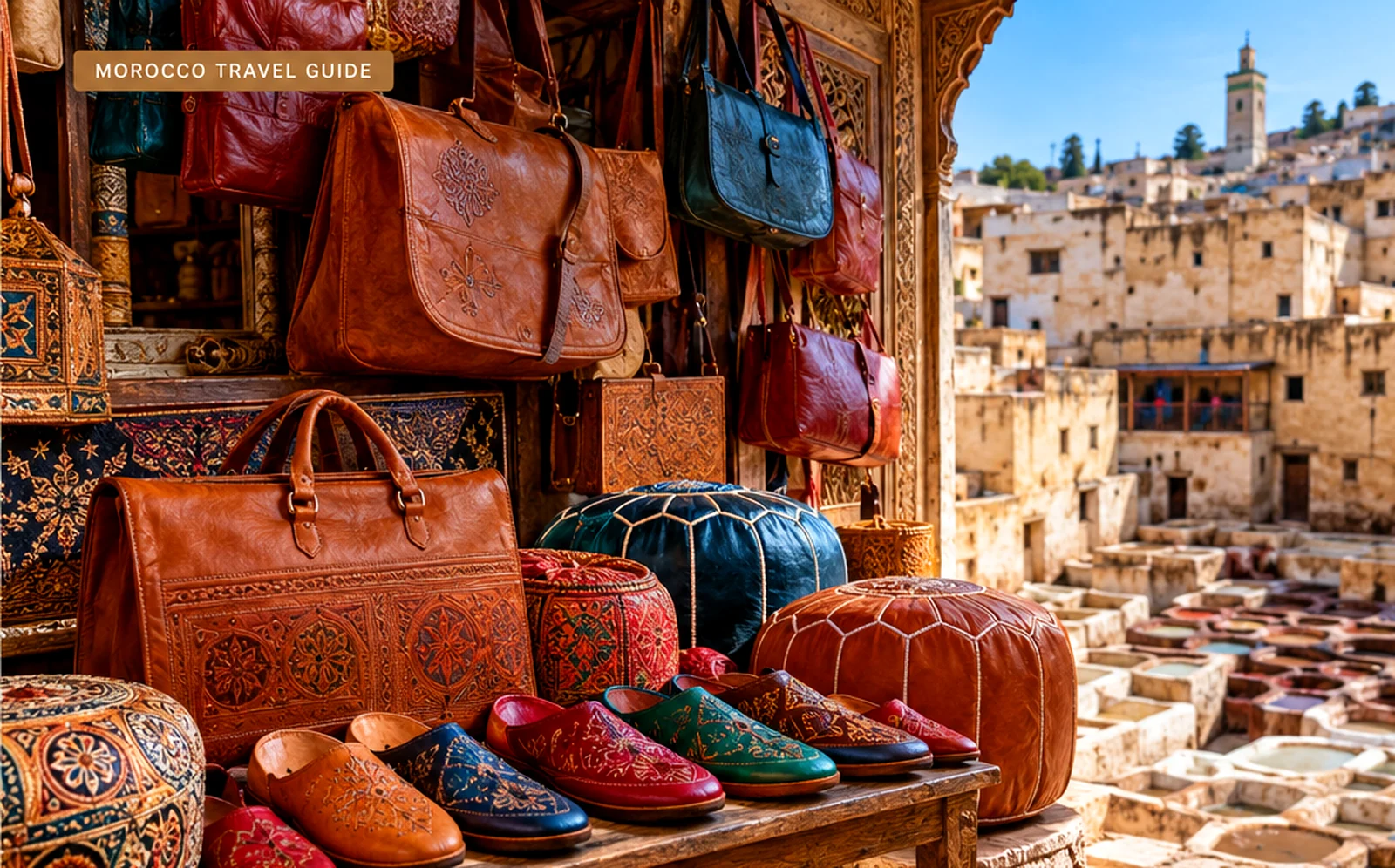
Leather bags, wallets, belts, babouches, and small pouches are common shopping choices. Inspect stitching, edges, lining, hardware, and points where straps attach. Ask what type of leather is used and whether the surface is coated. For footwear, check fit and sole construction; for a wallet, check card slots and folded edges. A product that looks beautiful in a display should also work for the person who will use it. Avoid relying on smell alone as proof of material.
Leather needs suitable storage and care. Keep it away from prolonged moisture and direct heat, and follow product-specific instructions before using conditioner or cleaner. If the gift recipient prefers low-maintenance items, choose a simple design and ask the seller what care it requires. For more detailed checks, read the genuine Moroccan leather guide and the Fes leather goods guide once that page is published.
Rugs and textiles: meaningful but size-sensitive
A rug, kilim, scarf, or woven textile can bring colour and texture into a home. For a rug, measure the intended space and inspect fibre, weave, back, edges, condition, and care needs. Ask where it was woven because a rug sold in Fes may come from another region. Smaller textiles may be easier to pack, but still check loose threads, colour transfer, and washing instructions. A gift should match the recipient’s taste and home rather than depend only on the story told in the shop.
Rugs need more planning than small gifts. Confirm packed dimensions, shipping method, insurance, and whether duties or taxes are excluded from the shipping price. If the rug is described as vintage or antique, ask what supports the age claim and request a written description. Compare styles in the Beni Ourain, Azilal, and Boujad guide and use the Moroccan rug buying guide to check quality before paying.
Ceramics and small decorative objects
Ceramics can make attractive gifts because they carry colour and pattern without needing much explanation. Check rims, handles, bases, and surfaces for cracks or chips. Ask whether a piece is food-safe or intended only for display, and confirm whether it can be used in a microwave or dishwasher. A decorative bowl may not be suitable for everyday serving. For tiles or zellige-inspired pieces, check the back and edges and ask whether the object is handmade, a reproduction, or a printed design on another material.
Packing is essential. Ask the seller to wrap fragile pieces individually, cushion protruding handles, and prevent items from knocking together. If you buy a set, check that all pieces are in good condition before they are wrapped. A small tile or dish may be easier to transport than a large platter. Keep fragile items where they will not be crushed by heavier luggage, and avoid placing unprotected ceramics in a checked suitcase.

Copperware and metal gifts
Trays, bowls, lanterns, candleholders, and engraved decorative objects can be durable gifts, but material and finish vary. Ask whether an item is copper, brass, plated, lacquered, or made from mixed materials. Inspect edges, joins, handles, feet, and any glass panels. If the object is intended for food or drink, ask whether the surface is suitable for that purpose. A decorative item may look similar to a functional vessel while having different care or safety requirements.
Metal objects can be heavier than they appear, so check weight and dimensions before buying. A large tray may need a separate box or shipping service, while a small candleholder may fit in luggage. Ask whether the finish will tarnish and how it should be cleaned. Aggressive polishing can damage some surfaces. Keep the receipt and care instructions with the gift so the recipient understands what the item is made from and how to maintain it.
Souvenir choice by travel need
| Souvenir | Best for | Main practical consideration |
|---|---|---|
| Leather accessory | Everyday use or a compact gift | Material, stitching, care, and lining |
| Small textile | Easy packing and flexible gifting | Fibre, hems, colour transfer, washing |
| Rug or kilim | Home furnishing or statement gift | Size, origin, care, shipping, insurance |
| Ceramic dish or tile | Decorative gift | Fragility, food-safe status, packaging |
| Copperware or brass | Home décor or serving object | Weight, finish, intended use, packing |
| Wooden craft | Decorative keepsake | Material, treatment, destination import rules |
Clothing, scarves, and wearable gifts
Clothing and textiles can be thoughtful souvenirs when you know the recipient’s size, taste, and care preferences. Check fibre content, seams, lining, fasteners, and washing instructions. For a made-to-measure garment, agree on measurements, completion date, fitting arrangements, and what happens if alterations are needed. If you are buying a scarf or small textile, inspect the hems and look for loose threads or colour transfer. Do not assume a fabric is silk, wool, or cotton because it feels a certain way.
Traditional clothing and contemporary Moroccan fashion can both make meaningful gifts. Ask the seller to explain the garment’s intended use and whether it is everyday clothing, ceremonial wear, or a modern design inspired by traditional styles. A clear description helps you choose an item that the recipient can wear comfortably. For more context, see the existing traditional Moroccan clothing guide.
Buy with confidence in a souk
Visit more than one shop when time allows, and compare products that are similar in material, size, and construction. Ask the same questions in each shop and record the answers. A rug with a different fibre or size is not directly comparable to another rug, and a lined bag with secure hardware may justify a different price from a simple unlined one. Bargaining may be common in some markets, but keep it respectful and decide your budget before the conversation becomes long.
Do not feel pressured to buy because someone offers tea, spends time explaining a product, or tells an emotional story. You can thank the seller and continue browsing. If you decide to buy, confirm the total price, currency, packaging, shipping, payment method, and any exchange or repair terms. For a high-value item, ask for a receipt that describes the product. A clear transaction protects both buyer and seller and makes the purchase easier to document later.
Pack fragile, heavy, or oversized items
Small textiles and leather accessories can often be packed with ordinary care, while ceramics, glass, metal trays, and large rugs need a more deliberate plan. Ask the seller to protect corners, handles, rims, and fragile surfaces. Keep receipts and take a photograph before packing. If an item is valuable, consider whether your travel insurance covers it and whether the carrier provides additional insurance. Check airline baggage limits directly with the airline because dimensions, fees, and policies change.
For a large rug or object, ask for a written shipping quote that names the destination, carrier, tracking, insurance, packaging, estimated delivery window, and excluded fees. Confirm who handles a damage claim. Do not assume that the price includes customs duties or taxes. If you are shipping several items, ask whether they will be packed separately or together and how the contents will be identified. A low shipping quote is not useful if the service does not protect the item adequately.

Customs and restricted materials
Before bringing a souvenir home, consider what it is made from. Ordinary textiles and leather goods may have different requirements from objects containing untreated wood, plant material, shells, wildlife products, or other regulated components. The rules depend on the destination and item, and they can change. For the United States, official USDA APHIS guidance explains restrictions for souvenirs made from plants, wood, and wildlife-related materials. For Canada, check current Canadian Food Inspection Agency and Canada Border Services Agency information before travelling.
Declare items when required and keep receipts or product descriptions that identify the material and country of origin. Do not buy a product made from protected wildlife or restricted materials simply because it is sold openly. If you are unsure whether an item is allowed, check official guidance before purchase or choose a different souvenir. The purpose of a souvenir is to preserve a memory, not create a border problem that could have been avoided with a short check.
Gifts that support craft without making assumptions
A handmade object can connect a recipient to the place where it was purchased, but the story should be accurate. Ask whether the seller is the maker, whether the product comes from a local workshop, and which parts were made by hand. Some items combine handwork and machine processes; some shops sell goods made elsewhere in Morocco. That does not make a product worthless, but the description should match reality. Honest information is more meaningful than a claim that every item is ancient or unique.
Respect the people and workplaces behind the products. Ask permission before photographing artisans, follow workshop rules, and avoid touching tools or unfinished work without invitation. If you visit a workshop and choose not to buy, thank the host. If you do buy, pay the agreed amount and keep the receipt. Thoughtful shopping can support local trade while giving you a better understanding of the skill and labour that go into the object.

Practical checklist
- Choose gifts according to the recipient’s needs and your available luggage space.
- Inspect material, construction, finish, and condition before comparing prices.
- Ask for a clear description of where the item was made and which parts are handmade.
- Get a receipt and written shipping terms for expensive, fragile, or oversized purchases.
- Check official import guidance for wood, plant, shell, or wildlife-derived materials.
- Pack fragile items individually and keep proof of purchase and product details.
Questions readers often ask
What are the best souvenirs to buy in Morocco?
Good options include leather accessories, textiles, rugs, ceramics, zellige-inspired objects, metalwork, clothing, and small decorative pieces. The best choice depends on your budget, luggage, and intended use.
What souvenirs are easiest to bring home?
Small textiles and compact accessories are often easier than large rugs, heavy metal objects, or fragile ceramics. Check the material and destination rules before buying.
Can I bring Moroccan wooden crafts into the United States or Canada?
Rules depend on the type of wood, treatment, and item. Consult official USDA APHIS guidance for the United States and CFIA/CBSA guidance for Canada before travelling.
Should I buy souvenirs from the first shop I visit?
Not necessarily. Compare similar products in more than one shop, inspect workmanship, and make sure you understand the price and material.
How do I ship a large Moroccan rug home?
Ask for a written quote with packaging, tracking, insurance, destination, estimated delivery, and excluded customs fees. Keep the receipt and product description.
Where can I find a broader guide to shopping in Morocco?
Start with the Moroccan markets and souks guide and the official Fes travel guide.
Additional practical notes
Some souvenirs are best bought near the end of a trip, but do not leave a complicated purchase until the last hour. A large rug, custom garment, or fragile ceramic piece may require time for measurements, alterations, packing, or shipping. If you find something you like early, ask for the seller’s contact details and return later after comparing options. This gives you room to think without forcing you to carry a fragile item around all day.
Keep an inventory of gifts as you travel. Write down the item, material, price, seller, and intended recipient. This is especially helpful if you buy several similar objects or ship them separately. Receipts also help if you need to make a customs declaration or an insurance claim. A photograph of each item before packing can document its condition and help you identify which package contains what.
Consider whether the souvenir’s material creates special care or import requirements. Wood, plant fibres, shells, animal products, and wildlife-derived materials may be regulated differently from ordinary textiles. If a seller cannot tell you what a product contains, choose a clearer alternative or check with the relevant official agency before buying. A beautiful object is not worth the uncertainty of bringing home a restricted material.
Gift planning becomes easier when you group recipients by need. For a colleague, a small textile or compact accessory may be easier to transport; for a close friend, a carefully chosen decorative object may carry more meaning; for your own home, a rug or metal piece may be worth the extra shipping effort. Keep the recipient in mind instead of choosing the most elaborate item in the shop. A thoughtful explanation of why you chose a product can matter as much as its price.
Before packing, remove any loose price tags only after you have photographed them or kept the receipt. Put fragile items in separate wrapping, cushion empty spaces, and keep sharp edges away from fabric or leather. Do not place heavy objects on top of ceramics or glass. If the seller ships the item, ask for the tracking number and a copy of the shipping terms. For high-value goods, photograph the packed parcel if possible and keep the seller’s contact details until the item arrives.
A souvenir’s story should be accurate and respectful. If the seller says an item was made in a particular region, record that description as the seller’s claim unless you have independent evidence. Do not describe a modern piece as antique or a product as entirely handmade if the seller has not said that. Honest details make the gift more interesting, because they connect it to a real craft tradition without adding claims that may not be true.
For souvenirs that will be shared among several people, choose a consistent budget and decide whether you want identical gifts or a small range of different objects. Compact textiles, small accessories, and lightweight decorative pieces can be easier to distribute than one large purchase. Keep each receipt separate if items have different materials or destinations. This small bit of organization helps with packing, gifting, and any questions that arise when you return home.
Official sources and further reading
- Moroccan National Tourist Office: Fes
- Moroccan National Tourist Office: Traditional Craftsmanship
- UNESCO: Medina of Fez
- USDA APHIS: International Traveler Souvenirs
- Canadian Food Inspection Agency: Wooden and Bamboo Souvenirs
- Canada Border Services Agency: Bringing Personal Goods into Canada
Final thoughts
Moroccan souvenirs are most rewarding when they are chosen with care. Compare materials and workmanship, ask honest questions about origin, and think about packing and maintenance before paying. A small, well-chosen object can preserve a travel memory for years, while a rushed purchase may become an avoidable burden. Choose the item that suits your life and bring it home responsibly.
