


Table of Contents
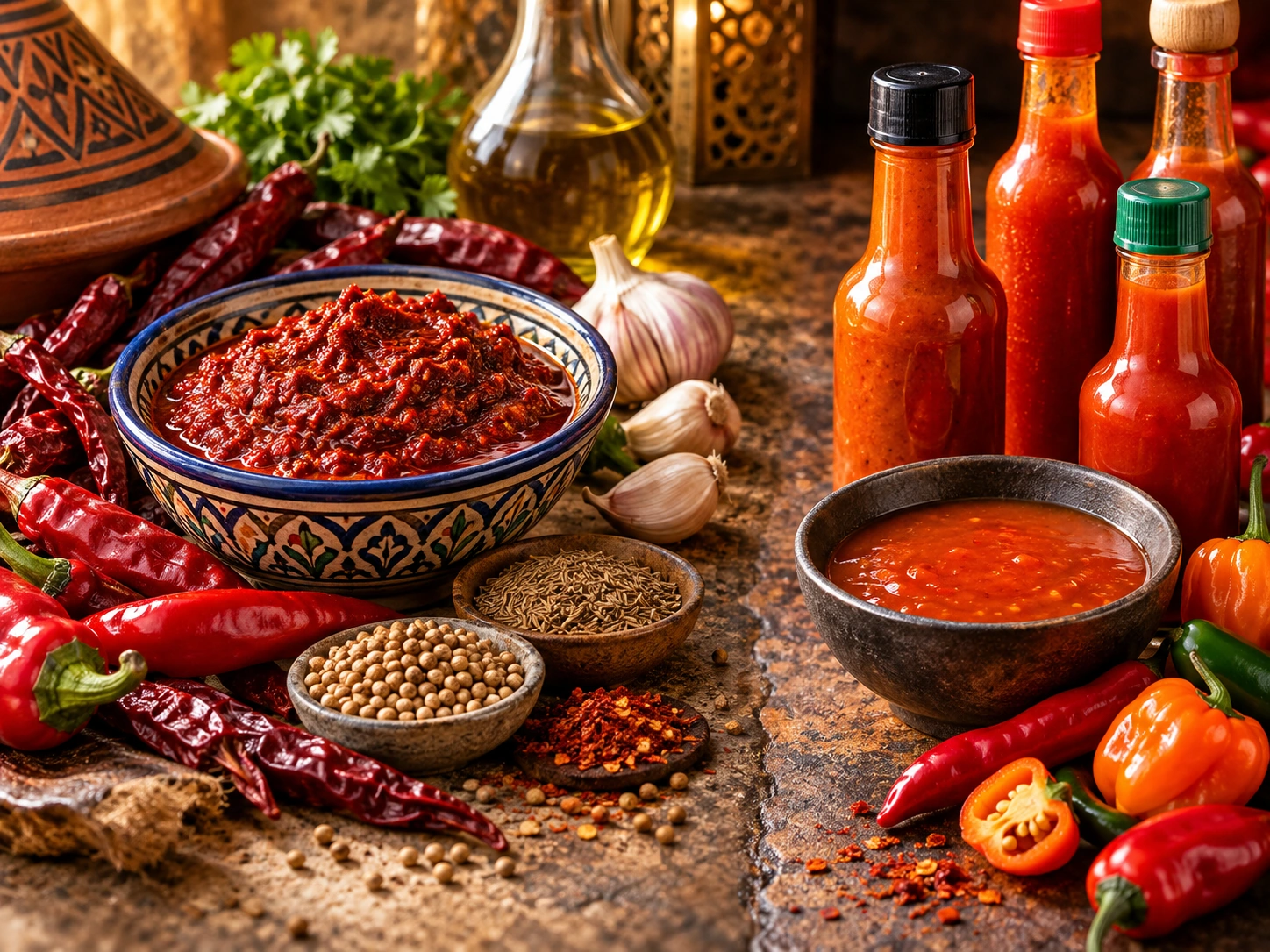
If a recipe calls for harissa and your jar is empty, the best harissa substitute is another chili paste with a similar balance of heat, garlic, and acidity. Sriracha can be useful in a pinch, and Food Republic also discusses sriracha as an alternative. A mixture of chili flakes, paprika, garlic, olive oil, and lemon juice can come closer to harissa’s thicker, spice-forward character. Ordinary American hot sauce can work for heat, but it often tastes more vinegary and has a thinner texture.
The right substitute depends on the dish. A few drops of hot sauce might be sufficient for a soup, while a marinade or dip needs something with more body. For Moroccan-inspired cooking, it also helps to distinguish hot chili paste from the warm, aromatic spices that give many traditional dishes their flavor.
What Is Harissa?
Harissa is a North African chili condiment most closely associated with Tunisia, but it is also used elsewhere in the region, including Morocco. It generally features chilies and seasonings, with variations that may include garlic, caraway, coriander, cumin, and oil.
The flavor of one jar can differ from another. Some are smoky, some are hot and sharp, and some are relatively mellow. Products labeled rose harissa can include floral notes. That is why there is no perfect universal replacement.
For context on dishes such as tagine, harira, and other regional specialties, see the Moroccan National Tourist Office’s food and drinks overview. Harissa also should not be confused with ras el hanout, a Moroccan blend of dry spices. Ras el hanout brings aromatic complexity but does not reproduce harissa’s chili paste texture or heat.
The Best Harissa Substitutes at a Glance
| Substitute | Best for | Main difference |
|---|---|---|
| Another North African chili paste | Most recipes | Usually the closest overall choice, but recipes differ |
| Sriracha | Quick sauces, marinades, bowls | Often sweeter and more garlicky |
| Crushed red pepper + paprika + olive oil + lemon | Homemade alternative | Texture and heat can be adjusted |
| Sambal oelek | Chili-heavy sauces and stews | Less complex spice character in many versions |
| American vinegar-based hot sauce | Soups and final seasoning | Usually much thinner and more acidic |
| Chili paste + cumin and coriander | Tagine-inspired sauces | Requires balancing to avoid overpowering the dish |
| Tomato paste + paprika + chili flakes | Milder stews | More tomato-forward, less direct chili heat |
When substituting, start with a smaller amount than you think you need and add more after tasting. Heat levels vary widely across brands and homemade blends.

1. Sriracha: The Easy American Pantry Stand-In
Sriracha is familiar to many home cooks in the United States. It can make a useful alternative when you need chili heat plus garlic flavor without another grocery trip.
The trade-off is sweetness and texture. Many sriracha sauces taste sweeter and smoother than harissa. They may also miss the cumin, caraway, or coriander character found in some harissa pastes.
Use it in quick sauces, cooked vegetables, or a marinade where the recipe can tolerate a slightly different flavor profile. If the original recipe calls for a thick spoonful of harissa, adding sriracha may make the mixture wetter, so account for that.
2. American Hot Sauce: Great for Heat, Not a One-to-One Match
Many classic American hot sauces emphasize chili peppers and vinegar. Their bright acidity can wake up soup or add a kick at the table. But because they are often thin, a spoonful of hot sauce is not a perfect substitute for a spoonful of harissa paste.
For a Moroccan-inspired tomato stew, add hot sauce a little at a time. If you want a thicker sauce, incorporate a small amount of tomato paste or olive oil separately. The result will not taste exactly like harissa, but it can still be delicious.
This is a good example of why substituting by volume alone is unreliable: two chili condiments with similar heat can behave very differently in a recipe.
3. Make a Quick Harissa-Inspired Paste at Home
For a practical substitute using common U.S. pantry ingredients, combine:
- 1 tablespoon olive oil.
- 1 teaspoon sweet paprika.
- 1/2 teaspoon crushed red pepper flakes, adjusted for your preferred heat.
- 1 small garlic clove, finely grated or crushed.
- 1/4 teaspoon ground cumin.
- 1/4 teaspoon ground coriander.
- 1 teaspoon lemon juice.
- A pinch of salt.
Stir well and allow the mixture to sit briefly so the spices hydrate and the flavors mingle. If you want a smoother paste, blend the ingredients or use a fine chili powder instead of coarser flakes. Add olive oil a few drops at a time until the texture suits the recipe.
This is a harissa-inspired workaround, not a claim to be a traditional harissa recipe. It emphasizes practical substitution using ingredients commonly available in American kitchens. Adjust it to the taste and heat level of your actual dish.
4. Sambal Oelek: A Straightforward Chili Alternative
Sambal oelek can provide direct chili flavor and a paste-like consistency. Compared with many harissa varieties, it may offer fewer warm spice notes. That can be useful if your recipe already contains cumin, coriander, garlic, and other seasonings.
Use it when the original harissa is one component among many rather than the central flavor. Taste before adding extra salt or acid because commercial condiments differ.
5. Tomato Paste, Paprika, and Chili Flakes for Gentle Heat
If you are making a stew for people who do not enjoy much chili heat, a little tomato paste, paprika, and red pepper can help replace some of harissa’s richness and color. This mixture will be milder and distinctly more tomato-forward.
It is especially practical in vegetable or chickpea dishes, where the other ingredients can carry the flavor. It is not the closest substitute for a recipe designed around a fiery harissa sauce, but it can solve a weeknight cooking problem.
6. Can Ras el Hanout Replace Harissa?
Not directly. Ras el hanout is a spice blend; harissa is a chili-based condiment. Their ingredients, uses, intensity, and texture differ. You can use a modest amount of ras el hanout to build a Moroccan-style aromatic base, then add chili separately if you want heat.
For example, a vegetable tagine might use ginger, cumin, turmeric, paprika, and other spices to create its foundation. A diner can add heat afterward. Adding excessive chili does not automatically make the result more authentically Moroccan.
This distinction is important for American cooks who are new to North African food: spiced does not always mean hot.
7. What About Chermoula?
Chermoula is another flavorful North African preparation, usually built from herbs, garlic, citrus, oil, and spices. It is often associated with fish and vegetable dishes. It can create a wonderful Moroccan-inspired meal, but it is not a direct hot-chili substitute for harissa.
If you planned to marinate fish and wanted a flavorful alternative to a harissa-based marinade, chermoula may be an excellent change of direction. If you are trying to reproduce a spoonful of harissa in a chili dip, choose an actual chili paste instead.
Harissa vs American Hot Sauce: What Changes in a Recipe?
The biggest difference often comes down to consistency, acidity, and layered seasoning. Many American hot sauces are pourable. Harissa is frequently spoonable or spreadable. A thinner sauce can change the consistency of dips and marinades; a sweeter sauce can change how a tomato-based dish tastes.
Ask three questions before choosing an alternative:
- Does this dish need heat, spice complexity, or both?
- Does it need a thick paste or only a splash of seasoning?
- Will the substitute be cooked, used as a marinade, or added at the table?
If you answer those questions, you will make a better substitution than simply grabbing whichever hot sauce is closest.
How to Use Harissa Substitutes in Moroccan-Inspired Food
Harissa and its substitutes can be useful around a Moroccan-inspired table, but they should not dominate every dish. Try one of these approaches:
Chickpea and Tomato Stew
Build flavor with onion, garlic, cumin, paprika, and tomatoes. Add cooked chickpeas, then finish with a small amount of chili paste to your taste. This is an accessible way to explore North African flavor combinations without assuming the dish is identical to traditional harira.
Roasted Carrots and Cauliflower
Coat vegetables lightly with olive oil and seasonings, roast until tender and browned, then toss with a small amount of your chosen chili paste mixed with lemon juice. For a milder result, use paprika and garlic instead.
Grilled Chicken Marinade
Combine olive oil, lemon juice, garlic, cumin, coriander, and a modest amount of chili paste. Marinate under refrigeration, then cook chicken thoroughly to a safe temperature. Here, a thicker substitute helps the seasonings cling to the surface.
Fish With Chermoula
Rather than treating harissa as an essential ingredient, try chermoula, a fragrant herb-and-citrus mixture widely used with seafood in Morocco. That gives the dish a distinct direction and creates a natural link between Moroccan coastal cooking and the fish recipes familiar to American readers.
For more background on dishes such as tagine, couscous, fish chermoula, and harira, explore our guide to Moroccan food.
How to Choose a Substitute Based on the Recipe
When Harissa Is the Main Flavor
If the recipe revolves around harissa, as in a harissa-forward dip, a red-chili glaze, or a condiment served with grilled food, choose a replacement with a similar body and a reasonable balance of chili and seasoning. A pourable, vinegar-heavy sauce can make the final dish taste too sharp. A thick chili paste plus a little cumin, coriander, and olive oil may be more appropriate, but taste as you go. If your substitute contains sugar, account for that in the finished flavor.
When Harissa Is Only a Small Accent
A teaspoon of harissa in a large pot of soup behaves differently from several tablespoons in a marinade. When the recipe already contains tomato, garlic, onion, and other spices, even a modest amount of chili flakes or a few drops of hot sauce may provide enough heat. There is less pressure to recreate the precise paste. Start with less than the specified harissa quantity, simmer briefly if appropriate, and reassess after the rest of the seasonings have developed.
When the Sauce Must Stick to Vegetables or Meat
Texture matters in roasting and grilling. A thin hot sauce can run off the surface, while a paste mixed with olive oil may coat the ingredients more evenly. For roasted cauliflower, carrots, or potatoes, toss your replacement with oil before cooking. For chicken or fish, use a suitable marinade and keep food refrigerated during marination. Do not reuse marinade that contacted raw meat as a finishing sauce unless it has been properly cooked.
Shopping for Harissa Alternatives in U.S. Grocery Stores
You may see condiments with very similar packaging but very different compositions. Start by reading the label rather than relying on the color of the sauce. Ask whether the product lists chili peppers first, whether it contains vinegar or sugar, and whether it includes garlic and aromatic spices. Also look at the texture through the jar when possible: a blended sauce and a coarse paste will not work the same way in a recipe.
A useful starter pantry for Moroccan-inspired cooking includes paprika, cumin, coriander, garlic, olive oil, lemon, and a chili ingredient you enjoy. None of those alone is harissa. Together, however, they let you adjust heat, tang, aroma, and consistency in manageable steps.
At an international grocery store, ask specifically for harissa paste rather than assuming every product labeled chili sauce is equivalent. Harissa preparations vary by producer and region, so a jar can still be different from the one a cookbook author used. Taste a little before adding it to a finished dish, especially if the recipe has no other strong flavors to balance the chili.
Common Harissa Substitution Mistakes
Using equal amounts without tasting. One brand of harissa may be significantly hotter than another. A tablespoon-for-tablespoon replacement can overwhelm a meal. Begin conservatively and increase in stages.
Assuming red means spicy. Tomato paste and sweet paprika produce vivid color but little heat. Cayenne can bring substantial heat without providing the thickness, garlic, or acidity of chili paste. Match the properties the recipe needs instead of judging by appearance.
Confusing Moroccan spice blends with chili condiments. Ras el hanout can be fragrant rather than fiery. Chermoula often emphasizes fresh herbs and citrus. They may improve a dish but cannot be expected to reproduce harissa simply because they belong to a related regional food tradition.
Ignoring the salt and vinegar already in a substitute. Commercial sauces can bring a noticeable amount of both. Before adding extra lemon juice, salt, or another acid to a recipe, taste your replacement mixture and adjust the rest of the seasoning accordingly.
Trying to make every Moroccan dish hot. Many Moroccan dishes are aromatic, savory, sweet, or tangy without being intensely spicy. For a broader introduction to the country’s traditional foods, explore our Moroccan food guide rather than treating chili heat as the defining feature of the cuisine.
A Practical Five-Minute Flavor Test
Before committing to a substitution in a large pot, mix a very small sample with a spoonful of plain cooked chickpeas, warm tomato sauce, or another neutral component of your dish. Taste the result. Is the heat sharp or rounded? Does the acidity dominate? Does it cling to the food? Add a pinch of cumin if the flavor needs warmth, lemon if it lacks brightness, or olive oil if it feels harsh or thin. This mini test is especially useful when preparing food for people who prefer different spice levels.
The point is not to imitate a single ‘authentic’ flavor with whatever happens to be in the refrigerator. It is to use the ingredients at hand thoughtfully, while recognizing that harissa itself has a specific North African identity. If experimenting with those ingredients makes you curious about the wider cuisine, our Morocco tours page can help you start planning a visit beyond the kitchen.

Frequently Asked Questions
What can I use if I don’t have harissa?
For a quick stand-in, try sriracha or another chili paste. For a more adjustable alternative, mix paprika, chili flakes, garlic, cumin, coriander, olive oil, and lemon juice. Choose according to your recipe’s required heat and consistency.
Is sriracha the same as harissa?
No. They are distinct condiments with different culinary traditions and flavor profiles. Sriracha is often sweeter and more garlicky, while harissa may offer a deeper mix of chilies and warm spices.
Can I replace harissa with cayenne pepper?
Cayenne adds heat but not the paste texture or other flavors. Combine a small amount with paprika, oil, garlic, and lemon juice if the recipe needs more than heat alone.
Is harissa Moroccan or Tunisian?
Harissa is a North African condiment with particularly strong associations with Tunisia. It is also encountered in Moroccan and other regional cooking. It should not be labeled exclusively Moroccan.
Can I use chili powder instead of harissa paste?
Chili powder can contribute flavor and heat, but it is dry. Add liquid and fat as appropriate for the recipe. Also check the label: in the United States, chili powder often means a seasoning blend rather than pure powdered chilies.
Is ras el hanout spicy like harissa?
Not necessarily. Ras el hanout is an aromatic Moroccan spice mixture rather than a hot chili paste. Different blends contain different ingredients, and many emphasize fragrance over intense heat.
Final Takeaway
The best harissa substitute is the one that solves the problem your recipe actually has. For immediate heat, an American hot sauce may do. For a thicker chili condiment, another chili paste is usually more suitable. For Moroccan-inspired aromas, think about cumin, coriander, paprika, garlic, herbs, and olive oil rather than treating a hot sauce as the entire flavor story.
A good substitute should improve your dish, not erase the character of the ingredient it replaces. Begin with the flavor and texture you need, then adjust in small steps.