


Table of Contents
The main difference between lamb and mutton is the age of the sheep. Lamb generally comes from a younger animal and is usually milder and more tender. Mutton comes from an older sheep and often has a deeper, more pronounced flavor and firmer texture. Those differences affect the cut you choose, the cooking method and how long the meat benefits from gentle moist heat.
If you shop in the United States, you may see lamb chops, legs and stew cubes frequently but encounter mutton less often. In Moroccan cooking, sheep meat can appear in tagines, grilled preparations, celebratory meals and slow-cooked dishes. Neither one belongs exclusively to one culture. What matters is matching the cut to the technique and understanding that the word mutton does not automatically mean lower quality.
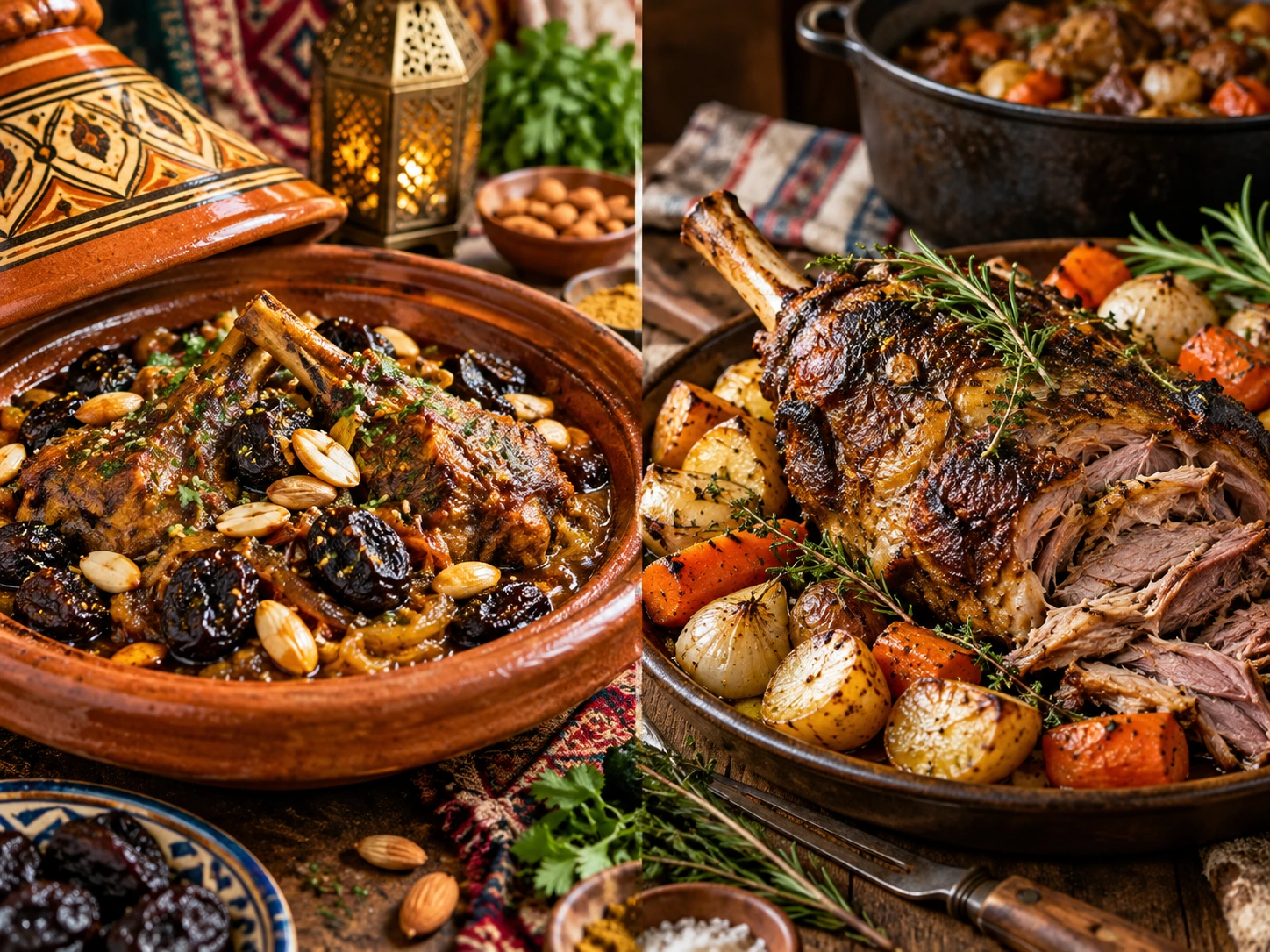
This guide explains the practical differences and compares two comforting dishes: a Moroccan-inspired tagine and a familiar American stew. It includes shopping advice, flavor adjustments and food-safety notes so you can cook with confidence instead of believing that one name tells you everything about the meat.
Lamb vs Mutton at a Glance
| Question | Lamb | Mutton |
|---|---|---|
| Animal | Younger sheep | Older sheep |
| Typical flavor | Mild to moderately rich | More assertive, often described as gamey |
| Texture | Often naturally tender, depending on cut | Frequently firmer; benefits from slow cooking |
| U.S. availability | More common in mainstream supermarkets | Often easier to find at specialty butchers |
| Good cooking styles | Chops, roasting, braising, stews | Braising, long simmering, slow cooking |
| Best choice | Depends on tenderness and flavor preference | Depends on time, cut and desired depth |
Exact legal and commercial definitions can vary between markets. Ask a butcher how the meat is labeled, what cut it is and how it has been handled. A tender cut of older sheep and a tough cut of young lamb may still need different approaches, which is why age alone cannot replace information about the muscles and connective tissue.
What Does Lamb Taste Like Compared with Mutton?
Lamb has a distinctive richness that separates it from beef or chicken. The flavor can be mild in some cuts and stronger in others, particularly where fat contributes aromatic compounds. Mutton usually tastes more intense, which some diners love and others need time to appreciate. “Gamey” is a common shortcut, but it does not tell you whether the meat was raised, stored or cooked well. Quality and handling matter just as much as preference.
In a highly seasoned stew, the contrast can become less dramatic. Onion, tomato, broth and long simmering bring the meat into a shared sauce. Yet mutton’s depth often remains noticeable. If you normally enjoy mild beef stew, try lamb first; if you like slow-cooked meat with strong character, mutton may reward your patience.
Fat deserves particular attention. Trimming excess exterior fat can moderate richness, but removing every trace may leave lean pieces dry. Browning produces savory notes without making the meat taste identical to beef. Acid from lemon or tomato can brighten the finished dish; it does not magically erase the animal’s natural character.
Why Cut Matters as Much as Age
The word lamb describes the animal’s relative age, not one universal texture. Chops from a tender part of the animal can cook quickly, while shoulder or shank contains more connective tissue and becomes appealing after a gentle braise. The same principle applies to mutton: a slow-cooking cut gives connective tissue time to soften. If you cook a tough stew cut like a lean steak, it may become chewy even though the meat reaches a safe temperature.
For a tagine or stew, shoulder, neck and shank are useful options when available. They bring collagen and flavor. Ask for evenly sized cubes if you prefer a spoonable stew. Bone-in pieces can contribute richness, but diners should be aware of small bones when serving. A butcher can help adapt a recipe to the meat stocked locally.
U.S. labeling also varies: packages may say “lamb stew meat” without listing the precise muscle. In that case, use a slow simmer and check for tenderness. A recipe promising a fixed finish time cannot know exactly which cut you bought. A thermometer helps assess safety, while a fork and taste help you understand whether the connective tissue has softened enough.
How Moroccan Tagine Uses Lamb
A tagine is both a cooking vessel and a family of dishes. The familiar conical lid encourages condensation, while the contents often cook gently with onions, spices, vegetables and a modest amount of liquid. Lamb can be cooked with ingredients such as prunes and almonds, peas and artichokes, or seasonal vegetables, depending on region and household. The blend is not necessarily hot; sweet, savory, aromatic and acidic notes are carefully balanced.
For people using an American stovetop, a heavy Dutch oven can often reproduce the essential moist-heat logic even though it does not duplicate the traditional vessel or the cultural context. If you own a clay tagine, check the manufacturer’s instructions about heat diffusion, seasoning and oven safety before using it. Some clay cookware needs particular care and should not be placed directly on intense burners.
A Moroccan-style lamb preparation can begin with onion, ginger, turmeric, black pepper and perhaps saffron. Cumin may appear in some dishes but should not be treated as mandatory in every tagine. The point is to respect a range of flavor profiles rather than using a generic jar of “Moroccan seasoning” for every possible recipe. Our Moroccan food guide explores the broader food culture behind these dishes.

Recipe: Accessible Moroccan-Inspired Lamb Tagine
Yield: Four servings.
Prep: About 20 minutes.
Cooking: Plan 90 minutes to more than two hours, depending on cut and size.
Equipment: Heavy Dutch oven or suitable tagine, spoon and food thermometer.
Ingredients
- 1½ pounds lamb shoulder, cut into generous cubes
- 2 onions, thinly sliced
- 2 tablespoons olive oil
- 2 garlic cloves, chopped
- 1 teaspoon ground ginger
- ½ teaspoon ground turmeric
- ½ teaspoon freshly ground black pepper
- Salt, added gradually to taste
- 1 small pinch saffron, optional
- 1 to 1½ cups water or unsalted stock, as needed
- 2 carrots or another suitable seasonal vegetable
- Chopped parsley or cilantro to finish
- Lemon wedges to serve, optional
Step 1: Prepare the meat. Pat it dry and trim only excessive surface fat. If the pieces are different sizes, expect some to become tender sooner than others. Salt moderately; you can always correct the seasoning after the sauce concentrates.
Step 2: Soften the onions. Warm the oil in the pot over medium heat and cook the onions gently until they soften. Add garlic and the ground spices, stirring just until fragrant. Do not let the spices burn against a dry pan. If they start to stick, add a little water immediately.
Step 3: Add the lamb. Turn the meat in the aromatic onion mixture until coated. Browning is optional for this style: a gentle initial cook can work well, while a brief sear creates a somewhat different flavor. Avoid crowding the pot so tightly that you cannot turn the pieces.
Step 4: Simmer. Add enough liquid to support moist cooking without submerging everything as though making soup. Cover and simmer gently. Check occasionally and add a small splash of liquid when necessary. Aggressive boiling tightens muscle fibers and can leave stew meat feeling dry despite being surrounded by liquid.
Step 5: Add vegetables at the right moment. Once the meat begins to soften, add carrots or other vegetables that need a moderate simmer. Delicate zucchini or peas should go in later. Keep pieces large enough that they do not dissolve before the meat reaches the desired tenderness.
Step 6: Finish and serve. Continue cooking until the lamb is fork-tender, adjust salt, and add herbs at the end. Verify safe cooking with appropriate food-safety practices; flavor and texture checks are not substitutes for safe handling. Serve with bread or a grain side. If your sauce seems thin, simmer uncovered briefly rather than adding large amounts of starch.
This is intentionally an accessible Moroccan-inspired version, not the only correct regional recipe. If you have mutton rather than lamb, begin earlier, choose a suitable slow-cooking cut and expect a longer simmer. The flavor may be stronger and the liquid may need monitoring. Do not force a fixed timeline on a piece that is not yet tender.
American Beef Stew: Why the Technique Looks Familiar
A classic American beef stew commonly starts by browning pieces of beef, then simmering them with onion, carrots, potatoes, broth and herbs. The underlying technique is also moist heat: toughness is transformed through time, collagen softens, and the flavors combine in one pot. This makes it a useful comparison point for readers who have never cooked lamb.
The biggest differences are not that one country uses a pot and another uses a tagine. American stew may lean on celery, thyme, bay leaves and potatoes, while a Moroccan tagine might emphasize ginger, turmeric, preserved lemon, fruit or vegetables in different combinations. Those are tendencies, not rules. American home cooking is diverse, and Moroccan home cooking is not uniform either.
The cooking vessel influences how moisture circulates, but a properly used Dutch oven can make delicious tender lamb. If you already know how to make a long-simmered beef stew, you have transferable skills: manage heat, give dense meat enough time, season gradually, and avoid adding fragile vegetables too early.
Can You Use Mutton Instead of Lamb in a Tagine?
Yes, especially in a slow-cooked preparation. Expect a more pronounced flavor and potentially longer cooking. Begin with a cut intended for braising and monitor tenderness instead of relying on a quick-lamb recipe time. A few pieces with bone may offer extra depth, but they also affect portion sizes and serving ease.
If your family is unfamiliar with stronger sheep flavor, pair mutton with soft onion, cooked tomato or sweet vegetables rather than increasing every spice at once. Cinnamon and dried fruit can complement certain Moroccan dishes, but they are not mandatory for every tagine. Taste the sauce at several stages. A dish with mutton deserves the same considered seasoning as one made with lamb.
Some cooks use pressure cookers to shorten the cooking process. Follow your appliance’s instructions for liquid, fill limits and natural pressure release. Pressure can speed up tenderness, but recipe time will still depend on cut and size. More heat is not always more flavor, and it will not fix a poorly trimmed piece or bland seasoning.
What About Nutrition?
Both lamb and mutton provide protein and nutrients such as iron, zinc and vitamin B12. The exact nutritional profile depends on the cut, fat level, serving size and cooking method, so a single comparison claiming one is always “healthier” is not useful. A lean, trimmed portion may differ substantially from a fatty bone-in cut. Added oil, sauce, bread and side dishes also contribute to the meal.
For everyday balance, serve the meat with vegetables and an appropriate portion of a grain or bread. You do not have to turn a celebratory tagine into diet food, but you can decide how often and how much you eat based on your needs. If you track nutrients for health reasons, use a reliable food composition database with the actual cut and cooked weight rather than generic online comparisons.
Food Safety: Temperatures, Storage and Leftovers
A safe minimum internal temperature depends on the preparation. The USDA temperature chart gives 145°F with a three-minute rest for whole-muscle lamb steaks, chops and roasts, and 160°F for ground lamb. In a stew or braise, the meat is typically cooked well beyond the minimum as connective tissue softens. A thermometer still provides a better safety check than meat color alone.
Keep raw meat refrigerated and prevent its juices from contacting ready-to-eat ingredients. Wash knives and boards thoroughly after handling raw meat. When serving, do not use raw-meat marinade as a finishing sauce unless it has been properly boiled according to food-safety guidance. That shortcut is not worth the risk.
Refrigerate leftover stew promptly in shallow containers. The USDA leftovers guidance recommends using most cooked leftovers within three to four days and reheating them to 165°F. A gently reheated stew often tastes excellent, but it still requires appropriate refrigeration and handling.
Where to Buy Lamb or Mutton in the United States
Check a reliable neighborhood butcher, a halal meat market or a specialist grocery store if a mainstream supermarket carries only a few cuts of lamb. Ask whether the product is lamb or mature sheep, whether the meat is fresh or previously frozen, and which cuts work best for slow cooking. A trustworthy butcher may suggest shoulder, neck or shank instead of a premium chop that would be wasted in a long stew.
Frozen meat can be a sensible option. Thaw it safely in the refrigerator, not on the counter, and follow the handling instructions. When comparing prices, remember that bone-in weight and trimmed boneless weight do not yield the same number of servings. Lower sticker price does not always mean lower cost per cooked portion.
If you are buying for guests who rarely eat sheep meat, lamb shoulder is often a forgiving starting point. If you are intentionally seeking deeper flavor and have time to simmer, ask about mutton. The best choice depends on what you want the finished meal to taste like and how long you can give it.
Moroccan Food Experiences for Travelers
Travelers sometimes assume that ordering “tagine” guarantees lamb. It does not. Menus may offer chicken, beef, fish or vegetable dishes, and the exact preparation changes from one kitchen to another. Ask what meat is used, whether the dish contains nuts or dried fruit, and how it is seasoned. Learning a few food terms and asking polite questions makes the experience more rewarding.
Food experiences are also shaped by city and setting. A family-run kitchen in Fes may focus on different dishes than a coastal restaurant in Essaouira. Our guide to the best places to visit in Morocco helps match destinations to your interests, while the Moroccan food guide offers a starting list of dishes to recognize on menus.
For visitors organizing a longer culinary and cultural trip, explore Morocco tours and check whether a proposed itinerary actually includes market or cooking experiences before booking. A tour that mentions local culture is not automatically a cooking class. The best food stop is one that suits your schedule, dietary preferences and appetite for trying new ingredients.

Mistakes That Make Lamb or Mutton Tough
First, using a quick-cooking method for a cut full of connective tissue will not produce tender stew. Second, boiling hard instead of simmering can dry out the muscle fibers while the surrounding sauce continues to bubble. Third, using tiny pieces can make it harder to keep the interior juicy during a long cook. Choose the cut and size with the method in mind.
Another mistake is adding potatoes or zucchini at the very beginning of a long mutton braise. They may dissolve before the meat softens. Add vegetables in stages or cook some separately. Finally, resist covering the flavor of mutton with huge amounts of spice. Good onion development, measured seasoning and patient cooking are more valuable than trying to hide the ingredient completely.
Frequently Asked Questions
Is lamb just young mutton?
Both come from sheep, but lamb generally refers to meat from a younger animal and mutton from an older one. Definitions and labels may vary by country. Ask your butcher for details if a particular recipe depends on age or tenderness.
Does mutton always taste gamey?
Mutton often has a stronger character, but flavor varies with the animal, diet, fat, cut and preparation. Some diners describe it as gamey; others find it savory and satisfying. That is preference rather than proof that the meat is inferior.
Which is better for a Moroccan tagine?
Both can work. Lamb is often easier for first-time cooks and may cook faster with a comparable cut. Mutton can provide a deeper flavor, especially in long simmered dishes. Match the cut to the recipe and allow enough time.
Can I make tagine in a Dutch oven?
Yes. A heavy Dutch oven can support the low, moist heat that many tagines need. It does not replace the cultural tradition of a clay vessel, but it is a practical adaptation for an American kitchen.
Is mutton the same as goat?
No. Mutton refers to meat from an older sheep. Goat meat is a different animal, although some regional menus and informal labels can confuse shoppers. Confirm the species with the seller.
How do I know when stew meat is ready?
Use appropriate food-safety handling and temperature checks, then judge braised tenderness by how easily a fork enters the meat. Safe temperature alone does not tell you whether slow-cooking connective tissue has fully softened.
Final Takeaway
Choose lamb when you want a relatively mild sheep flavor and often a more accessible shopping experience. Choose mutton when you welcome stronger flavor and can allow enough cooking time. For Moroccan tagine and American-style stew alike, the cut, the gentle heat and patient seasoning matter at least as much as the name on the package. A good meal starts with knowing what you bought and ends with giving it the cooking method it deserves.