


Table of Contents
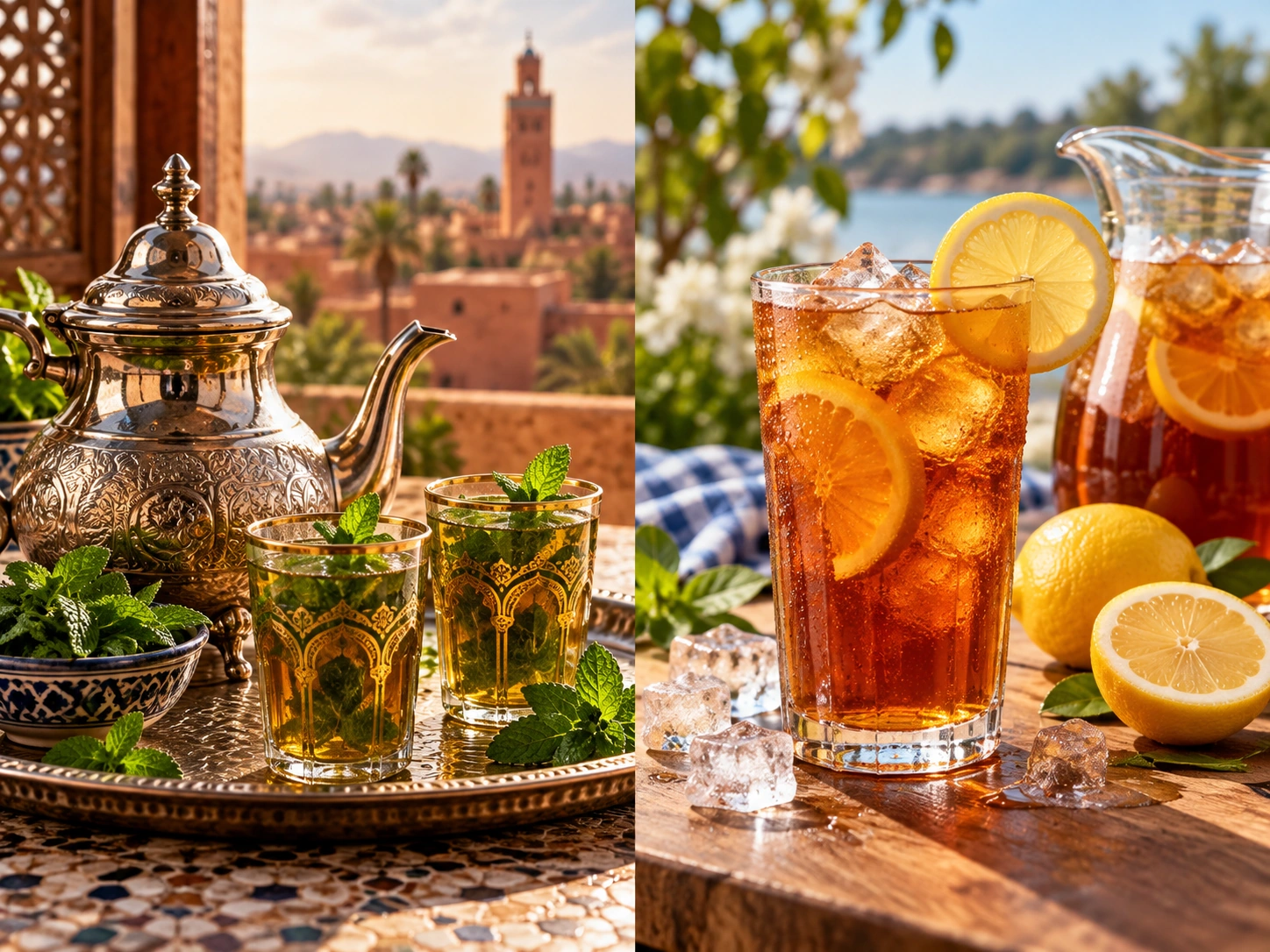
Moroccan mint tea and American iced tea start with a familiar ingredient, tea, but the experiences can feel completely different. Moroccan mint tea is commonly made with green tea, generous fresh mint, and sugar, then served hot in small glasses. American iced tea is a broad family of drinks, often brewed from black tea and chilled, and it may be sweetened or unsweetened. Southern-style sweet tea is just one especially well-known U.S. variation. Neither country has a single tea recipe that every household follows, and that variation is part of the pleasure of comparing them.
This guide explains what goes into each drink, why temperature matters, how sweetness changes the flavor, and how to prepare both with ingredients sold in American grocery stores. It also covers tea etiquette for travelers, make-ahead tips, ingredient substitutions, and common brewing mistakes. If you enjoy food and travel, the two cups offer a small but memorable window into different rhythms of daily life.
Quick Comparison: Moroccan Mint Tea vs American Iced Tea
| Feature | Moroccan mint tea | American iced tea |
|---|---|---|
| Common tea base | Gunpowder-style green tea | Often black tea; other bases exist |
| Distinctive additions | Fresh spearmint; sugar is common | Ice; sugar, lemon, or fruit may be added |
| Serving temperature | Hot | Cold or over ice |
| Typical vessel | Small tea glasses and a teapot | Tall drinking glass or pitcher |
| Flavor profile | Herbal, aromatic, green-tea bitterness balanced by sweetness | Tea-forward, cool, sometimes citrusy or sweet |
| Social setting | Hospitality, family visits, cafés, gatherings | Meals, cafés, cookouts, homes, takeout |
| Brewing approach | Tea is steeped, combined with mint, and served from a pot | Tea is brewed and cooled or chilled |
| Easy first experiment | Make a small pot and adjust sugar | Brew a pitcher and serve with ice |
The table describes recognizable styles, not universal rules. Some Moroccans prefer less sugar or different herbs. Some Americans drink green iced tea, herbal infusions, or hot tea every day. The useful contrast is between two traditions with distinct serving habits, not between imagined national personalities.
What Is Traditional Moroccan Mint Tea?
Moroccan mint tea is often called atay b naanaa, or tea with mint. The familiar version combines green tea, commonly gunpowder tea, with fresh mint and sugar. Gunpowder tea is a style of rolled green tea leaf, not a seasoning. When hot water hits the leaves they unfold and release flavor. Mint adds a vivid aroma and an uplifting herbal note. Sugar is often used generously, although preferences vary by family, season, and host.
The drink is associated with hospitality. It can appear when guests arrive, during conversations, after a meal, or as a welcome at a guesthouse. Service is more than filling a cup: a teapot and small glasses create a shared moment. In many settings the person serving tea pours from above the glass, a practiced motion that can make a layer of bubbles and helps mix the tea. You do not have to imitate the height to make an enjoyable cup at home, particularly when handling hot liquid.
Morocco has many regional and household variations. Fresh mint is particularly prominent, yet other aromatic herbs may appear at different times of year or in different regions. Tea strength, serving size, sweetness, and number of refills also vary. Calling any one recipe the single authentic formula would flatten a living tradition into a tourist souvenir.
For additional context about food and drink in Morocco, consult the Moroccan National Tourist Office’s food and drink guide and our guide to Moroccan food.
What Counts as American Iced Tea?
American iced tea means much more than one bottled drink. At its simplest, it is brewed tea served cold, often with ice. Black tea is common, but green tea and herbal versions are widely available. Some households brew it fresh and refrigerate a pitcher; others use tea bags, concentrate, or ready-to-drink bottles. Lemon slices are familiar, but not mandatory. Sugar, honey, fruit syrups, and zero-calorie sweeteners are choices rather than definitions.
In parts of the American South, sweet tea is an established tradition. It is typically sweetened while the brewed tea is still warm so the sugar dissolves, then cooled. In many other settings, diners are offered unsweetened iced tea and can adjust it themselves. That difference matters when comparing sweetness with Moroccan mint tea: American iced tea is not automatically sugary, even when the same restaurant serves sweet tea nearby.
The serving format also changes how people drink it. Ice dilutes tea gradually; a tall glass encourages larger sips. A pitcher is convenient for family meals and gatherings. The drink can be refreshing on a hot day, but it also works year-round. Just as with Moroccan tea, personal routines mean more than national stereotypes.
Green Tea and Black Tea: Why the Base Changes Flavor
Many people notice the temperature difference first, but tea-leaf processing matters too. Both green and black tea commonly come from the plant Camellia sinensis. Green tea is processed to limit oxidation, while black tea undergoes more extensive oxidation. The resulting flavor profiles differ. Gunpowder green tea can be brisk and slightly astringent, which gives mint and sugar something to balance. Black tea often has a fuller, more robust taste that holds up to chilling and dilution with ice.
Neither is a universally better choice. If you prefer a gentle herbal aroma, Moroccan-style mint tea may be immediately appealing. If you prefer a bold tea flavor with a slice of lemon, black iced tea may be your comfort zone. Brewing time, water temperature, leaf quality, and the amount of tea all influence what ends up in the glass. Over-brewing either can produce bitterness; too little tea can leave the drink watery.
It is also worth remembering that both green and black tea naturally contain caffeine. The amount per serving depends on leaf type, quantity, brewing conditions, and serving size. Do not assume that hot tea is stronger or weaker than iced tea simply because one is served in a smaller glass. Decaffeinated versions are available if caffeine is a concern.
Recipe 1: Moroccan-Style Mint Tea for a U.S. Kitchen
Yield: About four small servings, depending on your glass size.
Equipment: Heat-safe teapot, kettle, strainer if needed, measuring spoon.
Type: Approachable home version, not a claim to represent every Moroccan household.
Ingredients
- 2 teaspoons gunpowder green tea, or another loose green tea suitable for brewing
- 3 cups hot water, plus a small amount for rinsing if desired
- 1 generous handful fresh spearmint, gently rinsed
- 1 to 3 tablespoons sugar, adjusted to preference
- Optional: more mint leaves to garnish the glasses
Method
- Warm the teapot with a little hot water, then discard the warming water. This helps avoid an abrupt temperature change if your pot is designed for hot beverages.
- Add the green tea leaves. Some cooks give the leaves a quick rinse before the main brew. Others keep all the first infusion; this varies and is not required for a good home version.
- Pour in the hot water according to your tea’s brewing guidance. Many green teas benefit from water below a full rolling boil, which can reduce bitterness.
- Let the leaves infuse briefly, then add the rinsed fresh mint and sugar. Begin with less sugar than you think you need; you can add more later.
- Stir gently with a spoon, or pour a little tea into a heat-safe glass and return it carefully to the pot to mix. Handle hot liquid cautiously.
- Taste a small, cooled sip. If it is too strong, dilute it slightly. If the mint is not noticeable, add a little more fresh mint and allow time for it to infuse.
- Serve hot in small glasses. A modest pouring height is enough; dramatic high pours are not essential and can burn an inexperienced cook.
The finished tea should smell fresh and inviting rather than aggressively bitter. Mint quality matters. Brown or wilted leaves may contribute less aroma, so fresh spearmint usually gives the most recognizable result. If you find the drink too sweet, reduce the sugar on the next pot instead of treating a single recipe as mandatory.

Recipe 2: Classic American-Style Iced Tea
Yield: About four tall glasses.
Equipment: Kettle, pitcher, strainer or tea bags, refrigerator.
Type: Basic unsweetened or lightly sweetened black iced tea.
Ingredients
- 4 standard black tea bags, or an equivalent amount of loose black tea
- 4 cups hot water for brewing
- 2 cups cold water, or enough to reach a preferred strength
- Ice for serving
- Optional: lemon wedges, mint leaves, or sugar to taste
Method
- Bring clean water to the temperature recommended for your black tea. Place the tea bags or leaves in a heat-safe vessel.
- Pour in four cups of hot water and steep according to package guidance. Start with a moderate steep rather than chasing strength by leaving tea bags in indefinitely.
- Remove the bags or strain the leaves. If making sweet tea, dissolve sugar in the warm brewed tea now, starting with a modest amount.
- Add the cold water and allow the mixture to cool safely. Refrigerate in a covered container until thoroughly chilled.
- Fill a glass with ice, pour the chilled tea over it, and add a squeeze of lemon if you like.
- Taste after a few minutes. Ice changes the intensity, so you may prefer a somewhat stronger brew than for a hot cup.
This recipe is intentionally flexible. Some people like a darker brew, while others prefer very lightly brewed tea. For a smoother drink, change the tea quantity carefully and use appropriate steep times instead of boiling the tea for a long period. Keep brewed tea refrigerated rather than leaving a pitcher on the counter all day.
What If You Want Moroccan Flavor in an American Iced Tea?
A hybrid can be delicious, provided it is described as a variation rather than a traditional Moroccan serving style. Brew green tea, add mint while the tea is still warm, remove the leaves after infusing, and chill it. Serve the tea with ice and a squeeze of lemon if desired. You get the cooling quality of American iced tea and some of the herbal fragrance associated with Moroccan tea.
The trick is concentration. A cold drink generally seems less aromatic than a hot one because fewer volatile compounds reach your nose. A generous amount of fresh mint can help, but leaving the mint submerged overnight can produce a dull vegetal flavor. Taste the infusion before refrigeration and remove herbs when the balance feels right.
A second hybrid is hot black tea with mint. It will not taste identical to the more recognizable gunpowder green-tea version, yet it can be useful when you cannot find green loose-leaf tea. Reduce steeping times if the black tea starts overpowering the mint. Remember that these are home adaptations, not substitutes for learning how tea is served locally.
Sugar: Comparing Sweetness Without Stereotypes
Both drinks can be sweet, but there is no single meaningful sugar number to assign to a national tea tradition. Many Moroccan hosts prepare tea with generous sugar; many American Southern sweet-tea recipes do the same. At the same time, plenty of people in both countries prefer a less sweet glass. Serving size also changes how much sugar you consume.
If you are making tea for a group, ask before sweetening the entire pot. You can brew a lower-sugar Moroccan-inspired version, offer extra sugar separately, or make two small batches. For iced tea, an unsweetened pitcher with optional sweetener gives guests control. These approaches may depart from a host’s usual service routine but can make a home gathering more comfortable for everyone.
Honey is another possibility, but it changes the flavor. Some people enjoy the floral effect in mint tea, while others prefer sugar because it does not introduce a competing taste. Honey also does not transform tea into a sugar-free beverage. The useful principle is to adjust sweetness intentionally rather than following a recipe without tasting.
Which Drink Fits Different Meals?
Moroccan mint tea pairs naturally with pastries, bread, dates, and leisurely conversation. A glass served with msemen, baghrir or almond sweets can frame the flavors beautifully. That is only one side of the food tradition, though. Many Moroccans drink tea at different times and with different foods; the combination is a habit, not an obligation.
American iced tea is familiar beside grilled meats, sandwiches, salads, picnic dishes, and casual restaurant meals. Unsweetened iced tea can cut through richer foods, while sweet tea supplies a dessert-like contrast to savory or spicy plates. If you are serving Moroccan food to American guests, either drink can work. A cold mint-infused tea may be especially useful at a summer gathering.
Try a tasting with foods from both cultures. Prepare a modest plate of Moroccan-style bread with honey and an American breakfast sandwich, then serve small samples of both teas. Ask which drink best balances each bite. There is no universal winner, but the experiment illustrates how temperature, tannins, herbs, sweetness, and texture interact.
For more dishes to explore, our Moroccan food guide introduces tagine, couscous, pastries, and regional specialties. You can also use our Morocco tours guide to think about how food fits into a longer visit.

What American Travelers Should Know About Tea in Morocco
Tea is often a gesture of welcome. In a home, a riad, or a small shop, being offered a glass can be part of conversation rather than the start of a formal tea-tasting ceremony. Accepting or declining politely is usually more important than knowing a theatrical pouring technique. A friendly thank-you goes a long way.
Do not assume that tea is always free everywhere. In a café it is a purchased drink; in other situations it may be offered by a host. If you are unsure, simply ask. Do not feel pressured to accept repeated refills or to drink tea that is too sweet for your needs. Hosts vary, and considerate communication usually works better than rehearsed rules about what “all Moroccans” expect.
Visitors will often see distinctive small glasses and metal teapots, but you can experience good tea without buying special equipment. The essentials are quality leaves, fresh mint, reasonable brewing, and attention to your guests. While traveling, enjoy the local setting and avoid comparing each glass with an imagined authentic standard.
If a food-focused visit appeals to you, start with the broad Morocco trip itinerary guide and plan enough free time for markets, cafés, and shared meals rather than squeezing a tea break into a five-minute photo stop.
How to Buy the Ingredients in the United States
Most U.S. supermarkets stock black tea, sugar, and lemons, so American iced tea is simple to make. Mint may be available in the produce department, especially at larger stores. Look for spearmint for a flavor closer to common Moroccan preparations. Peppermint has a sharper menthol quality and produces a noticeably different result, though personal preference is entirely valid.
For green tea, the words “gunpowder green tea” refer to the tightly rolled leaves. You may find it in specialty tea shops, Asian markets, online tea retailers, or North African grocery stores. A fresh, reasonably priced tea is often a better investment than decorative serving equipment. Store leaves dry and protected from strong odors. Purchase mint shortly before brewing when possible.
If you use loose tea, a fine strainer can keep sediment out of the serving glasses. If you use tea bags, experiment with smaller batches first because the flavor may differ from rolled loose-leaf tea. Write down the amounts you like. A simple recipe that you can repeat beats an elaborate one that succeeds only by accident.
Common Mistakes and Easy Fixes
The mint tea is too bitter. Water that is too hot, too much leaf, or excessive steeping may be responsible. Use your tea’s brewing recommendations, shorten steeping time, and adjust the green-tea quantity. Adding sugar can mask bitterness but will not improve over-extracted tea itself.
The mint flavor disappears. Use fresh, aromatic mint and let it infuse long enough to contribute flavor. Very strong tea can dominate the herb. Do not rely only on a mint sprig placed in the finished glass for decoration.
The iced tea tastes watery. Ice and added cold water dilute the brew. Start with a slightly concentrated tea, then adjust after chilling. Do not make up for weakness with excessive sugar.
The iced tea becomes cloudy. Cooling certain teas may cause harmless cloudiness from tea compounds. It is usually a visual issue rather than a flavor disaster. For reliable results, follow storage instructions and use clean equipment.
The pitcher tastes stale the next day. Make a fresh batch, cool it promptly, cover it, and refrigerate. Avoid leaving brewed tea sitting warm for extended periods. Clean pitchers well between batches.
The first batch is different from the café version. Restaurants, families, and tea sellers have different ratios and techniques. Ask what kind of tea or mint was used rather than assuming the recipe must be wrong.
Frequently Asked Questions
Is Moroccan mint tea always served hot?
Hot service is the recognizable traditional style. Cold Moroccan-inspired mint tea also exists as a home or café variation, but it should not be confused with the classic small-glass presentation.
Is American iced tea always made with black tea?
No. Black tea is common, but green tea, white tea, and herbal infusions can be served chilled. Some drinks marketed as iced tea are ready-to-drink products with additional flavorings.
Does Moroccan mint tea contain caffeine?
Usually yes, when it uses green tea leaves. Herbal mint infusion without tea leaves is a different beverage and is generally caffeine-free if no caffeinated ingredients are added.
Can I make Moroccan mint tea without sugar?
Yes, for personal preference. The flavor will be more tea-forward and herbal. Since sweetness is customary in many settings, a sugar-free version is best described as your adaptation.
What type of mint works best?
Spearmint is a strong starting point. Other mint types can be pleasant but may change the aromatic profile. Freshness matters as much as the label.
Should I add lemon to Moroccan mint tea?
Lemon is not a necessary element of the familiar mint-tea preparation. Add it if you enjoy the taste, especially for chilled variations, but recognize that it changes the result.
Can I prepare either drink the day before a gathering?
Iced tea is well suited to preparing ahead and refrigerating. Moroccan mint tea usually tastes most aromatic when prepared fresh and served hot. You can organize the ingredients the day before to speed up service.
Final Verdict: Two Good Drinks for Different Moments
Moroccan mint tea and American iced tea are not competing versions of the same recipe. One is often a fragrant hot green-tea drink centered on mint, a teapot, and small glasses. The other is a varied American cold-tea category that can be bold, light, sweet, or unsweetened. Making both teaches you more about the ingredients than arguing about which is best.
Start with a small batch of each. Adjust strength and sweetness, taste them beside different foods, and notice how serving temperature changes your impression. If Morocco is on your travel list, leave room for a slow tea break. It may teach you as much about daily hospitality as any planned sightseeing stop.