


Table of Contents
Moroccan tagine and American beef stew share a comforting idea: cook affordable cuts slowly until they become tender and flavorful. Their differences lie in the pot, the amount of liquid, the seasoning, and the accompaniments that make a meal feel familiar. A Moroccan tagine often builds flavor around onions, herbs, warm spices, and sometimes olives, preserved lemon, dried fruit, or vegetables. American beef stew commonly leans on browned beef, potatoes, carrots, onions, stock, and herbs. Both traditions have many versions, so there is no single recipe that speaks for a whole country.
If you are comfortable making stew in a Dutch oven, you already have skills that transfer to Moroccan food. If you have tried tagine on a trip to Marrakech or Fes, you may wonder whether a dedicated clay pot is necessary to recreate those flavors at home. The short answer is no. A heavy covered pot is a practical alternative, although the serving experience and evaporation may differ.
This article compares the dishes in a useful way, shows how to choose the right beef, explains cooking safety, and gives two approachable recipes with measurements that work in a typical American kitchen. It also points out which changes are respectful adaptations and which claims about authenticity deserve skepticism.
Quick Comparison: Tagine vs American Beef Stew
| Feature | Moroccan-style beef tagine | American-style beef stew |
|---|---|---|
| Cooking vessel | Tagine pot or heavy covered pot | Dutch oven or stockpot |
| Typical meat | Beef or lamb, depending on dish | Commonly beef chuck |
| Flavor approach | Ginger, cumin, turmeric, paprika, herbs; varied by recipe | Onion, garlic, bay, thyme, black pepper |
| Vegetables | Vary by dish; carrots, potatoes, peas, tomatoes and others | Often potatoes, carrots, celery and onions |
| Liquid level | Can be relatively modest | Often enough stock for a generous gravy |
| Texture | Tender pieces with a concentrated sauce | Tender beef and vegetables in broth or gravy |
| Common accompaniment | Moroccan bread, sometimes couscous depending on meal | Bread, biscuits or an all-in-one bowl |
| Serving approach | Often presented at the table in its cooking vessel | Ladled into individual bowls |
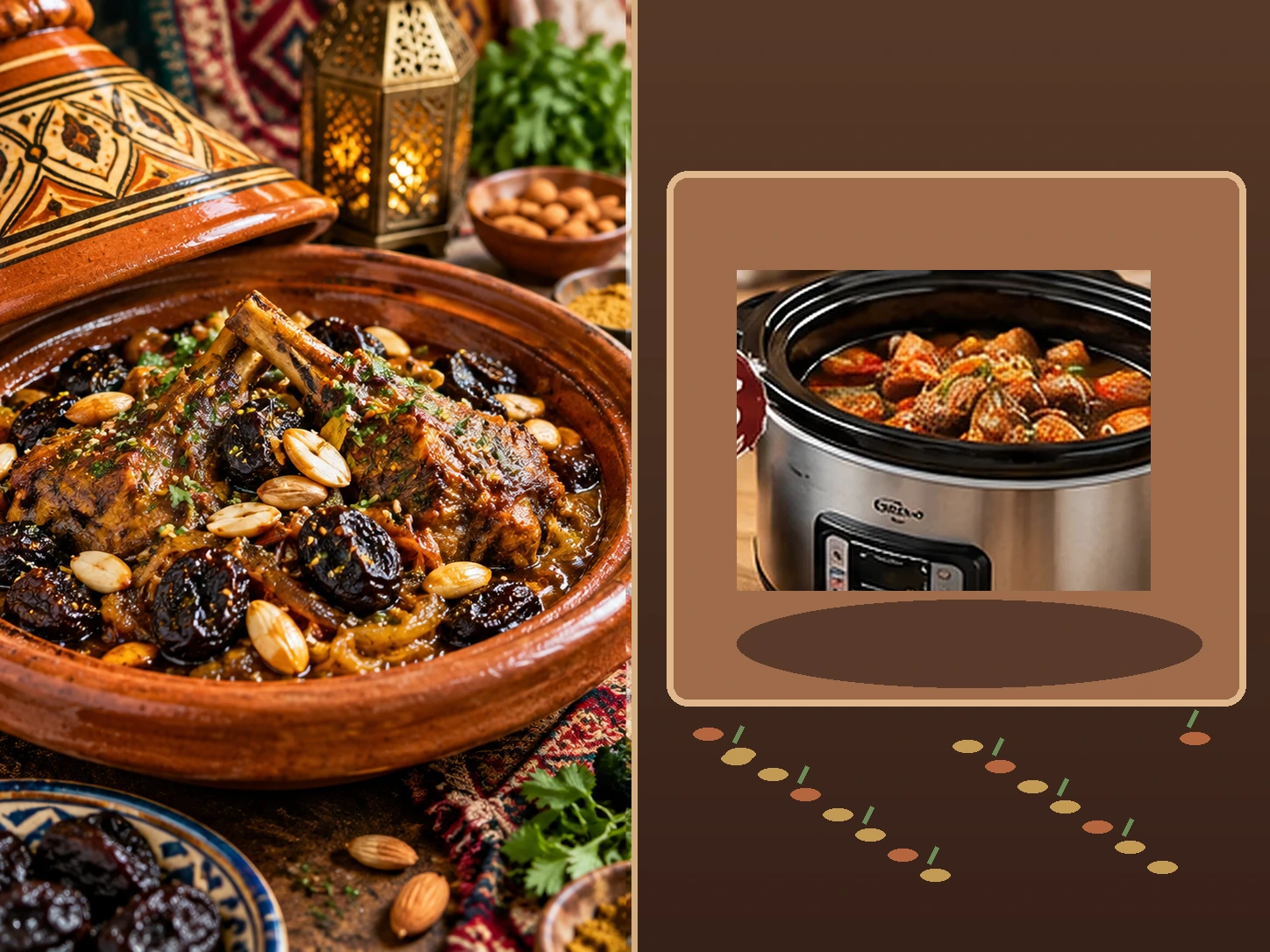
A tagine is both a vessel and the name used for many dishes. It is not a single recipe, any more than “stew” identifies only one combination of ingredients. A tagine with chicken and preserved lemon will taste very different from a beef tagine with prunes and almonds. For a wider picture, see our Moroccan food guide.
What Exactly Is a Moroccan Tagine?
The familiar tagine vessel is a shallow base with a tall conical or domed lid. The lid helps retain moisture as food cooks. Traditionally, many versions were prepared over controlled charcoal heat, but modern cooks also use stovetops, ovens, and heavy pots. Clay and ceramic tagines vary: some are intended for cooking, while decorative serving tagines are not. Always check the manufacturer’s instructions before exposing a pot to heat.
The dish itself is flexible. Some recipes begin with sliced onions as a bed beneath meat. Others use a tomato-based sauce, a generous amount of fresh parsley and cilantro, or a mixture of ground spices. Potatoes, carrots, peas, zucchini, eggplant, artichokes and dried fruit can play different roles in particular dishes. One tagine may be savory and bright with olives and preserved lemon; another may combine meat and a sweet-spiced topping of prunes.
An important difference from some American braises is that tagines are often built with relatively little added liquid. Ingredients release moisture as they cook; the covered vessel helps retain it. This can concentrate flavor, but it does not mean a tagine should ever be left to burn. If a stovetop batch looks dry, add a little water as needed and reduce the heat.
What Makes American Beef Stew Familiar?
A basic American beef stew usually features bite-sized beef, root vegetables, stock, and herbs, cooked until the meat softens. Many recipes call for browning the beef first. That creates roasted, savory flavors on the meat and in the pot. The cook may then sauté vegetables, deglaze, add stock, and let the mixture simmer slowly. Flour or another thickener may give the broth more body.
The dish is especially convenient in a Dutch oven because a heavy metal pot distributes heat, handles browning well, and can move from stovetop to oven if it is oven-safe. Slow cookers and pressure cookers are also popular approaches, each with different liquid needs and timing. A generous bowl can include protein, vegetables, and starch, which makes the meal easy to serve without additional side dishes.
American stew is not a fixed national formula. Households add tomatoes, mushrooms, red wine, Worcestershire sauce, peas, or other ingredients depending on their region and preferences. Some versions are brothy, others thick. The most useful comparison is therefore between common methods, not a claim that American stew is always bland or that Moroccan cooking always uses many spices.
The Pot: Do You Need a Tagine to Cook Tagine?
No. A Dutch oven, heavy saucepan, or other well-fitting covered pot can produce tender meat and a flavorful Moroccan-inspired sauce. A dedicated tagine can be delightful for presentation and for learning its particular gentle-cooking rhythm, but the recipe is more important than owning an expensive piece of cookware.
If you use earthenware, read the product’s directions. Some unglazed clay pots require preparation, some glazed pots have restrictions, and some ceramic pieces cannot be used directly over a burner. Sudden temperature changes can crack certain materials. Never assume a decorative tagine bought as a souvenir is safe on a gas flame or induction hob.
With a Dutch oven, you have the advantage of easier browning and more familiar heat control. Use a tight-fitting lid and moderate heat. If the sauce seems watery at the end, uncover briefly to reduce it, rather than cranking up the heat early and risking tough meat. If it is getting dry, add small amounts of hot water or stock.

The Spice Question: Warm, Aromatic, and Balanced
A Moroccan-style beef tagine might use ginger, turmeric, cumin, black pepper, paprika, saffron, or cinnamon, depending on the recipe. Not every tagine contains all of these. Many dishes rely on a small, intentional set of seasonings rather than an indiscriminate spice blend. Fresh parsley and cilantro also matter. Their flavor can lift a long-cooked dish that might otherwise feel heavy.
Ras el hanout is a Moroccan spice blend with no universal recipe. It can be useful, but do not assume you must buy an elaborate mix to make tagine. You can build a delicious dish with cumin, ginger, turmeric, and paprika from an ordinary U.S. spice aisle. Whole spices stay aromatic longer than old ground spices, so freshness matters more than a dramatic number of ingredients.
Classic American beef stew often emphasizes herbs like thyme and bay leaf alongside black pepper, garlic, and onion. Browning and stock supply a savory base. Neither system is inherently superior. The contrast is about where flavor comes from. A cook can choose a restrained Moroccan combination or make a highly aromatic American stew with local herbs. Taste as you go rather than dumping in more spice to create the impression of boldness.
Choosing Beef for Both Dishes
Chuck roast is a dependable, widely available U.S. choice for slow cooking. It contains connective tissue that becomes tender with sufficient moist heat and time. Look for pieces with reasonable marbling and trim away only excessive hard fat. Precut “stew meat” can be convenient but may combine different cuts, causing uneven texture. Buying a whole chuck roast and cutting it yourself offers more control.
Shank and other tougher cuts can also work, sometimes with even longer cooking. Very lean steak cuts are usually less suitable for prolonged stewing because they can dry out. Cut pieces to reasonably similar sizes so they cook evenly. Large pieces take longer but can retain more moisture; small cubes cook faster but may become stringy if simmered too vigorously.
Do not confuse tenderness with an objective safety temperature. Food safety guidance for intact cuts of beef sets a minimum temperature and rest time, but stews generally continue far beyond that minimum to soften connective tissue. Use a food thermometer when appropriate and avoid tasting undercooked meat or using the same utensils for raw and cooked ingredients. The USDA safe temperature chart is a useful reference.
Recipe 1: Approachable Moroccan-Style Beef and Vegetable Tagine
Serves: 4 to 5.
Prep: 20–25 minutes.
Cook: About 2 to 3 hours at a gentle simmer, depending on cut and pot.
Pot: A heavy Dutch oven with lid or a cooking-safe tagine used according to the manufacturer’s directions.
Ingredients
- 2 pounds beef chuck roast, cut into roughly 1½-inch pieces
- 2 tablespoons olive oil
- 2 medium onions, thinly sliced
- 3 garlic cloves, finely chopped
- 2 medium carrots, cut into large pieces
- 2 small potatoes, cut into chunks
- 1 teaspoon ground ginger
- 1 teaspoon ground cumin
- 1 teaspoon paprika
- ½ teaspoon ground turmeric
- ½ teaspoon black pepper
- 1 teaspoon salt to start, adjusted at the end
- 2 tablespoons chopped parsley
- 2 tablespoons chopped cilantro, or more parsley if preferred
- 1 to 1½ cups water or unsalted stock, plus more as needed
- Optional: a small piece of preserved lemon added toward the end, or a few green olives
Step-by-Step Method
- Pat the beef dry with clean paper towels and prepare the vegetables. Wash your hands and tools after handling raw meat.
- Heat the oil in a heavy pot over moderate heat. Add onions with a small pinch of salt and cook until they begin to soften. You can brown some beef lightly in batches first if you prefer, but this is not necessary for every tagine style.
- Stir in garlic, ginger, cumin, paprika, turmeric, and black pepper. Cook briefly just until fragrant; ground spices can burn if left in dry, high heat.
- Add the beef and turn the pieces so the seasoning and onions coat them. Add the herbs and about a cup of water or stock. You want moisture for a gentle simmer, not necessarily a pot filled to the rim.
- Cover and cook over low heat. Check periodically, adding a small splash of water if the bottom looks dry. Avoid a hard boil; gentle bubbling is enough.
- When the beef has begun to soften, add carrots and potatoes. The timing varies with the cut, but adding vegetables later helps them keep their shape. Cook until both beef and vegetables are tender.
- If using olives or preserved lemon, add them toward the end and taste before adding more salt. Both can contribute considerable salinity.
- Reduce the sauce uncovered for a short time if it is too thin, or add a little water if it is too concentrated. Serve warm with Moroccan bread or your chosen accompaniment.
This method is designed to be achievable rather than ceremonial. In Morocco, cooks may layer vegetables attractively in a tagine vessel or use a different order and spice mix. A home cook working with a Dutch oven can still learn the flavor principles without pretending the equipment and method are identical.
Recipe 2: Simple American-Style Beef Stew
Serves: 4 to 6.
Prep: About 25 minutes.
Cook: Roughly 2 to 3 hours, with tenderness as the final guide.
Pot: Heavy Dutch oven or sturdy stockpot.
Ingredients
- 2 pounds beef chuck, cut into even chunks
- 2 tablespoons neutral cooking oil
- 1 large yellow onion, diced
- 2 carrots, sliced thickly
- 2 celery stalks, sliced
- 3 medium potatoes, cubed
- 2 garlic cloves, minced
- 3 cups low-sodium beef stock, with more if needed
- 1 tablespoon tomato paste, optional
- 1 teaspoon dried thyme
- 1 bay leaf
- Salt and black pepper to taste
- Optional: 1 tablespoon flour or cornstarch slurry for thickening later
Step-by-Step Method
- Dry the beef, season lightly, and brown it in batches over medium-high heat. Leave space between the pieces so they brown instead of steaming.
- Transfer the meat to a clean plate. Lower the heat, add onions and celery, and cook until they begin to soften. Stir in garlic and tomato paste, if using.
- Add a little stock and scrape up the browned bits from the pot. These contribute flavor. Return the beef and add the remaining stock, thyme, and bay leaf.
- Cover and maintain a very gentle simmer until the beef starts to tenderize. Depending on the size and cut, that may take around 90 minutes or longer.
- Add carrots and potatoes, then simmer until the vegetables are cooked and the beef is fork-tender. Add stock or water as needed to keep the consistency you want.
- Taste and season. If you want thicker gravy, add a small amount of a properly mixed slurry and simmer until thickened. Remove the bay leaf before serving.
- Serve hot in bowls. Cool leftovers promptly in shallow containers and refrigerate according to food safety guidance.

Why One Dish Can Taste Brighter and the Other Richer
The contrast often comes from the sauce. A Moroccan preparation with herbs, olives, or preserved lemon can deliver a sharp or fragrant note through a relatively concentrated base. American beef stew with rich stock and deeply browned meat may feel rounder and more gravy-like. These are tendencies, not rules. Add olives to the wrong dish at the wrong moment and the salt can overwhelm everything; add too much stock to a tagine and the carefully layered seasonings can become diluted.
If you are testing the recipes side by side, use the same cut of beef and cook both gently. That controls some of the biggest variables. Notice whether the onion breaks down differently, how the sauce clings to potatoes, and whether fresh herbs improve the finish. This kind of tasting teaches practical skills instead of asking which culture has “better” comfort food.
How to Convert an American Stew into a Moroccan-Inspired Meal
Do not simply add a huge scoop of ras el hanout to a finished bowl. Think in layers. Start with onion, a moderate amount of cumin and ginger, and a small amount of turmeric or paprika. Consider replacing a portion of the stock with water to create a less gravy-heavy base. Introduce parsley or cilantro and finish with a little preserved lemon or olives if the combination suits the vegetables and meat.
Keep the original dish’s structure if you prefer it. A beef stew containing carrots and potatoes can take inspiration from Moroccan seasoning without being advertised as traditional Moroccan tagine. Calling it a Moroccan-inspired stew is accurate and welcoming. Food traditions grow through exchange, but careful labeling lets readers understand where a variation came from.
Another useful experiment is changing only one variable at a time. Keep the vegetables the same and swap the seasoning. On a second cooking day, use the Moroccan seasoning but reduce the stock. On a third day, serve with bread rather than a bowl of stew. You will learn whether the strongest impression comes from spices, sauce texture, or serving style.
Serving Tagine in Morocco vs Serving Stew in the USA
In Moroccan homes and restaurants, tagine is often shared, with pieces of bread used to gather food and sauce. Serving styles differ depending on household and setting, and utensils are also used. If you are visiting, look at how your host or fellow diners eat instead of arriving with a rigid rule. A small courtesy is to reach toward the portion nearest you when sharing a central dish.
American stew is commonly served in bowls, with a spoon and perhaps bread on the side. The bowl suits a soupier texture and helps contain gravy. A home cook can offer both styles without insisting that one is more civilized or more authentic. Presentation changes pace and social experience, but both formats encourage a satisfying shared meal.
Food can be a useful way to choose a travel route. Marrakech is known for market food and dishes such as tanjia, while Fes has its own celebrated culinary traditions. Our Morocco itinerary guide covers how to connect major cities, and the Morocco tours collection offers ideas for travelers interested in combining food with cultural experiences.
Storage, Reheating, and Food Safety
Both dishes make useful leftovers, but big pots cool slowly. Divide leftovers into shallow, covered containers and refrigerate promptly rather than leaving the entire pot at room temperature for hours. Follow the USDA’s guidance on storing and reheating cooked foods; the agency’s leftovers and food safety resource explains timing, refrigeration, and reheating.
For reheating, bring portions up to the recommended safe temperature and stir so the center warms evenly. Add a little liquid if the sauce has thickened in the fridge. Do not assume that a dish is safe because it smells pleasant or because it was cooked with spices. Foodborne bacteria are not reliably detected by smell.
If freezing, portion the food into meal-sized containers with enough space for expansion. Potatoes may become softer after freezing and reheating, but that is a texture issue rather than a reason to avoid saving a good meal. Label containers with a date so you are not conducting archaeological research in your own freezer months later.
Common Mistakes and How to Avoid Them
Boiling the meat aggressively: Tough cuts need sufficient time and controlled moist heat. High heat may tighten muscle fibers while the connective tissue has not yet softened. Lower the simmer and be patient.
Adding too much liquid to tagine: Begin with less liquid than you might use for American stew, then monitor the pot. The goal is a concentrated sauce without scorching.
Putting vegetables in too early: Potatoes and carrots can become mushy if they cook as long as the meat. Add them when the beef is partway to tenderness.
Using old spices: Ground seasonings lose aroma over time. Use reasonably fresh spices and taste in stages rather than relying on a large measured amount to compensate.
Confusing decorative and cooking clay: Check that a tagine vessel is explicitly rated for the heat source you intend to use. A pretty lid does not make every ceramic item stovetop-safe.
Calling all Moroccan stews tagine: Names vary by dish and region. Be descriptive and precise instead of declaring every tomato-and-cumin meal an authentic tagine.
Frequently Asked Questions
Is a Moroccan tagine just a stew?
Tagine dishes often use slow, moist cooking and can fit a broad definition of stew, but the term also refers to a particular cooking vessel and Moroccan traditions of seasoning and serving. The words overlap without being perfect synonyms.
Can I cook tagine without a clay tagine pot?
Yes. A Dutch oven or other heavy pot with a good lid works for many home adaptations. Adjust liquid and heat according to the equipment.
Which beef cut is best?
Chuck is a practical U.S. choice for both dishes because its connective tissue responds well to slow cooking. Other tough cuts can work with appropriate time.
Do all Moroccan tagines contain cinnamon?
No. Some preparations, especially certain sweet-savory combinations, use cinnamon. Others use ginger, turmeric, cumin, or other seasonings without it.
Is American beef stew always thick?
No. Some versions have gravy, while others are more brothy. The amount of stock and any thickener determine the final texture.
Can I use a slow cooker for either dish?
A slow cooker can work for adapted versions. Follow the manufacturer’s safety directions and use a recipe designed for the appliance. Liquid evaporation differs from a stovetop pot, so do not copy quantities blindly.
Is tagine spicy-hot?
Not necessarily. Moroccan tagines may be aromatic and richly seasoned without being chili-hot. Harissa or hot peppers may be served separately or included in particular preparations.
Final Verdict: Shared Technique, Different Personalities
Moroccan tagine and American beef stew are cousins in method but distinctive in flavor and presentation. Both reward patience, thoughtful seasoning, and a cut of meat suited to moist heat. Tagine offers an opportunity to explore fragrant spices and concentrated sauce; American beef stew is a dependable example of stock-based comfort cooking. Try both methods, note which steps matter, and bring the skills you learn from one pot into the other.
If you later visit Morocco, tasting a well-prepared tagine in its local setting adds a dimension no home recipe can fully copy. Until then, a heavy pot, a few fresh spices, and careful simmering can take you surprisingly far.