


Table of Contents
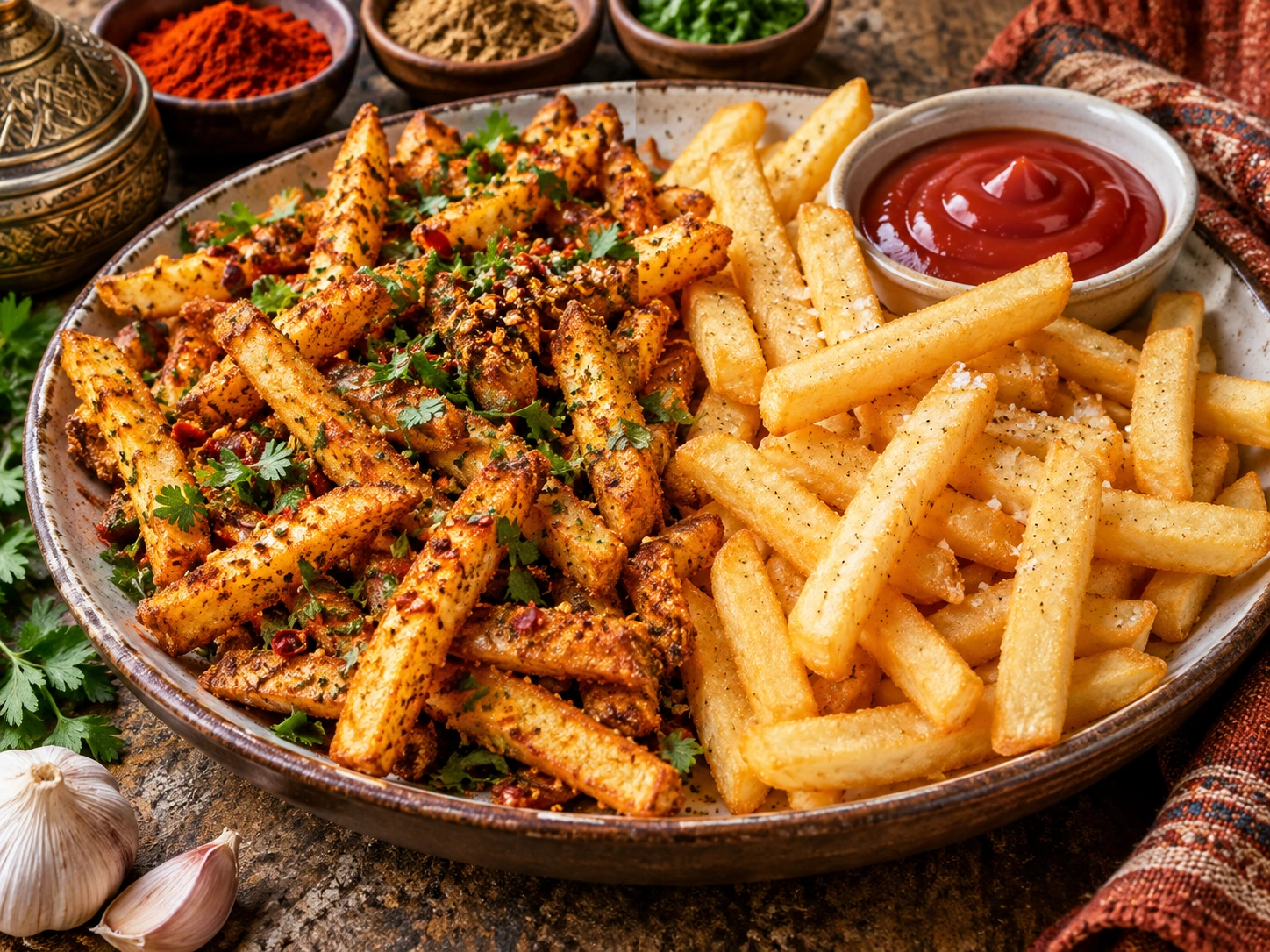
A good French fry seasoning begins with salt, but it does not have to end there. American-style blends often build on salt, garlic, onion powder, paprika and pepper. A Moroccan-inspired version can use cumin, paprika, herbs and a subtle touch of warm spice. The difference is not that every French fry in Morocco tastes one way and every fry in the United States tastes another. The interesting difference is what happens when you borrow flavor principles from two cooking traditions and apply them thoughtfully to the same potato.
French fries are eaten in Morocco as well as in the United States, often with sandwiches, grilled foods and casual meals. There is no one national Moroccan fry seasoning. That is precisely why this comparison should be described as a kitchen experiment, not a rigid cultural claim. Below are two flexible seasoning formulas, plus ways to keep fries crispy in the oven, air fryer or pan.
What Is French Fry Seasoning?
French fry seasoning is a mixture applied to potatoes before or after cooking. The simplest version is salt. More elaborate commercial blends can include garlic, onion, smoked paprika, pepper, sugar, flavor enhancers or anti-caking ingredients. Homemade blends let you decide how much of each ingredient you want, and whether the fries should be spicy, smoky, lemony or herbaceous.
Timing matters. Fine salt clings easily to hot fries, while coarse dried herbs can fall off. Some powders toast when heated, but others can burn if added before a very hot frying process. Fresh herbs and lemon zest usually work best at the finish. Your seasoning strategy should suit the cooking method rather than treating the seasoning as a decorative afterthought.
The best blend is one that makes the potato taste better without overwhelming it. A slightly uneven homemade mix can be more appealing than a powerful prepackaged shaker if the latter masks the taste of the actual fries.
American vs Moroccan-Inspired Seasoning at a Glance
| Feature | Familiar American-style blend | Moroccan-inspired blend |
|---|---|---|
| Starting point | Salt and pepper | Salt, cumin and paprika |
| Additional aromatics | Garlic and onion powder | Garlic, parsley or cilantro |
| Optional heat | Cayenne or chili powder | Chili flakes or a pinch of hot paprika |
| Smoky note | Smoked paprika | Sweet or smoked paprika, by preference |
| Fresh finish | Parsley or ranch-style dip | Lemon zest, fresh herbs or lemon wedge |
| Best pairing | Burgers, sandwiches, fried chicken | Grilled vegetables, chicken, fish or spiced chickpeas |
These are suggested profiles for American home cooks, not claims that either country has a legally defined fry-seasoning formula. Regional preferences, restaurants and individual households vary enormously.
Recipe 1: Easy American-Style French Fry Seasoning
For approximately four servings of fries, combine 1 teaspoon fine salt, ½ teaspoon sweet or smoked paprika, ½ teaspoon garlic powder, ¼ teaspoon onion powder and ¼ teaspoon black pepper. If you enjoy heat, add a pinch of cayenne. Mix well so that the tiny amount of hot spice distributes evenly.
Start by using only part of the blend, especially if the potatoes were salted before cooking. Taste one fry before adding more. Fine-grain spices disperse better if you shake the finished fries in a roomy bowl instead of sprinkling only the top layer. This simple mixture also works on roasted potato wedges, though thick wedges may need a little extra seasoning because of their larger centers.
Garlic and onion powders are convenient because they supply aromatic flavor without adding moisture. The downside is that large amounts can taste dusty or harsh. If that happens, reduce the powders and add a little fresh parsley after cooking. You want a balanced snack, not garlic-flavored sand.
Recipe 2: Moroccan-Inspired Cumin and Paprika Fries
For four servings, combine ¾ teaspoon fine salt, ¾ teaspoon sweet paprika, ½ teaspoon ground cumin, ¼ teaspoon garlic powder and ¼ teaspoon black pepper. If desired, add a very small pinch of ground coriander or chili flakes. Finish cooked fries with chopped parsley and a squeeze of lemon on the side, not poured all over the fries.
Ground cumin provides a warm, earthy note that pairs naturally with potatoes and tomato-based dips. Paprika adds color and gentle sweetness. Fresh herbs introduce contrast. Although Moroccan cuisine also uses ras el hanout, it is not necessary here, and there is no reason to imply that every Moroccan fry vendor sprinkles the blend on potatoes. If you experiment with ras el hanout, start with a tiny amount because commercial blends differ widely.
For the clearest comparison, prepare one plain batch of fries and divide it into two bowls. Season half with the familiar American blend and half with the Moroccan-inspired mixture. Taste them at the same temperature, ideally with water between samples. This tells you whether you actually prefer cumin, paprika or a more garlic-forward finish.

How to Get Crispy Oven Fries
Crispness depends on potato variety, how the pieces are cut, surface moisture, oil quantity and heat circulation. Cut potatoes to similar thickness so some do not burn while others remain undercooked. Rinse or soak if your preferred method uses that step, then dry the potatoes thoroughly. Water on the surface encourages steaming rather than browning.
Toss with a modest amount of oil and spread in a single layer on a large pan. Crowded potatoes trap moisture. A preheated oven and hot tray can help, though exact oven settings depend on slice thickness and equipment. Turn the fries when the undersides brown and continue until the interior is tender and the edges are crisp. Salt and delicate herbs are often best added immediately afterward.
For a practical starting experiment, try 425°F (220°C) with medium-cut fries, checking early and adjusting for your oven. This is an illustrative cooking approach rather than a guarantee of a particular finishing time. Very thin shoestring fries and thick steak fries behave differently. Never assume a timer replaces looking at the food.
Air Fryer Fries: How Seasoning Changes
Air fryers circulate hot air, which makes spacing important. Cook in manageable batches rather than packing the basket tightly. Dry the potatoes well and coat lightly with oil. Shake the basket when appropriate for your machine, taking care not to spill hot food. Add finishing salt and herbs in a bowl after cooking so loose powders do not scatter through the appliance.
Some spice blends can darken quickly in an air fryer, especially those containing sugar or a high proportion of paprika. If this happens, use a little less spice before cooking and add the remainder afterward. The Moroccan-inspired blend works well as a post-cooking finish because cumin and paprika can be tasted clearly without needing prolonged roasting.
Frozen commercial fries may already contain salt or coatings. Read the package before using the full recipe quantity. Home cooks sometimes blame their seasoning when the real problem is that the underlying product was already quite salty.
Deep-Fried Potatoes and Safe Handling
Deep frying produces a different surface texture because hot oil contacts the potato more directly. Use a suitable stable pot or fryer, avoid overfilling and keep water away from hot oil. Never place wet potatoes directly into an overcrowded fryer. Follow appliance instructions, monitor the heat and keep children and pets away from the cooking area.
Once the fries are drained, season while hot in a large bowl. This is where finely ground salt and paprika adhere well. Avoid putting damp herbs directly into very hot frying oil simply to infuse flavor; fresh herbs are easier to manage at the table. A homemade seasoning should make the meal enjoyable without introducing unnecessary kitchen hazards.
If you would rather avoid deep frying, an oven or air fryer can still produce a satisfying result. The appropriate technique is the one you can repeat confidently and safely.
Why Moroccan Spices Pair So Well with Potatoes
Potatoes are mild, so they provide room for cumin, paprika and garlic to stand out. Those spices are familiar in many Moroccan dishes, including vegetable preparations and chermoula-inspired mixtures, though combinations vary. The Moroccan National Tourist Office’s gastronomy overview describes cumin, coriander and other spices as part of the country’s culinary culture.
The key is restraint. Ground cumin can become dominant quickly. A little paprika provides warmth without making every bite taste of red pepper. Lemon at the table brightens the dish and balances richness. Think of these seasonings as a conversation with the potato, not a substitute for it.
If you want more Moroccan food context beyond fries, explore our Moroccan food guide for traditional meals that make fuller use of these flavor families.
Five Dipping Sauces Worth Trying
1. Ketchup with cumin: Stir a small pinch of cumin and a few drops of lemon into regular ketchup. The point is a gentle warm background, not a thick spice paste. 2. Yogurt and herbs: Combine plain yogurt, grated garlic, parsley, lemon and a pinch of salt. This cool dip is particularly useful if your fries contain chili.
3. Harissa-yogurt dip: Mix a little North African harissa into yogurt. Harissa is strongly associated with Tunisia and also appears in neighboring cuisines, including Moroccan contexts; it should not be presented as an exclusively Moroccan invention. 4. Garlic-lemon mayonnaise: Make a simple lemony aioli-style dip using commercial mayonnaise, lemon and finely grated garlic. 5. Tomato and roasted pepper dip: Blend roasted pepper, tomato and cumin for a tangy option inspired by Moroccan vegetable flavors.
Keep chilled dips refrigerated until serving, and do not leave perishable sauces unrefrigerated for a long gathering. For general guidance, the USDA food-safety basics describe safe time and temperature practices.
Which Potatoes Work Best?
Starchy potatoes such as Russets are a common choice in American fry recipes because their interiors can become fluffy while the exterior browns. Other varieties can make good fries but differ in moisture and texture. Waxy potatoes may hold their shape well, yet the finished mouthfeel can be less fluffy. Rather than assuming one variety is universally correct, choose based on whether you want thin crisp fries or substantial wedges.
Cutting consistency is more important than arguing over a single brand of potato. Thick slices require more time than thin ones, and uneven pieces defeat even a good oven. If you use frozen fries, the product may already be prepared for crispness and only need careful cooking plus a light final seasoning.
The spice recipe works on sweet potatoes too, although their sugars make browning different. Because the flavor is sweeter, a little cumin or chili can be especially pleasant. Adjust salt and cook time rather than treating sweet potato and white potato as perfectly identical materials.
Common Seasoning Mistakes
Over-salting: Begin with part of the blend and taste. Adding herbs too early: Fresh parsley can darken or dry out if roasted at high temperatures. Using coarse spice flakes: These tend to fall to the bottom of the bowl unless lightly crushed. Crowding the pan: No amount of paprika can rescue fries that steamed instead of browned.
Using too much cumin: The result can taste bitter or dusty. Forgetting acid: A lemon wedge or fresh tomato dip may make the seasonings feel brighter. Relying on appearance alone: Paprika can color potatoes before the interior is cooked. Bite one to check texture when it is safe to do so.
A final mistake is naming your experiment as though it were a national tradition. “Moroccan-inspired fries” is more accurate than claiming that one blend is how all Moroccans season their potatoes.

How to Serve These Fries with a Moroccan Meal
Cumin-and-paprika potatoes fit alongside grilled sardines, roast chicken, vegetable salads or a simple omelet. They also work as part of a casual sandwich meal. If your dinner already contains a richly spiced tagine, consider keeping the fries simple so the seasoning does not compete with the main dish.
Travelers interested in the everyday food scene can compare how cafés, sandwich shops and homes present potato sides. That is a more realistic food discovery than expecting each plate to match an online photo. If you are planning a trip, our Morocco tours and travel FAQ provide a starting point for cities and practical questions.
Frequently Asked Questions
What is the best seasoning for French fries?
For a familiar American profile, start with salt, garlic, paprika and pepper. For a Moroccan-inspired twist, use cumin and paprika with fresh herbs. The best combination depends on your taste and dipping sauce.
Do you season fries before or after cooking?
You can use a little seasoning before cooking, but final salt and delicate herbs often taste best on hot finished fries. Adjust timing for deep frying, oven roasting or air frying.
Is ras el hanout a traditional fry seasoning?
Ras el hanout is a Moroccan spice blend, but there is no need to claim it is a universal topping for fries. It can be an optional experiment used sparingly.
Can I prepare the seasoning in advance?
Yes. Mix dry spices and keep them sealed in a cool, dry place. Add fresh herbs and lemon when serving, and check that the spices still smell aromatic before use.
How do I keep fries from tasting too salty?
Start with a small amount of seasoning, especially when using frozen or packaged fries. Toss thoroughly, taste and add more gradually. Acidity brightens flavors but does not chemically remove excess salt.
What makes fries crispy in the oven?
Surface dryness, enough space, appropriate oil, a hot oven and even cuts are major factors. Seasoning alone does not create a crisp crust.
Are these fries spicy?
Neither suggested blend needs to be hot. Sweet paprika and cumin add flavor without much heat. Add cayenne or chili only if desired.
What sauce pairs best with cumin fries?
A lemony yogurt-herb dip or a simple tomato-based sauce complements cumin well. Choose a dip that balances the fries rather than repeating every spice in the bowl.
Final Verdict
French fry seasoning is a simple place to explore two flavor directions. The American-style mix highlights garlic, onion and paprika; a Moroccan-inspired version centers cumin, paprika and herbs. Neither should be mistaken for every household’s daily practice. Prepare one batch of well-cooked potatoes, divide it, test the blends and keep the version you actually enjoy.