


Table of Contents
Yes, olive oil is a good choice for roasted vegetables. It helps coat the surfaces, contributes flavor and encourages even browning when the vegetables have enough space on the baking sheet. Extra-virgin olive oil is a familiar option for everyday roasting, although cooks should avoid leaving an empty, oil-coated pan in a very hot oven until it smokes. The more important variables are how much oil you use, the size of the pieces, the moisture in the vegetables and whether the pan is overcrowded.
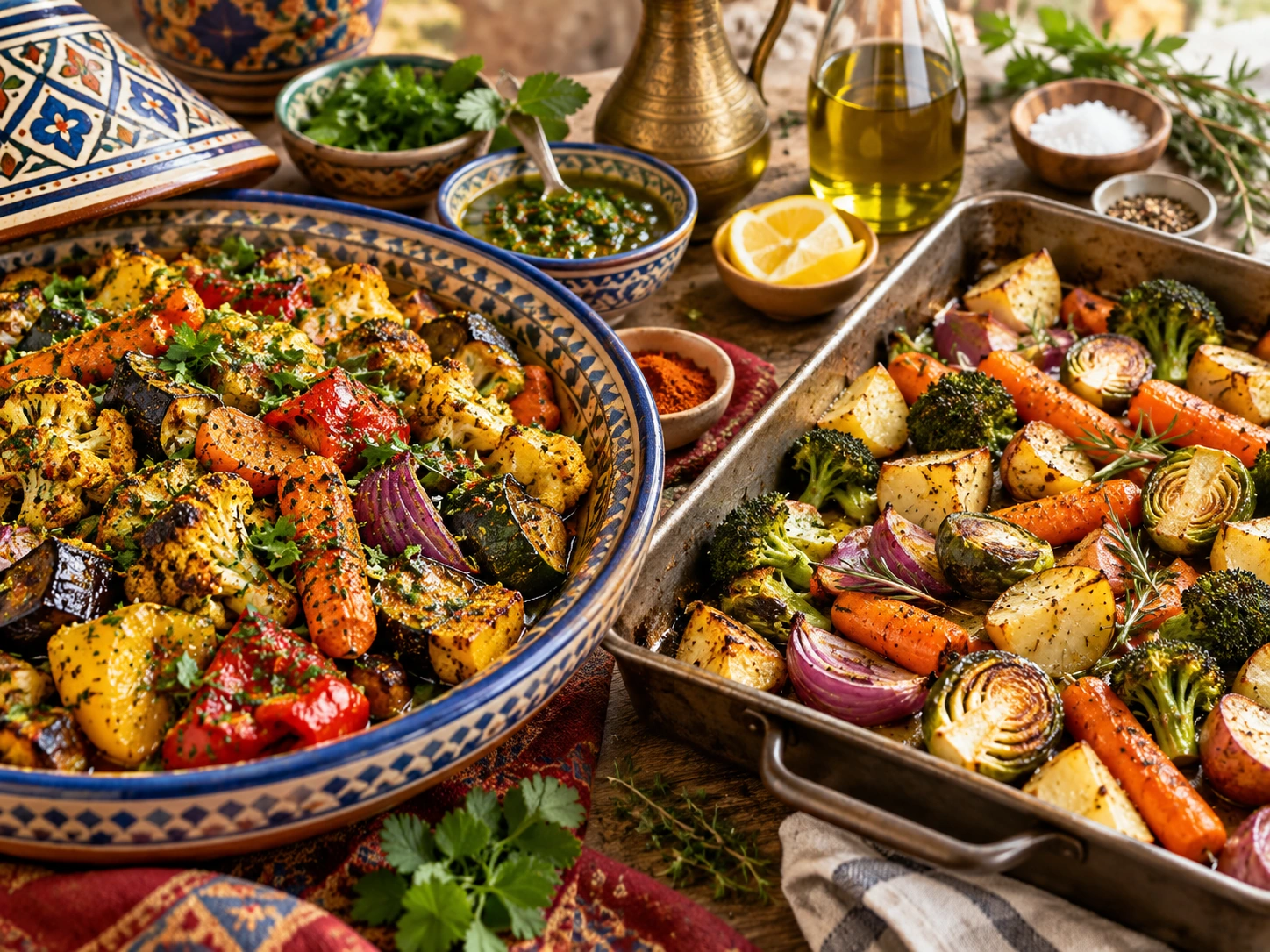
To take a familiar American sheet-pan side dish in a Moroccan-inspired direction, finish it with chermoula: a bright, herb-forward combination often made with parsley, cilantro, garlic, cumin, paprika, lemon and olive oil. Moroccan preparations vary between homes and regions. Here we use chermoula as a finishing sauce so that fresh herbs remain fragrant rather than spending half an hour in the oven.
This guide starts with basic roasting, answers common oil questions, and then shows how to build a complete, adaptable recipe. It also explains the distinction between an inspired weeknight variation and a traditional Moroccan dish. That distinction matters if we want a useful comparison instead of a story in which every plate of vegetables is assigned an imaginary nationality.
Quick Answer: How Much Olive Oil Should You Use?
A useful starting point is about 1 to 2 tablespoons of olive oil per pound of cut vegetables, with adjustment for the vegetable and the desired texture. You want a light, even coating rather than puddles of oil on the pan. Dry, porous vegetables may benefit from a little more, while already-moist zucchini needs less than you might expect. Toss the vegetables in a bowl before spreading them out; pouring oil on the tray often leaves some pieces greasy and others dry.
For many combinations, 400–425°F (about 205–220°C) works well in a conventional oven. This is a practical starting range, not a promise that every olive oil, oven and vegetable behaves identically. Watch the food instead of treating a timer as a substitute for attention. Delicate garlic, herbs and fine spices can burn faster than the vegetables, so add them strategically.
| Vegetable | Approximate cut | Starting check time at 425°F | Visual cue |
|---|---|---|---|
| Carrots | ½-inch sticks | 20 minutes | Tender center, browned edges |
| Cauliflower | Medium florets | 20 minutes | Golden tips, soft stalks |
| Bell peppers | Wide strips | 15 minutes | Softening, some blistered spots |
| Zucchini | Thick half-moons | 12 minutes | Lightly browned, not collapsed |
| Red onion | Thick wedges | 18 minutes | Sweet aroma and caramelized edges |
These are checkpoints, not fixed cooking times. Ovens, trays and vegetable size vary. Denser root vegetables often need longer than zucchini, and crowded trays need more time because steam gets trapped between pieces.
Why Olive Oil Works for Roasting
Roasting relies on a dry, hot environment. Water must evaporate from the vegetable surface before significant browning can happen. A thin film of oil helps heat reach irregular surfaces and contributes its own flavor. It also helps salt and seasonings cling to potatoes, carrots or cauliflower. The oil does not need to drown the vegetables; the pan should still look mostly dry when you spread them out.
In the United States, grocery shelves often distinguish between extra-virgin olive oil, pure olive oil and light-tasting olive oil. The last term refers chiefly to flavor, not calorie content. Extra-virgin oil offers a more assertive taste, sometimes grassy or peppery, while refined olive oils tend to be milder. Either can fit a simple roasting recipe depending on preference and temperature management.
Smoke-point charts can be misleading when presented as one universal number. Processing, quality and free-fatty-acid content change how an oil behaves. If a kitchen fills with smoke, lower the oven temperature and check for spilled oil, sugary marinades or a dirty tray. For a fresh green chermoula, saving part of the olive oil for after roasting brings a cleaner herbal note to the finished dish.
Moroccan Flavor: What Is Chermoula?
Chermoula is a North African seasoning or marinade particularly familiar in Moroccan cooking, where it is often associated with fish but is also used with vegetables and other ingredients. A basic version combines herbs, garlic, citrus and warm spices; the balance varies widely. Some preparations use preserved lemon, others fresh lemon juice. Some are thick enough to rub onto fish, while others are loosened with oil for spooning over food.
Its flavor is not simply “spicy.” Parsley and cilantro contribute freshness; cumin offers an earthy note; paprika adds color and sweetness; lemon brightens heavier roasted flavors. Chili is optional. This makes chermoula useful for American households that want more interesting vegetables without adding an extremely hot sauce.
Moroccan cooking is diverse, and not every vegetable plate in Morocco is covered in chermoula. For background on commonly encountered dishes, see our Moroccan food guide. Morocco’s national tourism office describes regional diversity, hospitality and the role of spices; that is a better starting point for culinary context than pretending this one sheet-pan recipe speaks for an entire country.

Recipe: Roasted Vegetables with Chermoula
Yield: Approximately four side-dish servings.
Prep: About 20 minutes.
Roast: Check at 20 minutes; continue as needed.
Equipment: Two rimmed sheet pans, a mixing bowl, knife and small bowl.
Ingredients for the vegetables
- 1 pound cauliflower, cut into medium florets
- ½ pound carrots, cut into sticks of similar thickness
- 1 large red onion, cut into thick wedges
- 1 bell pepper, cut into wide pieces
- 2 to 3 tablespoons olive oil, adjusted as needed
- ¾ teaspoon kosher salt, then more to taste
- Freshly ground black pepper
Ingredients for the finishing chermoula
- ½ cup chopped fresh parsley
- ½ cup chopped fresh cilantro
- 2 garlic cloves, finely grated
- 1 teaspoon ground cumin
- 1 teaspoon sweet paprika
- 2 tablespoons fresh lemon juice
- 3 tablespoons extra-virgin olive oil
- 1 to 2 tablespoons water, if needed to loosen
- Pinch of salt and optional chili flakes
Step 1: Heat the oven and prepare the pans. Preheat to 425°F. Line the trays if you prefer an easier cleanup, although direct contact with a sturdy metal pan can encourage browning. Keep the pans on separate racks with room for air circulation. If your oven has hot spots, plan to rotate them midway.
Step 2: Cut with purpose. A tiny carrot piece will scorch before a large cauliflower stalk becomes tender. Cut vegetables into reasonably consistent pieces within each category, and consider placing delicate peppers on a separate tray. Dry washed vegetables well. Excess surface water is the enemy of browning.
Step 3: Toss in olive oil. In a large bowl, toss the carrots, cauliflower and onion with the measured oil, salt and pepper. Every piece should have a thin sheen. Add oil gradually rather than automatically using the full amount. Spread vegetables in a single layer with visible gaps. Give peppers enough space to cook without releasing their moisture into the entire pan.
Step 4: Roast until colored and tender. Roast for about 20 minutes before checking, then stir or turn browned pieces. Continue in short increments until a fork enters the carrots easily and the cauliflower has golden edges. The peppers may finish earlier; remove them instead of making them wait for the carrots. Roasting is an observation-based process.
Step 5: Mix the chermoula while the vegetables roast. Combine the chopped herbs, garlic, cumin, paprika, lemon juice, olive oil and salt. Stir to a spoonable consistency with a little water if necessary. Taste and adjust: more lemon for brightness, more salt for definition, or more olive oil to mellow harsh acidity. This version intentionally uses no raw egg and can be mixed with a spoon.
Step 6: Finish just before serving. Transfer the roasted vegetables to a platter and spoon on part of the chermoula. Serve the rest separately so people can choose their amount. This finishing method preserves the freshness of the herbs. If the vegetables need additional heat, add chili at the table rather than making the entire batch too spicy for some guests.
American Sheet-Pan Vegetables vs Moroccan-Inspired Vegetables
The American weeknight version is often built around olive oil, salt, black pepper and perhaps garlic powder. It is convenient because the flavor profile goes with roast chicken, salmon, tofu or a grain bowl. The Moroccan-inspired version uses the same sound technique, but changes the finish: cumin, paprika, lemon and fresh herbs add complexity. Neither version is automatically healthier or more authentic. They simply prioritize different flavors.
| Element | Familiar U.S. sheet-pan style | Chermoula variation |
|---|---|---|
| Base | Chopped vegetables | Same vegetables |
| Fat | Olive oil | Olive oil |
| Main seasoning | Salt, pepper, garlic | Cumin, paprika, garlic |
| Freshness | Optional parsley | Parsley, cilantro, lemon |
| Heat | Usually mild | Adjustable with chili |
| Typical pairing | Protein plus potatoes | Couscous, fish, bread or lentils |
Do not roast leafy fresh herbs for the entire cooking time. They tend to turn dull and can taste bitter. If you want toasted spice character, add a modest amount of cumin and paprika to the vegetables before roasting, then reserve fresh herbs and lemon for the finish. When cooking for children or cautious eaters, put the sauce in a bowl at the table rather than coating everything.
How to Make the Vegetables Crisp Instead of Soggy
Start with dry ingredients. Wash produce, but pat it dry. A little water trapped in cauliflower florets creates steam as the oven heats. You do not need to dehydrate vegetables; just remove obvious surface moisture.
Use more than one tray. Overcrowding is probably the most common reason for disappointing sheet-pan vegetables. If the pieces touch all around, moisture cannot escape easily. Splitting one crowded pan into two well-spaced pans can make more difference than raising the oven temperature.
Match textures. Zucchini, eggplant, peppers, carrots and winter squash do not all cook at the same rate. Put dense vegetables in first, or give soft vegetables their own tray. A mixed pan is possible, but stagger the additions when the sizes and moisture levels are different.
Salt deliberately. Salt draws moisture to the surface. That is not necessarily a problem; the oven should evaporate it. If a particularly watery ingredient begins to pool liquid, spread it out or roast it separately. Avoid adding large amounts of acidic dressing before browning. Lemon juice is more exciting after the tray leaves the oven.
Check your pan and oven. A thin dark pan may brown faster than a heavy light-colored tray. Ovens also cycle above and below their set temperatures. Look for caramelized edges and a tender interior rather than expecting every batch to finish exactly at a stated minute.

Ingredient Swaps for U.S. Grocery Stores
If cilantro tastes unpleasant to someone in your household, use more parsley and a little fresh mint. The flavor will not be identical, but the sauce will still be lively. If you have no fresh lemon, a little vinegar can supply acidity, although lemon is more characteristic of the combination. Smoked paprika is an option when you prefer a smoky note, but regular sweet paprika produces a gentler baseline.
Garlic powder can replace fresh garlic if pantry convenience matters. Start sparingly and adjust. If you cannot find cumin, consider making a simple herb-and-lemon dressing rather than pretending another spice is interchangeable. Ground coriander has its own useful character, but it does not duplicate cumin’s earthiness. Good substitutions preserve the purpose of the dish, not necessarily every flavor detail.
Vegetables can change with the season. In winter, try carrots, parsnips and cauliflower. In summer, peppers, zucchini and eggplant may feel more appropriate. Chickpeas can be roasted separately until crisp and folded in at the end for extra substance. If using canned chickpeas, drain and dry them before spreading them on a tray.
What to Serve with Moroccan Roasted Vegetables
For a weeknight vegetarian meal, place the roasted vegetables over a bowl of couscous or rice and add cooked chickpeas. For a fish dinner, serve the chermoula on the side of grilled or baked fish, using a clean bowl of sauce that has never touched raw ingredients. With chicken or lamb, the vegetables bring color and freshness to a richer centerpiece. A simple yogurt sauce can cool the palate if chili is present.
If you want the experience behind the flavors, Moroccan cuisine is best explored as a living food culture rather than a single seasoning blend. Our Moroccan food guide introduces dishes and street-food ideas, and the best places to visit in Morocco guide can help you connect those experiences with destinations. Food-focused travelers often find that a local market walk reveals more about ingredients than a restaurant menu alone.
You can also serve these vegetables with warm bread as part of a small spread: olives, salad, legumes and a cooked main dish. Nothing requires an elaborate multi-course production. The most useful lesson to borrow is balance, not an obligation to produce an entire banquet on a Tuesday night.
Meal Prep, Storage and Reheating
Keep leftover cooked vegetables refrigerated in a shallow covered container and use within three to four days. Store extra chermoula separately so the herbs do not become limp on the vegetables. When reheating, spread vegetables on a tray or use an air fryer until heated through; an oven generally restores some texture better than a covered microwave bowl. If you are reheating a mixed prepared meal containing meat or other leftovers, follow appropriate food-safety guidance.
The USDA’s leftovers guidance recommends refrigerating perishable foods promptly and reheating leftovers thoroughly. Avoid leaving an entire tray out for a prolonged gathering. Serve a portion, refrigerate the rest, and bring more out as needed.
Frozen roasted vegetables may become softer after thawing. If freezing is your plan, roast them slightly less, cool quickly, and finish reheating on a hot tray. Fresh chermoula is best prepared close to serving, although you can chop herbs and squeeze lemon in advance. The labor saving comes from making small preparations easier, not from making the vegetables sit in dressing for days.
Mistakes to Avoid
A common mistake is using so much olive oil that vegetables fry in a shallow pool. The result feels heavy and may not brown evenly. Another is choosing tiny, uneven cuts: some burn while others remain raw in the center. A third is assuming a high oven temperature can overcome a crowded pan. It cannot make water disappear instantly.
The most avoidable flavor mistake is putting fresh lemon juice and chopped herbs on the vegetables at the very beginning. They lose much of what makes chermoula interesting. Roast the vegetables with oil and sturdy spices, and add the lively elements after cooking. Finally, season after tasting. A spoon of sauce may bring enough salt and acidity that the entire dish needs less than expected.
Frequently Asked Questions
Is extra-virgin olive oil safe for roasting vegetables?
Extra-virgin olive oil is commonly used for oven-roasted vegetables. Use an appropriate amount, watch for smoking, and match the oven temperature to the ingredients and equipment. Oil behavior varies, so a fixed smoke-point claim is less useful than good kitchen technique.
Should you add olive oil before or after roasting?
Add a light coating before roasting to encourage even surface cooking. A little fresh, flavorful olive oil can also be added afterward as part of a dressing or chermoula. Using it at two different stages creates different effects.
What temperature makes roasted vegetables crispy?
Many vegetables roast well at 400–425°F, but crispness also depends on dryness, spacing and piece size. A lower temperature may suit delicate ingredients; a higher one needs careful monitoring. Judge the finished result rather than only the number on the dial.
Can I make the chermoula without cilantro?
Yes. Substitute parsley and, if desired, a little mint. It will taste different from a parsley-cilantro version, but it can still provide freshness, garlic and lemon. Tell guests what is in the sauce when food allergies or preferences matter.
Is this a traditional Moroccan vegetable recipe?
It is a Moroccan-inspired sheet-pan variation, not a claim that every Moroccan household prepares these vegetables this way. Chermoula is grounded in regional culinary traditions; the American oven-roasting method makes the idea accessible for home cooks.
Can you use this method with potatoes?
Yes, but potatoes often need their own timing and benefit from careful drying. Cut them evenly, give them room and roast until their centers are tender. Apply the fresh chermoula close to serving rather than soaking the potatoes before they become crisp.
Final Takeaway
The best olive oil for roasted vegetables is one you enjoy using, applied in a sensible quantity to well-cut, dry vegetables. Good spacing and steady oven heat do most of the technical work. A Moroccan-inspired chermoula brings the extra character: herbs, cumin, paprika, garlic and lemon layered onto vegetables that already taste good. Start with the vegetables, perfect the roasting, then use the sauce to make an ordinary side dish memorable.