


Table of Contents
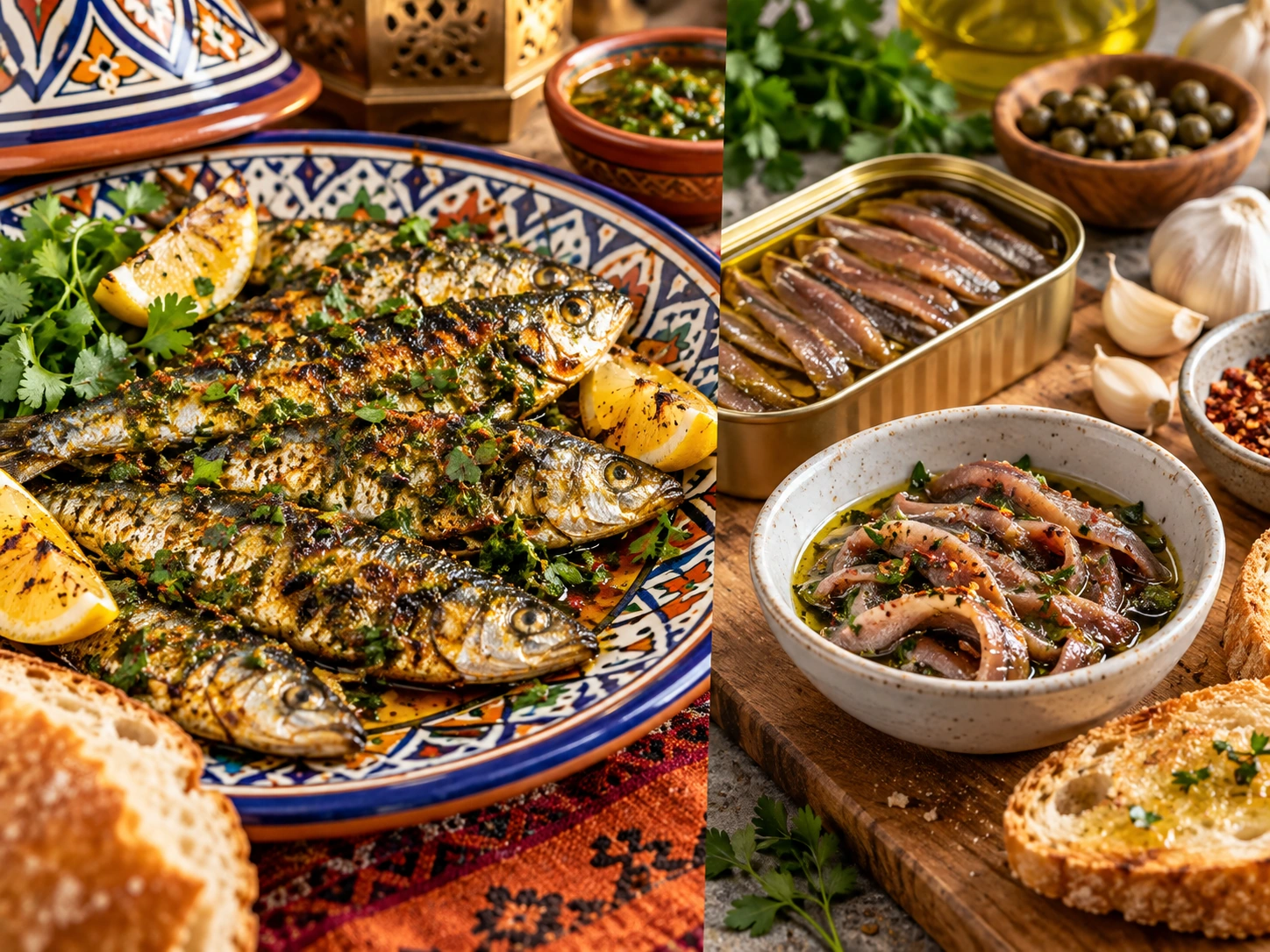
Sardines and anchovies are not the same fish. Both are small, oily fish, but sardines tend to be larger, meatier and milder, while anchovies are smaller and, when sold salt-cured, deliver a much more concentrated savory taste. The confusion usually begins in the canned-fish aisle: someone opens a tin of anchovy fillets expecting something similar to sardines in olive oil and gets an intense, salty surprise. The difference is partly the fish and partly the processing method.
For an American cook, the practical question is not simply which fish is better. It is which one belongs in a sandwich, pasta sauce, salad, stew or grill. In Morocco, that choice takes on another dimension because fresh sardines are particularly important in coastal cooking. Here is how to make sense of the labels, the textures and the techniques without treating all tinned fish as interchangeable.
Sardines vs Anchovies at a Glance
| Question | Sardines | Anchovies |
|---|---|---|
| Fish | Common name for several small fish species | Several small fish species usually sold as anchovies |
| Typical size | Generally larger and fleshier | Generally smaller and slimmer |
| Fresh flavor | Mild to distinctly fishy, depending on freshness | Delicate when fresh; not automatically intensely salty |
| Common U.S. preserved style | Whole or filleted, often in oil, water or tomato sauce | Salt-cured fillets packed in oil; also sold in other styles |
| Texture | Soft, flaky and substantial | Fine, delicate; cured fillets can dissolve into sauces |
| Best quick use | Toast, salads, rice bowls, grilling | Dressing, sauce base, seasoning and umami |
| Moroccan connection | Popular grilled, fried and chermoula-seasoned fish | Less central to familiar Moroccan sardine dishes |
The Biggest Difference Is Often How the Fish Is Preserved
A fresh anchovy is not a tiny version of the salty fillet that disappears into Caesar dressing. Salt-curing changes both the flavor and the texture. Water leaves the fish, salt becomes prominent and the remaining flesh develops a powerful savory quality. That is why a single cured anchovy fillet can season an entire pan of vegetables. If you add several without tasting, your sauce can become far saltier than you intended.
Canned sardines are commonly cooked during processing and packed for convenient eating. A tin might contain relatively large fish with skin and fine bones, boneless fillets, or a tomato-based preparation. Olive oil-packed sardines taste different from water-packed ones, and smoked sardines introduce another layer of flavor. Read the actual package instead of assuming every product with a silver fish on the label will behave the same way.
The comparison becomes fairer when you compare like with like: fresh sardines against fresh anchovies, or preserved sardines against preserved anchovies while accounting for the preservation method. In the United States, however, most shoppers encounter the salt-cured anchovy first. That everyday shopping reality explains many online questions about which fish is stronger.
Which Tastes Fishier: Sardines or Anchovies?
There is no universal winner because freshness, storage, species and preparation all matter. Salt-cured anchovies usually seem bolder to American palates because they concentrate salt and savory flavor into a small bite. Sardines often taste more like a complete piece of fish. On toast with lemon, they may be rich but balanced; on the grill, fresh sardines can taste notably different from either type of canned fish.
If you do not usually eat seafood, start with sardines packed in olive oil and add acid: lemon juice, chopped tomato or pickled vegetables. If you enjoy olives, Parmesan and savory sauces, you may appreciate cured anchovies more readily than you expect. They work especially well as a hidden ingredient rather than an obvious topping.
Flavor changes with the rest of the meal. A bright herb sauce makes sardines feel fresher, while tomatoes and garlic soften the edges of anchovies. The right question is therefore “What job is the fish doing in this recipe?” rather than “Which fish has the better flavor?”
Can You Substitute Sardines for Anchovies?
Sometimes, but not in a one-for-one swap. If a recipe relies on one anchovy fillet to melt into olive oil and provide background seasoning, replacing it with one sardine will change the texture and may leave pieces of fish throughout the sauce. Conversely, replacing a plate of sardines with a few cured anchovies may turn lunch into a salt-heavy condiment rather than a meal.
For a pasta sauce, try a smaller quantity of mashed sardine plus a little salt, capers or olives if the recipe calls for anchovy depth. Taste frequently. For a seafood toast or salad, use sardines as the primary ingredient and anchovies sparingly as seasoning. In a grilled Moroccan-style sardine recipe, anchovies are not a practical replacement for the fresh whole fish; choose another small fish suitable for grilling instead.
If you need to avoid anchovies entirely, think about the function they were meant to provide. A little miso, finely minced olives, mushrooms or capers may add savory complexity to a vegetarian sauce, although none reproduces anchovies exactly. Always consider food allergies before replacing one seafood product with another.
Why Sardines Matter in Moroccan Cooking
Morocco has an extensive Atlantic and Mediterranean coastline, and sardines appear in family kitchens, casual eateries and fish markets. Common preparations include grilled sardines, fried sardines, and sardines filled or coated with chermoula, an aromatic mixture of herbs, garlic, lemon and spices. Recipes vary by household and region; no single chermoula formula represents every Moroccan kitchen.
In cities such as Essaouira, Safi and Agadir, coastal food culture is an interesting part of a visit. A traveler can learn as much by examining a market fish counter as by booking a formal restaurant. Ask what was caught recently, how it will be cooked and whether the quoted price includes preparation. Avoid claiming that one fish market has fixed offerings or prices: catch, weather and season all change what is available.
For a broader introduction to regional dishes, start with our Moroccan food guide, which also explains tagine, harira and other specialties. The Moroccan National Tourist Office provides additional context about the country’s cuisine and dining traditions.

A Practical Moroccan-Inspired Chermoula Sardine Method
This is a flexible home-kitchen method, not a claim that every Moroccan family follows the same measurements. For approximately four small servings, start with 1½ pounds of cleaned fresh sardines, one small bunch of mixed parsley and cilantro, two grated garlic cloves, two tablespoons olive oil, one tablespoon lemon juice, one teaspoon ground cumin, one teaspoon paprika and salt to taste. A pinch of chili is optional. If fresh sardines are not available, ask the fishmonger about suitable small fish and adjust the cooking time to their thickness.
- Pat the cleaned fish dry with paper towels. Dry surfaces help the seasonings cling and reduce splattering.
- Finely chop the herbs and mix them with garlic, spices, oil and lemon. Taste a tiny amount of the herb mixture before it touches raw fish and adjust the acid or salt.
- Rub some chermoula outside and inside the fish, then refrigerate while preparing the grill or oven. Keep raw seafood chilled rather than leaving it on the counter.
- Grill in an appropriate fish basket or roast on a lightly oiled tray until the flesh is opaque and separates easily. Cooking time depends on size and equipment; do not rely on a single minute count.
- Serve with lemon, bread and a chopped tomato-cucumber salad. Add more fresh herbs at the table for contrast.
For U.S. food-safety guidance, the USDA minimum internal temperature chart lists 145°F for fish and shellfish. Use a reliable thermometer when practical, especially with thicker fish. Do not use previously raw marinade as a finishing sauce unless it has been properly cooked.
What if You Can Only Find Canned Sardines?
That is not a reason to skip the Moroccan flavors. Drain a tin of sardines, place the fish carefully on toast or warm cooked potatoes, and top with a fresh mixture of parsley, cilantro, garlic, lemon and a little cumin. Because canned sardines are generally ready to eat, there is no need to cook them as though they were raw. Keeping the topping fresh preserves the bright character of the herbs.
A quick lunch could include a tomato salad, chickpeas and crusty bread alongside the sardines. For a more filling meal, add the fish after cooking couscous or rice, rather than simmering the canned fish until it falls apart. Choose boneless fish if bones are a concern, and check the label for sodium or other ingredients that matter to you.
Canned sardines with tomato sauce are another option, but their existing seasoning changes the dish. Use less added tomato and taste before salting. Those small adjustments are more useful than insisting on an identical recipe when the pantry ingredients are clearly different.
Nutrition: What Can We Actually Compare?
Both fish can supply protein and useful nutrients, and both can contribute marine omega-3 fats. Exact numbers depend on species, portion, oil, added sauce and whether bones are included. If you are comparing two supermarket tins, the nutrition labels are more informative than a generic table with a single number for “sardines” or “anchovies.” Salt-cured anchovies may have especially high sodium per comparable weight, which is one reason they are often used in tiny portions.
For seafood selection, the FDA advice about eating fish lists both anchovies and sardines among its lower-mercury “Best Choices.” That does not make every serving or canned preparation identical; it provides one useful consideration among freshness, allergy, sodium and dietary needs. Readers with individual medical requirements should follow professional guidance rather than relying on a recipe website for personalized nutritional advice.
Also remember that fish served whole can contain fine edible bones. Many canned sardine bones are softened during processing, but some people dislike the texture. Remove them if preferred, and be especially careful about serving fish to young children.
How to Shop for Sardines and Anchovies in the United States
In the canned aisle, check four things: fish type, preparation style, packing liquid and net or drained weight. “Anchovy fillets in olive oil” usually signals a very different culinary role from “sardines in spring water.” Some tins are smoked, spicy or already in tomato sauce. Those details are not minor marketing decorations; they determine how much salt, acid and cooking time you will need.
At a fish counter, look for proper refrigeration, clean presentation and a seller who can identify the fish. Ask whether they are cleaned and whether you should cook them the same day. If the fish are frozen, follow safe thawing directions. Avoid relying on a simplistic “clear eyes always mean fresh” rule without considering handling and storage.
An important travel detail: U.S. supermarkets may carry products labeled by species, country or processing style that differ from fish marketed under familiar names in Morocco. When a particular recipe depends on whole fresh fish, confirm that the product is actually suitable rather than shopping only by a translated name.
How to Order Sardines in Morocco
At a casual coastal restaurant, sardines may arrive grilled, fried or seasoned before cooking. Ask whether the dish is a whole fish, fillets or stuffed sardines, since that affects both how you eat it and how long the meal takes. Bread, simple salads and lemon are common companions, but individual restaurants differ. If you are unfamiliar with eating whole fish, ask the server how it is usually served and take your time with bones.
There is no need to pretend to know the menu by heart. Asking the server for the day’s preparation is often more rewarding than searching for the most elaborate description. Travelers can explore destinations and route ideas through our Morocco tours page and review practical visitor advice in the Morocco travel FAQ.

Common Mistakes When Cooking Either Fish
Mistake 1: Treating cured anchovies like fresh fish. Their salt and texture already reflect substantial processing. Use them to season, and taste before adding more salt. Mistake 2: Overcooking canned sardines. They generally need gentle handling, not a long simmer. Mistake 3: Assuming all anchovies are extremely salty. Fresh anchovies and salt-cured anchovies are different experiences.
Mistake 4: Applying a restaurant description as a universal rule. Moroccan fish methods change among households and coastal cities. Mistake 5: Ignoring the packing liquid. Sardines in tomato sauce will behave differently from fish in oil. Mistake 6: Letting raw seafood sit out while you prepare the rest of the meal. Chill ingredients until they are needed and keep raw surfaces separate from ready-to-eat foods.
One more mistake is adding many spices just because the food is Moroccan-inspired. Start with balanced herbs, lemon, paprika and cumin. You can increase the complexity after understanding what the fish tastes like on its own.
Frequently Asked Questions
Are anchovies baby sardines?
No. Anchovies and sardines are different types of fish, not two ages of the same animal. Common names can cover more than one species, but the distinction remains important when buying and cooking them.
Are sardines milder than anchovies?
Many canned sardines taste milder than typical salt-cured anchovy fillets. The comparison is less straightforward between fresh fish because species, freshness and preparation strongly affect flavor.
Can I use sardines in Caesar dressing?
You can experiment, but they will not dissolve or season the dressing exactly like cured anchovies. Mash a little fish very thoroughly and adjust the salt and acidity. The result is a variation, not a traditional one-for-one substitution.
Do sardines and anchovies contain omega-3 fats?
Both can provide marine omega-3s, though levels vary by species and preparation. Compare product nutrition information if you need quantitative values rather than assuming every tin contains an identical amount.
Are Moroccan sardines always spicy?
No. Chermoula may include chili, but herbs, garlic, cumin and lemon often play larger roles than heat. Ask about seasoning when ordering, particularly if you prefer a mild dish.
Can I make chermoula with dried herbs?
You can create a pantry-friendly seasoned dressing, but it will taste different from a fresh parsley-and-cilantro version. Use modest quantities of dried herbs, allow them to hydrate in the dressing, and add lemon for brightness.
What should I serve with sardines?
Bread, lemon, tomato salad, roasted peppers and cooked potatoes are easy options. In Morocco, simple vegetable salads and fresh bread can complement the fish without overshadowing it.
Which fish is best for a quick weeknight dinner?
For a complete protein to place on toast or a grain bowl, canned sardines are convenient. For a small burst of savory flavor in a sauce, cured anchovies are useful. Buy the form that matches the job instead of choosing on reputation alone.
Final Takeaway
The simplest answer to sardines vs anchovies is that sardines are usually better treated as a meal ingredient, while salt-cured anchovies often work best as seasoning. Fresh versions can tell a different story. Moroccan sardine cooking shows how herbs, lemon, cumin and careful handling can make a relatively inexpensive fish memorable without hiding its flavor. Start with the fish you can actually buy, read the label and make the preparation suit the ingredient.