


Fes is one of Morocco’s most rewarding cities for travelers interested in traditional crafts. Inside the historic medina, workshops and small shops sell leather bags, babouches, woven rugs, ceramics, carved wood, brass and copper objects, embroidered textiles, and everyday items shaped by long-running craft traditions. The best souvenir is not automatically the most expensive or elaborate. It is the object whose material, workmanship, usefulness, and origin you understand before paying for it.
This guide explains what to buy in Fes, how to compare products, where different crafts fit into the city’s artisan landscape, and how to shop respectfully without rushing into a purchase. It is written for visitors from the United States, Canada, and elsewhere who may have limited luggage space, need to ship a larger item, or want to bring home something that will last. Availability varies by shop and season, so use this as a framework for informed choices, not a promise that every item will be available everywhere.
Quick answer: The best buys in Fes depend on your needs: compare leather goods, rugs, ceramics, metalwork, and woodwork, then verify material, origin, care, and transport before paying.
Start with the craft, not the souvenir list
Before browsing, decide what the object should do. A rug may become a focal point in a living room, a leather wallet may be used every day, and a small ceramic bowl may be an easy gift. An object bought only because it looks exotic can end up forgotten in a cupboard. Thinking about use, dimensions, weight, maintenance, and transport helps you compare products calmly and avoid impulse purchases.
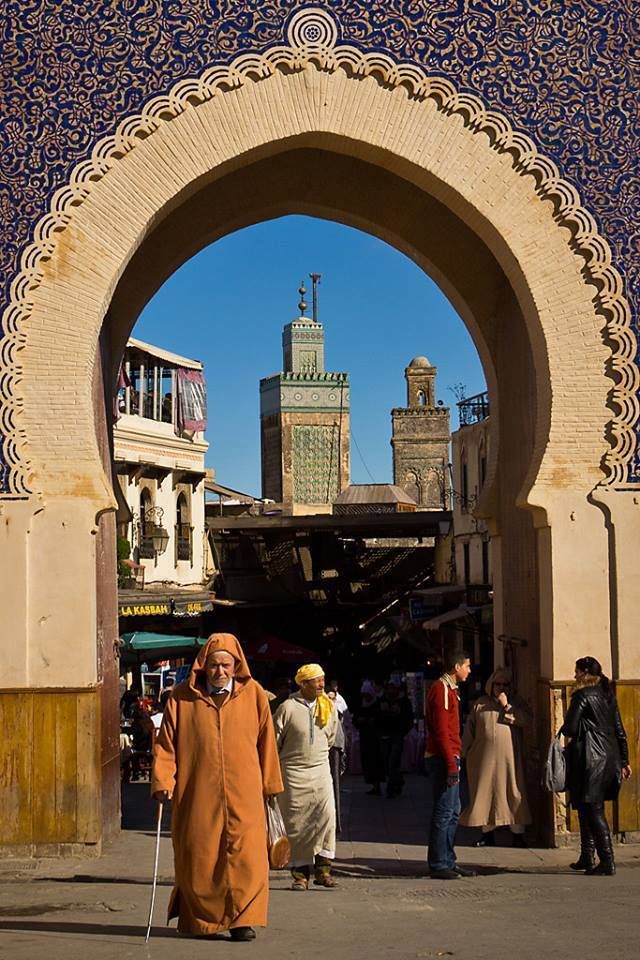
Fes is associated with leatherwork, weaving, metalwork, pottery, woodwork, and zellige. The Moroccan National Tourist Office describes the medina as a place where tanners, weavers, metalworkers, and potters work alongside one another. That range is part of the appeal: you can compare different materials in one visit. Still, not every product sold in Fes was made there. Ask where an item was produced and whether the seller can explain the workshop or technique behind it.
Leather bags, wallets, belts, and babouches
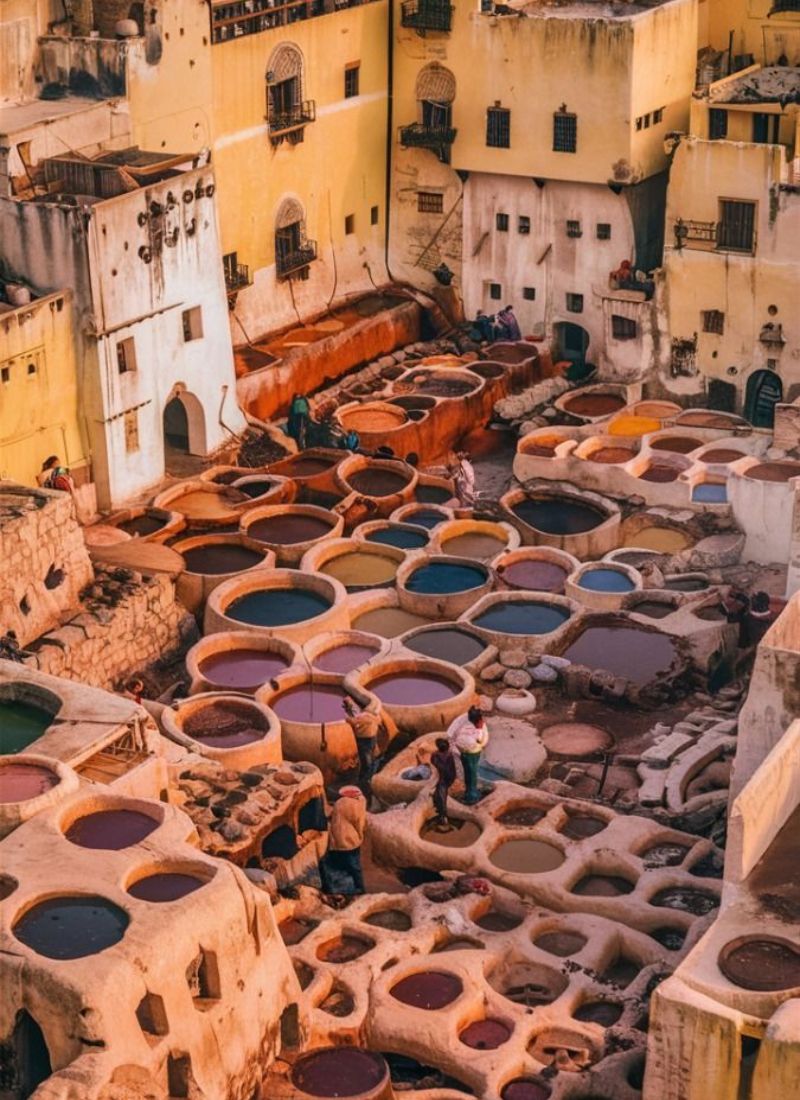
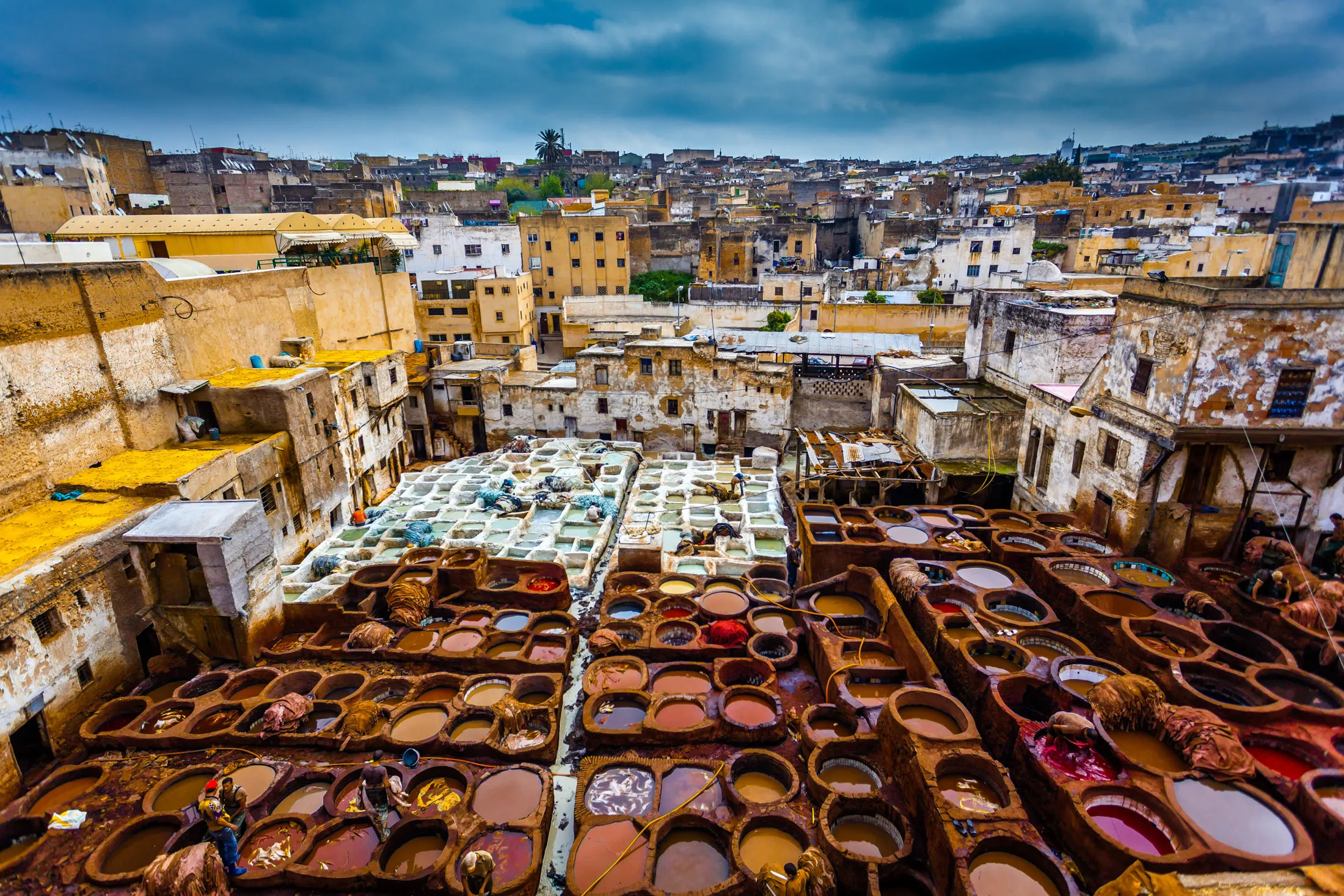
Leather goods are among the most recognizable purchases in Fes. Shops may offer satchels, backpacks, handbags, belts, wallets, babouches, poufs, and other accessories. Look at construction rather than smell or colour alone. Check seams, edges, lining, hardware, symmetry, and the points where straps join the body. Open and close zippers several times, inspect stitching around handles, and look for loose threads or adhesive marks. A well-finished item should feel consistent in the areas that receive the most stress.
Ask what type of leather is used, whether the surface has been coated, and how the item should be cleaned. Terms such as “genuine leather” can be broad and are not a substitute for a clear explanation. For babouches, try both slippers if possible, walk a few steps, and check whether the sole bends comfortably. Leather colour, softness, and finish vary, so compare several pieces before deciding. For more detailed checks, use the Fes leather goods guide once that page is published.
Moroccan rugs and woven textiles
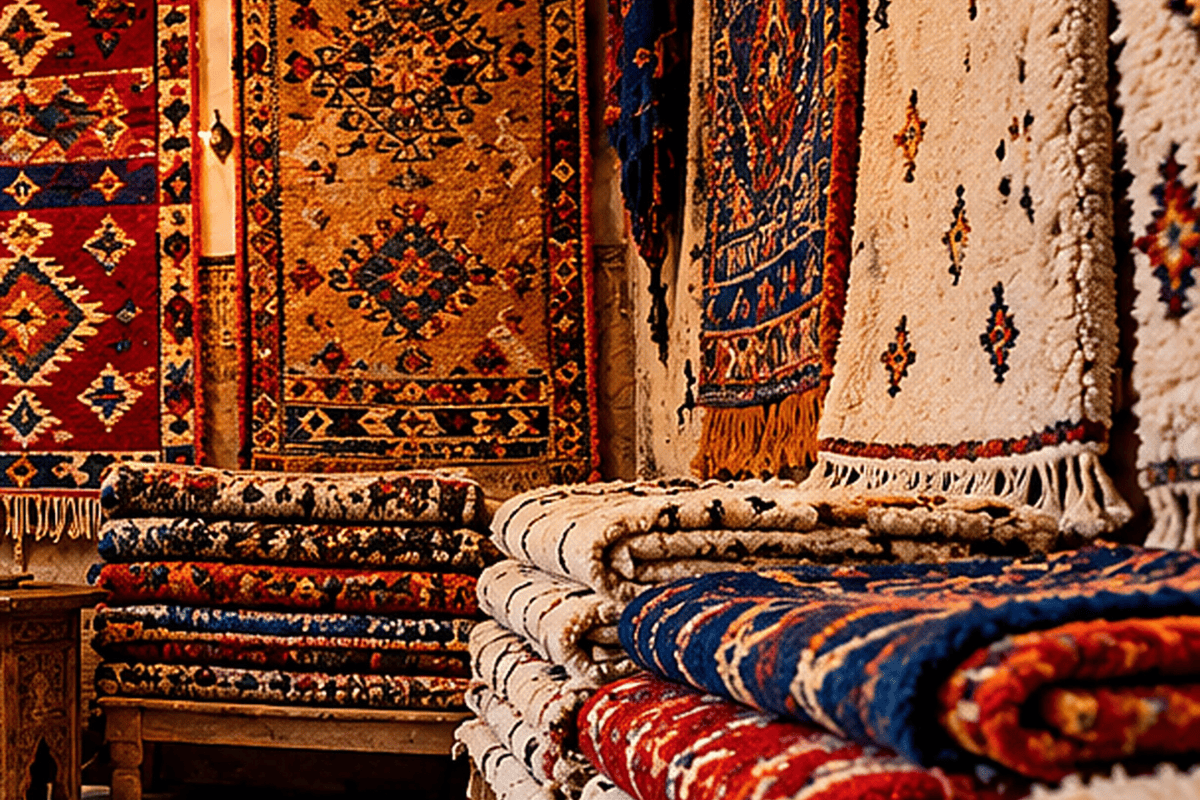
Rugs can be beautiful souvenirs, but they need more planning than a small accessory. Moroccan rugs vary by region, weaving method, fibre, pile height, pattern, and intended use. A thick, plush rug may suit a bedroom, while a flatter woven kilim may be easier to roll and transport. Some styles are associated with particular regions or communities, but a shop in Fes may sell rugs made elsewhere in Morocco. Ask about origin rather than assuming every carpet in a Fes shop was woven locally.
Inspect the front and back, look at the edge finish, and ask whether the fibres are wool, cotton, synthetic, or a blend. Handwoven pieces may show small variations, but irregularities alone do not prove authenticity. Compare the weave, density, finishing, and overall condition. Ask the seller to lay the rug flat and give you time to view it in good light. If you plan to buy a large rug, confirm packed dimensions, shipping method, insurance, and written costs before agreeing to the sale.
Pottery, ceramics, and Fes blue
Fes is associated with ceramic traditions, including blue-and-white decoration. Small bowls, plates, tiles, and decorative pieces can make manageable gifts, but inspect them for chips, hairline cracks, uneven glazing, and unstable bases. If the piece is intended for food, ask whether the glaze and decoration are suitable for food contact and whether it is dishwasher- or microwave-safe. Do not assume that a decorative object is designed for everyday kitchen use.
Fragile ceramics need careful packing. Ask the seller to wrap the piece individually, protect protruding handles, and use cushioning between multiple items. If you are buying a set, check that the pieces match closely enough for your needs. Hand-finished ceramics may have small variations in colour or pattern, which can be part of their character; cracks, sharp chips, and unstable construction are different matters. For limited luggage, a small tile or decorative dish may be easier than a large platter.
Copperware, brass, and metalwork
Metalwork in Moroccan medinas includes trays, teapots, bowls, lanterns, mirrors, candleholders, and decorative objects. Some pieces are made from copper, others from brass or mixed metals, and the visual difference is not always obvious to a first-time buyer. Ask what the item is made from and whether its colour comes from the metal itself, plating, lacquer, or another finish. Look at the underside and edges, where finishing can be easier to assess.
Consider weight and use. A large tray may be attractive but awkward to pack; a small bowl or candleholder may offer a more practical reminder of the trip. If you buy a teapot or serving vessel for regular use, ask how to clean it and whether it is intended to contact food or liquid. Decorative metalwork may tarnish, and some finishes should not be polished aggressively. For lanterns, check whether glass panels are secure and whether the object can be wrapped safely.
Quick guide: what to buy in Fes
| Item | What to inspect | Travel consideration |
|---|---|---|
| Leather bag or wallet | Stitching, lining, edges, hardware, material description | Usually manageable; protect from moisture and sharp objects |
| Babouches | Fit, sole, seams, flexibility, comfort | Lightweight; keep both slippers together |
| Rug or kilim | Fibre, weave, back, edge finish, size, origin | Confirm packing, shipping, insurance, and customs rules |
| Ceramics | Cracks, chips, stable base, food-use guidance | Wrap individually and protect fragile edges |
| Copperware or brass | Material, joins, edges, finish, intended use | Check weight and packing needs |
| Wooden craft | Joinery, finish, material, import rules | Check rules for wood or plant materials before travel |
Carved wood, zellige, and decorative pieces
Wooden boxes, carved panels, small furniture, and zellige-inspired objects can showcase Moroccan design without requiring a large purchase. Look at joinery, finish, and the back of the object, not only the decorated front. A neatly finished edge and stable construction are more useful signs than an elaborate story alone. If a wooden item has a strong varnish or fragrance, ask what finish was used and how it should be cleaned.
Zellige is a distinctive form of geometric tilework associated with Moroccan architecture, and Fes is an important centre for this craft. A small tile or decorative panel can be easier to transport than a large architectural piece. Check whether the item is a handmade tile, a decorative reproduction, or a printed design on another material. These are not interchangeable products, and the price should reflect the actual construction. If a piece contains wood or plant material, check destination import rules before purchase.
Compare shops without turning shopping into a race
Choose a first shop to learn what is available, not necessarily to buy immediately. Ask the price, material, size, origin, and care requirements, then visit other sellers and compare similar items. A price comparison is meaningful only when products are comparable: a lined leather bag with strong hardware is not the same as a thin unlined bag, and a dense wool rug is not equivalent to a lightweight synthetic rug. Take notes or photographs only with permission.
Bargaining is common in many souks, but it works best when it stays polite and realistic. Set a comfortable budget before entering a shop, and do not begin a long negotiation if you have no intention of buying. Ask whether the price includes packaging or delivery, whether card payments carry a fee, and whether a receipt is available. For expensive items, get the product description, agreed price, currency, shipping terms, and return or repair arrangements in writing.
Shipping, luggage, and bringing purchases home
Small goods can often travel in a suitcase, but rugs, large metal trays, ceramics, and furniture need extra planning. Before paying, ask the seller to show the final packed dimensions and confirm whether shipping is handled by the shop or a third party. Request a written quote that states the destination, service level, insurance, estimated delivery window, packaging, and what happens if an item arrives damaged. Keep the receipt and a photograph of the item before it is packed.
Rules for bringing goods home depend on destination, material, value, and whether the item contains plant, animal, or wildlife-derived components. Travellers returning to the United States should consult official APHIS guidance for souvenirs made from plants, wood, shells, or animal materials. Travellers entering Canada should check current CBSA and Canadian Food Inspection Agency guidance, especially for wooden or bamboo objects. These rules can change, so check before purchase rather than relying on a shopkeeper’s general assurance.

A practical half-day shopping plan
Begin with a walk through the medina to understand its layout and identify the crafts that interest you. If leather is your priority, visit a leather shop after you have seen a few examples and understand the range of construction. If you want a rug, allow extra time to compare sizes and materials rather than leaving it until the last few minutes before a tour departure. A guided visit can help with orientation and cultural context, but it should not remove your freedom to decide whether to buy anything.
Keep a list of what you are looking for, a budget in your preferred currency, and the maximum size you can take home. Take breaks, drink water, and avoid carrying fragile purchases through a crowded medina for hours. If you intend to ship a large item, arrange collection or delivery details before paying. Link the shopping plan to your wider visit by reviewing the Fes tour guide and Morocco tours from Fes, while leaving unhurried time for browsing.
Buy with respect for makers and the place
Traditional crafts are not simply souvenirs; they are work shaped by skill, materials, time, and local markets. Ask questions with curiosity rather than treating artisans as performers. If a workshop is open to visitors, follow its rules, do not touch tools or unfinished work without permission, and ask before photographing people. Buying directly from a maker can be meaningful when the seller is genuinely the maker, but not every shop owner is an artisan and not every product needs to be purchased to make a visit worthwhile.
Be cautious with unsupported claims such as “the last master in Morocco,” “the oldest workshop,” or “the only authentic piece.” A good seller should be able to explain practical details about materials and care. You can appreciate the history of Fes without demanding that every object be ancient or made by hand from start to finish. Contemporary Moroccan designers also reinterpret traditional patterns. The most responsible purchase is one you understand, can afford, can use or display, and can bring home lawfully.
Practical checklist
- Write down the object’s dimensions and intended use before shopping, especially for rugs, trays, and ceramics.
- Ask the seller to name the main material and explain the finish; record the answer if you are comparing shops.
- Inspect the underside, seams, edges, and moving parts rather than judging only the front or colour.
- Agree on the complete price, currency, packaging, delivery, and any card fee before the transaction is finished.
- Keep a receipt and photograph expensive purchases, and obtain written shipping terms for items sent overseas.
- Check official customs guidance before buying objects made with wood, plant fibres, shells, or animal-derived materials.
Questions readers often ask
What is Fes best known for buying?
Fes is a strong place to explore leather goods, ceramics, zellige-inspired objects, woven rugs, copperware, carved wood, and other traditional crafts. Availability and origin vary by seller, so ask where a specific item was made.
Are all Moroccan rugs sold in Fes made in Fes?
No. Shops in Fes may sell rugs made in different Moroccan regions. Ask about the rug’s origin and weaving method rather than assuming the city where it is sold is where it was made.
How do I avoid overpaying in the souk?
Compare similar items in several shops, check material and workmanship, set a budget, and ask what the price includes. There is no single fair price for every product because size, material, labour, and finish differ.
Can I ship a rug from Fes to the United States or Canada?
Some sellers can arrange shipping, but services and terms vary. Get a written quote covering packaging, delivery, insurance, tracking, and customs charges before paying.
What souvenirs are easiest to pack?
Small leather accessories, lightweight textiles, and compact decorative objects are often easier than large rugs, heavy metal trays, or fragile ceramics. Check material and import rules before purchasing.
Where can I learn more about Fes before shopping?
Start with the official Fes travel guide, the UNESCO Medina of Fez listing, and the existing Moroccan markets and souks guide.
Additional practical notes
One useful way to narrow the choice is to decide whether you are shopping for a personal object, a gift, or a home furnishing. Personal items should be judged for everyday durability; gifts should be easy to carry and simple to explain; furnishings require measurements and a realistic plan for shipping. A small notebook with dimensions, material claims, and prices can be more helpful than trying to remember every shop after several hours of browsing.
Visitors who have accessibility needs or limited time should plan the route around the items they most want to see. The medina’s lanes can be uneven and crowded, and carrying a large or fragile purchase can make the rest of the visit harder. Ask your guide or accommodation host about the easiest meeting point and whether a seller can deliver an item to your riad or vehicle. Confirm the arrangement directly with the seller and keep a written record of any delivery promise.
Do not confuse age with quality. A new handmade object can be well made, while an older object can be damaged or repaired. If a seller describes a piece as antique, ask what supports that claim and avoid buying cultural property or wildlife-derived items unless you understand the legal implications. For ordinary decorative goods, a clear description of materials, workmanship, and care is usually more useful than a dramatic story about the item’s past.
An easy way to shop without losing track is to group purchases by size and fragility. Browse small accessories first if you are still learning the market, but delay buying fragile ceramics or a large rug until you understand how you will transport them. If a shop offers delivery to your accommodation, confirm the address, timing, and price directly. Keep breakable items out of a day bag that will be carried through crowded lanes, and avoid leaving valuables unattended while comparing products.
Ask sellers to explain what makes two similar items different. The answer may be the leather type, the rug’s fibre, the thickness of metal, the quality of a ceramic glaze, or the amount of hand-finishing. You do not need to memorize technical vocabulary; the aim is to understand the difference that justifies the price. If the explanation remains vague, compare another product. The ability to explain material and care is a useful sign of a transparent transaction, though it does not independently certify origin.
After shopping, review your purchases before leaving the city. Check that each item is the one you selected, that fragile pieces are packed securely, and that receipts match the products. If a seller arranged shipping, save the tracking information and a copy of the written agreement. For customs questions, use official destination-country sources rather than social media posts or general advice from other travellers. Requirements may depend on material and can change, so the safest approach is to verify the exact item.
If you have only one afternoon, prioritize the two or three categories that genuinely interest you. A quick visit to every type of shop can feel efficient but leaves little time to compare materials or ask meaningful questions. It is usually better to understand one rug, one leather item, or one ceramic piece properly than to collect vague impressions of dozens of products. Keep the rest of the medina walk flexible, and remember that looking without buying is also a valid way to learn.
Official sources and further reading
- Moroccan National Tourist Office: Fes
- Moroccan National Tourist Office: Traditional Craftsmanship
- UNESCO: Medina of Fez
- USDA APHIS: International Traveler Souvenirs
- Canadian Food Inspection Agency: Wooden and Bamboo Souvenirs
- Canada Border Services Agency: Bringing Personal Goods into Canada
Final thoughts
The best things to buy in Fes are the pieces that fit your needs and that you can assess with confidence. Learn the basic differences between materials, compare workmanship, ask clear questions, and plan for transport before you pay. Fes offers a remarkable range of crafts, but a thoughtful purchase is better than a suitcase full of rushed decisions.
