


Table of Contents
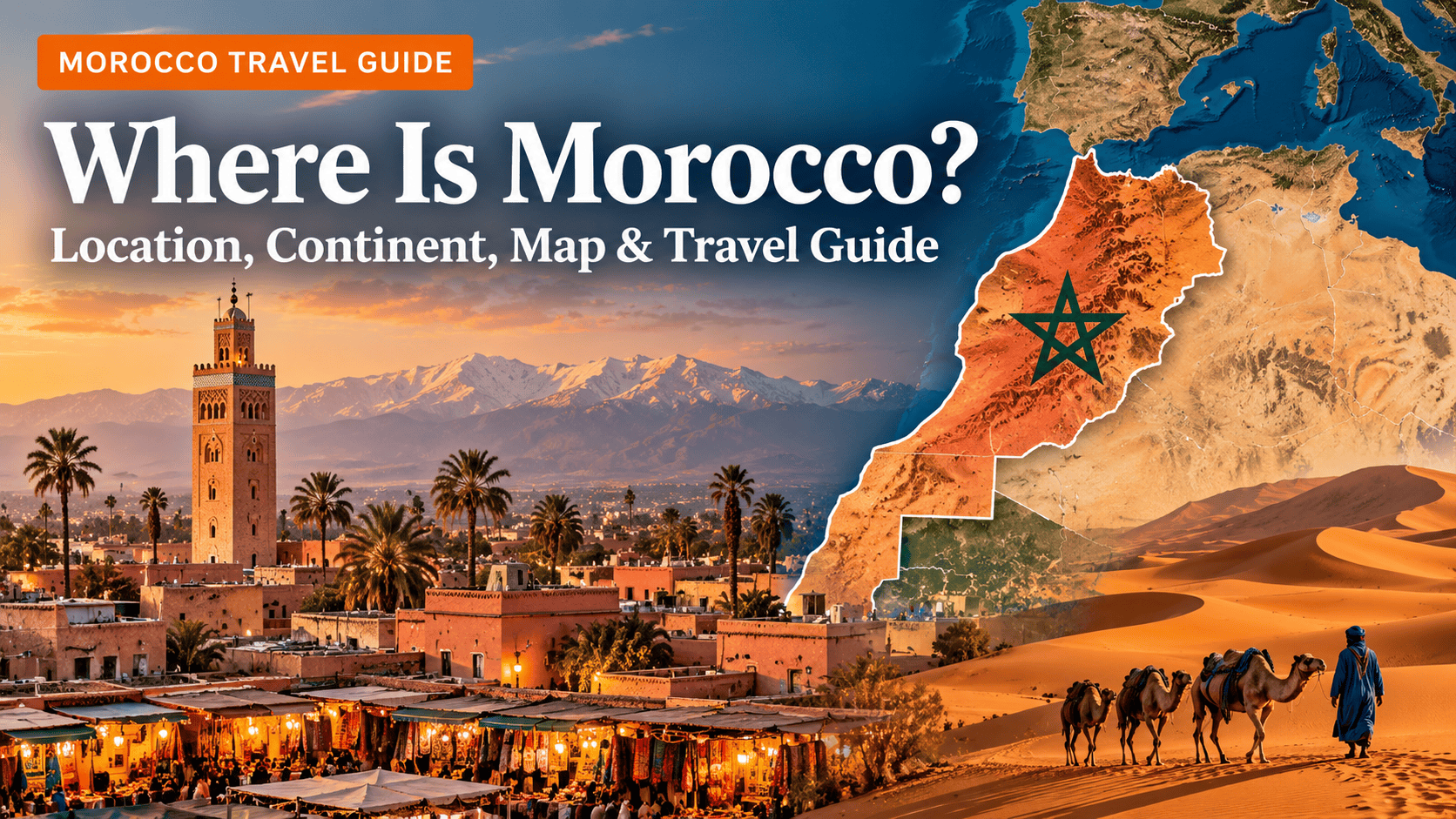
Where is Morocco? Morocco is in North Africa, directly across the Strait of Gibraltar from southern Spain. The country faces the Atlantic Ocean to the west and the Mediterranean Sea to the north, giving it one of the most distinctive geographic positions in Africa. For travelers, this location explains why Morocco can feel simultaneously African, Mediterranean, Arab, Amazigh and closely connected to Europe.
If you are planning a first trip, understanding Morocco’s location makes the rest of your itinerary much easier. The country’s major destinations stretch from Tangier and Chefchaouen in the north to Marrakech and the Atlas Mountains in the center, Agadir on the Atlantic coast, and the Sahara gateway towns farther southeast. Morocco is compact enough for a multi-city trip, but varied enough that distances and landscapes matter when planning transport.
Where Is Morocco Located on the Map?
Morocco sits in the northwestern corner of Africa. The Moroccan National Tourist Office describes the country as being at the crossroads of Europe and Africa, bordered by Mediterranean waters and open to the Atlantic Ocean. That position has shaped Morocco’s history, architecture, trade and culture for centuries.
On a world map, look at the top-left edge of the African continent. Morocco lies immediately south of Spain. The narrow Strait of Gibraltar separates northern Morocco from southern Europe, which is why Tangier has long served as a major link between Africa and Europe.
Is Morocco in Africa?
Yes. Morocco is an African country and is part of North Africa. This sounds obvious once you see a map, but the question is surprisingly common because Morocco is geographically close to Europe and culturally connected to the Mediterranean world.
Morocco’s African location is central to its geography and identity. At the same time, the country has strong Arab, Amazigh, Mediterranean, Andalusian and Saharan influences. That mix is one reason travelers notice significant differences between regions. Northern cities such as Tangier and Tetouan can feel strongly Mediterranean, while destinations near Merzouga are shaped by Saharan landscapes and desert culture.
What Continent Is Morocco In?
Morocco is on the continent of Africa. More specifically, it is generally grouped with the countries of North Africa. Travelers sometimes search for “what continent is Morocco in?” because the country is only a short distance from Europe. Geography, however, is unambiguous: Morocco is African.
If this is your first visit, our Morocco trip itinerary can help you turn that geography into a realistic route instead of trying to cross half the country every afternoon, a very human approach to vacation planning.
How Close Is Morocco to Europe?
Morocco is extremely close to Europe at its northern edge. Spain lies directly across the Strait of Gibraltar. This proximity has made northern Morocco an important meeting point between continents for trade, migration and tourism.
Tangier is the Moroccan city most strongly associated with this gateway position. From Tangier, travelers can continue south toward Rabat and Casablanca or head inland toward Chefchaouen. If you are starting in the north, see our Morocco itinerary from Tangier.
Which Seas and Oceans Border Morocco?
Morocco has coastlines on both the Atlantic Ocean and the Mediterranean Sea. This is a major reason the country offers such varied coastal travel.
- Atlantic coast: includes major destinations such as Rabat, Casablanca, Essaouira and Agadir.
- Mediterranean coast: stretches across the north and northeast, with access from areas around Tangier, Tetouan, Al Hoceima, Nador and Saïdia.
The Moroccan National Tourist Office notes that the Atlantic stretches along the western side of the kingdom while the Mediterranean runs across the north. These two coastlines support very different travel experiences, from surfing near Agadir and Taghazout to Mediterranean beaches farther north.
Where Are Morocco’s Main Tourist Cities?
Knowing the rough position of each major city helps you build a route that makes geographical sense.
- Tangier: northern Morocco, close to the Strait of Gibraltar.
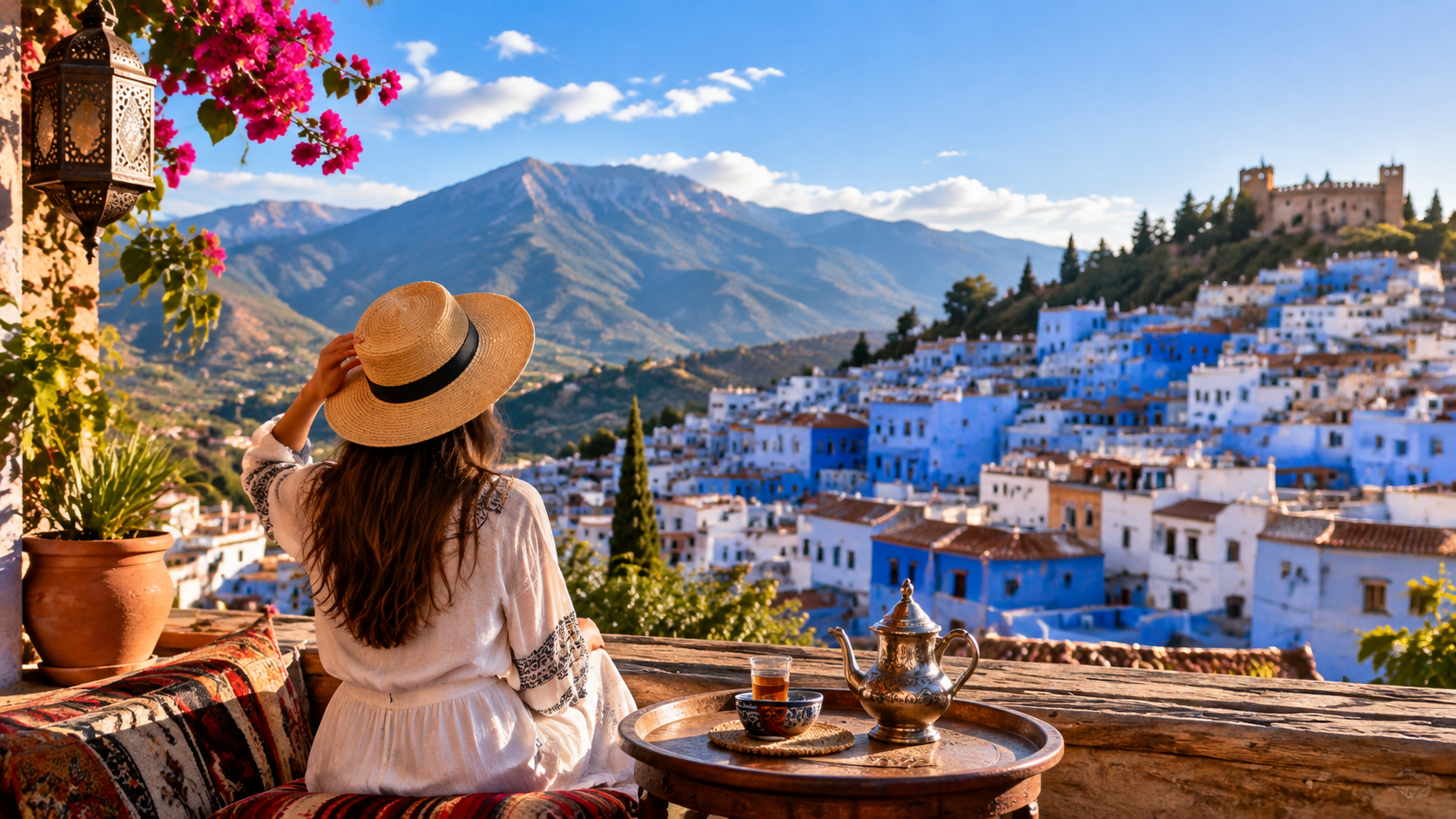
- Chefchaouen: inland in the Rif region of northern Morocco.
- Fes: northeastern interior, one of Morocco’s historic imperial cities.
- Rabat: Atlantic coast and the national capital.
- Casablanca: Atlantic coast, south of Rabat.
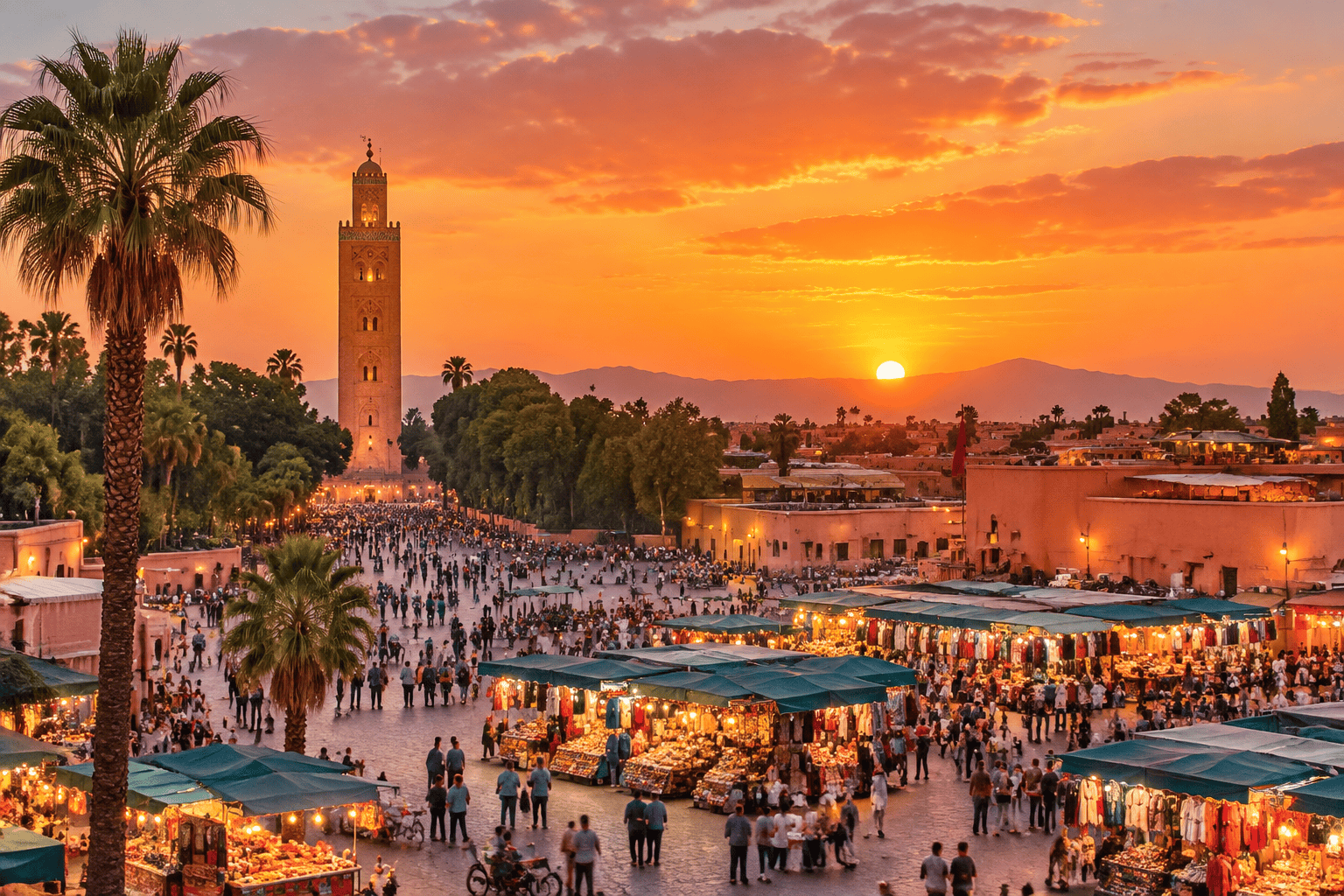
- Marrakech: inland, near the High Atlas Mountains.
- Agadir: southwestern Atlantic coast.
- Merzouga: southeastern Morocco near the Erg Chebbi dunes.
How Big Is Morocco for Travelers?
Morocco looks manageable on a map, but the experience of distance changes once mountains, winding regional roads and desert routes enter the equation. Casablanca to Rabat is a relatively simple connection. Marrakech to Merzouga is a much more substantial journey and is usually better treated as part of a multi-day route.
For that reason, it is smarter to group destinations geographically. A northern trip can combine Tangier, Chefchaouen and Fes. An Atlantic route can combine Casablanca, Rabat, Essaouira and Agadir. A southern itinerary can connect Marrakech with Ait Ben Haddou, the valleys and the Sahara.
Our Morocco road trip itinerary is useful if you want to connect these regions by car.
Where Are the Atlas Mountains in Morocco?
The Atlas Mountains run across large parts of Morocco and strongly influence both travel routes and climate. The High Atlas rises south of Marrakech and includes Jbel Toubkal, the highest peak in North Africa according to Morocco’s official tourism office.
The mountains create a dramatic transition between the greener north and west and the drier regions toward the Sahara. They are not simply a scenic backdrop. They affect driving times, weather and the types of activities available throughout the year.

Where Is the Sahara Desert in Relation to Morocco?
Morocco’s best-known Sahara experiences are in the southeast, particularly around Merzouga and the Erg Chebbi dunes. Travelers often reach the desert from Marrakech or Fes on multi-day routes.
If the Sahara is a priority, do not plan it as a casual afternoon detour from Marrakech. The distances are substantial and the journey itself passes through some of the country’s most interesting landscapes. See our Morocco desert tours and Morocco desert itinerary for route ideas.
Is Morocco in the Middle East?
Geographically, Morocco is in North Africa, not the Middle East. It is often included in the broader MENA expression, meaning Middle East and North Africa, because of shared linguistic, historical and cultural connections with other Arab-majority countries. But on a geographic map, Morocco belongs to Africa.
Why Morocco’s Location Matters for Your Trip
Morocco’s location creates unusually diverse travel possibilities within one country. You can move from Mediterranean-influenced northern towns to Atlantic beaches, imperial cities, mountain passes and Saharan landscapes on the same trip.
That variety also means there is no single “Morocco weather” or perfect route for everyone. Coastal conditions can differ from inland cities, while the mountains and desert have their own seasonal patterns. Before booking, compare your dates with our best month to go to Morocco guide.
Frequently Asked Questions About Where Morocco Is
Where is Morocco in Africa?
Morocco is in northwestern Africa, facing the Atlantic Ocean and Mediterranean Sea.
Is Morocco close to Spain?
Yes. Northern Morocco and southern Spain are separated by the Strait of Gibraltar.
Is Morocco an African or Arab country?
Morocco is geographically African. Its identity also includes Arab, Amazigh, Saharan, Mediterranean and other historical influences.
Is Marrakech in Africa?
Yes. Marrakech is a city in Morocco, which is in North Africa.
Is Morocco on the Atlantic Ocean?
Yes. Morocco has a long Atlantic coastline as well as a Mediterranean coastline.
Official Geography Sources
For official destination geography, see the Moroccan National Tourist Office geography guide and its history and geography overview.
