


Fes is a compelling destination for travelers who want to understand Moroccan craftsmanship as part of everyday city life. The medina brings together workshops, shops, materials, and skills connected with leather, textiles, ceramics, zellige, wood, and metalwork. These crafts are not a single style or a frozen tradition: makers adapt designs, tools, materials, and products to changing customers while drawing on knowledge passed between generations.
This guide introduces the main craft categories a visitor may encounter, explains what to look for when buying, and suggests ways to explore the medina respectfully. It distinguishes the place where a product is sold from the place where it was made, because not every item in a Fes shop originates in the city. Use the guide to plan your interests and ask better questions, rather than treating any one shop or object as the definitive example of Moroccan craftsmanship.
Quick answer: Fes crafts include leatherwork, weaving, ceramics, zellige, metalwork, and woodwork, but verify where each item was made and how it should be used or maintained.
Why Fes matters in Moroccan craft traditions
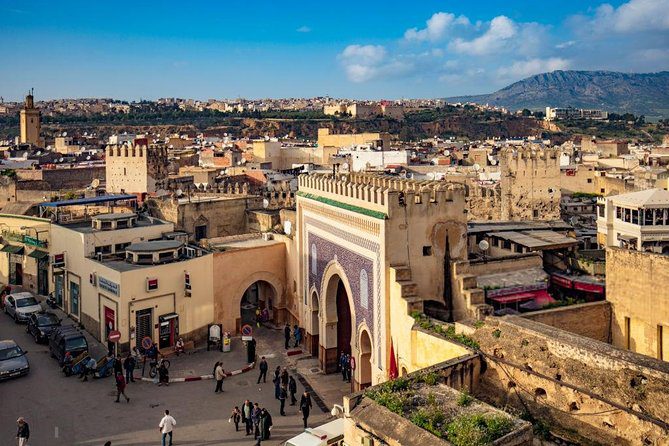
The historic medina of Fes is known for its dense network of streets, workshops, markets, and monuments. The Moroccan National Tourist Office describes the medina as a place where tanners, weavers, metalworkers, and potters are gathered. That variety makes the city useful for understanding how craft work relates to trade, architecture, and daily life. Visitors can see finished goods in shops and, where access is offered, learn about the processes behind them.
Fes’s heritage should not be reduced to a claim that every craft began there or that every item sold there is locally made. Morocco has many regional craft traditions, and products move between cities and markets. A shop in Fes may carry rugs from another region, leather goods from several workshops, or contemporary products inspired by traditional patterns. Ask about origin and construction when those details matter, and appreciate the medina as a place of exchange as well as production.
Leatherwork and the tannery district
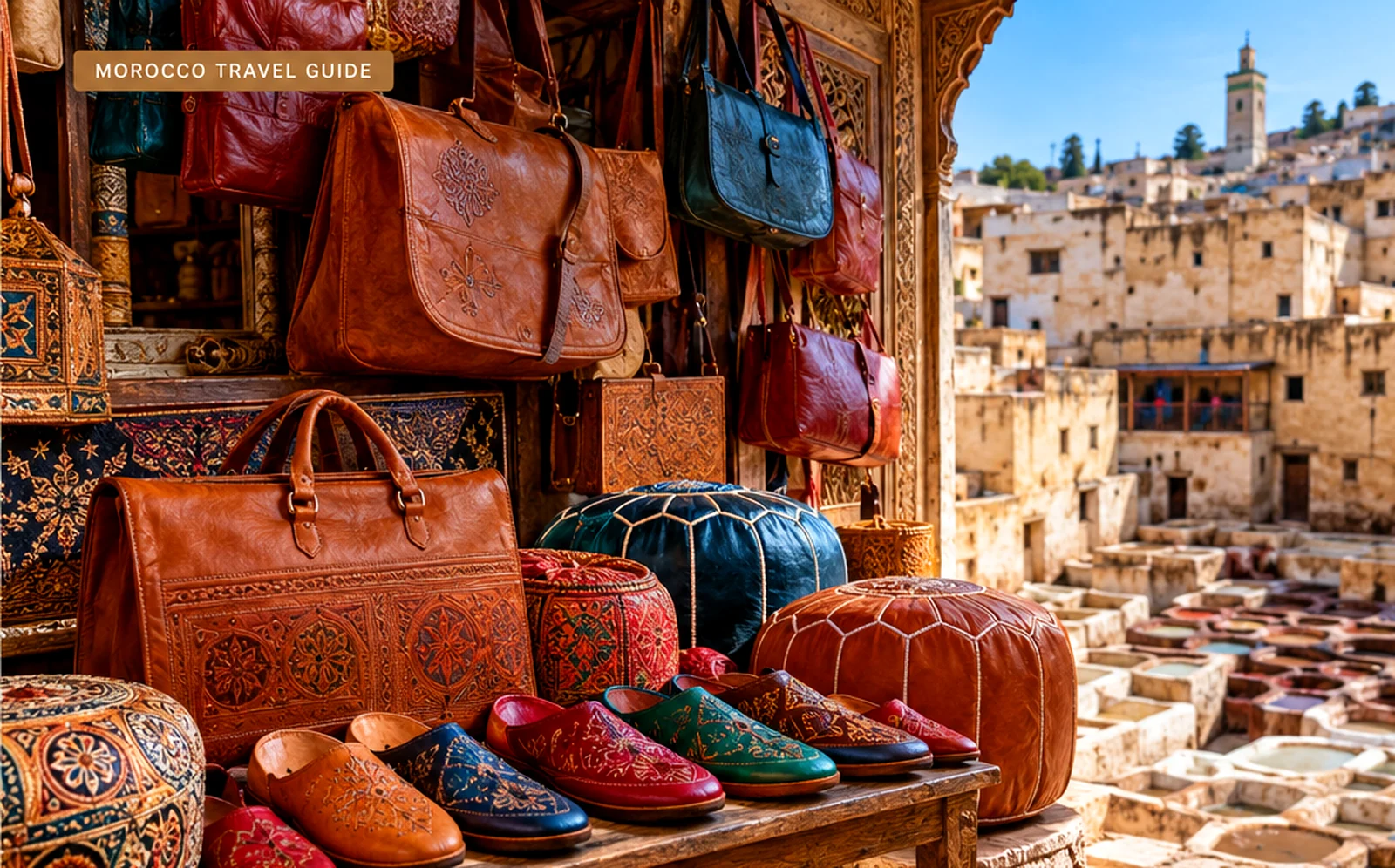
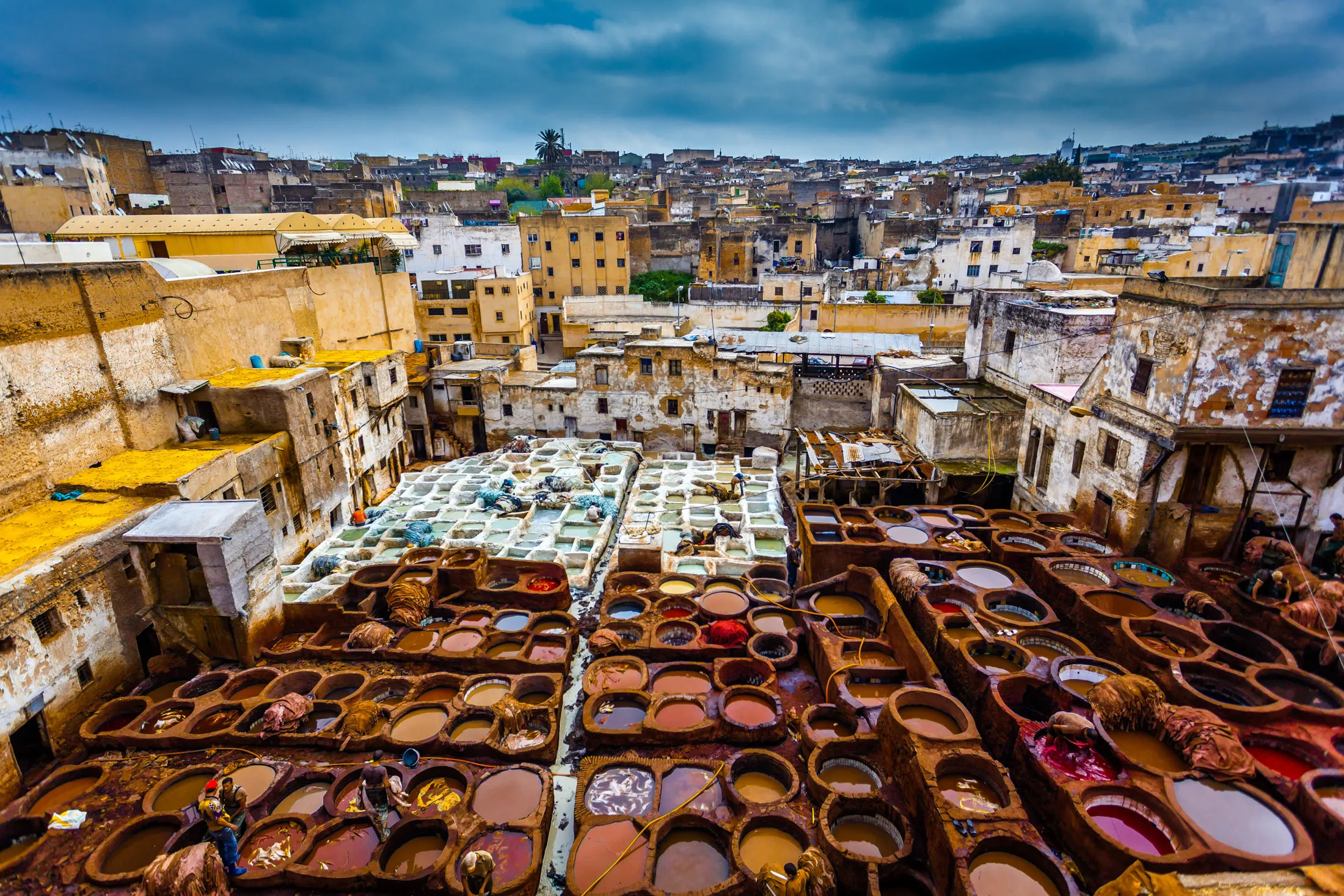
Leather is one of the most visible crafts associated with Fes. Visitors may encounter bags, wallets, belts, babouches, poufs, jackets, and other accessories, as well as viewpoints overlooking traditional tanning work. Finished goods involve more than the hide itself: cutting, stitching, lining, hardware, shaping, and finishing all affect the final product. A bag made from leather can still be poorly constructed, so inspect seams and stress points rather than relying on the material label alone.
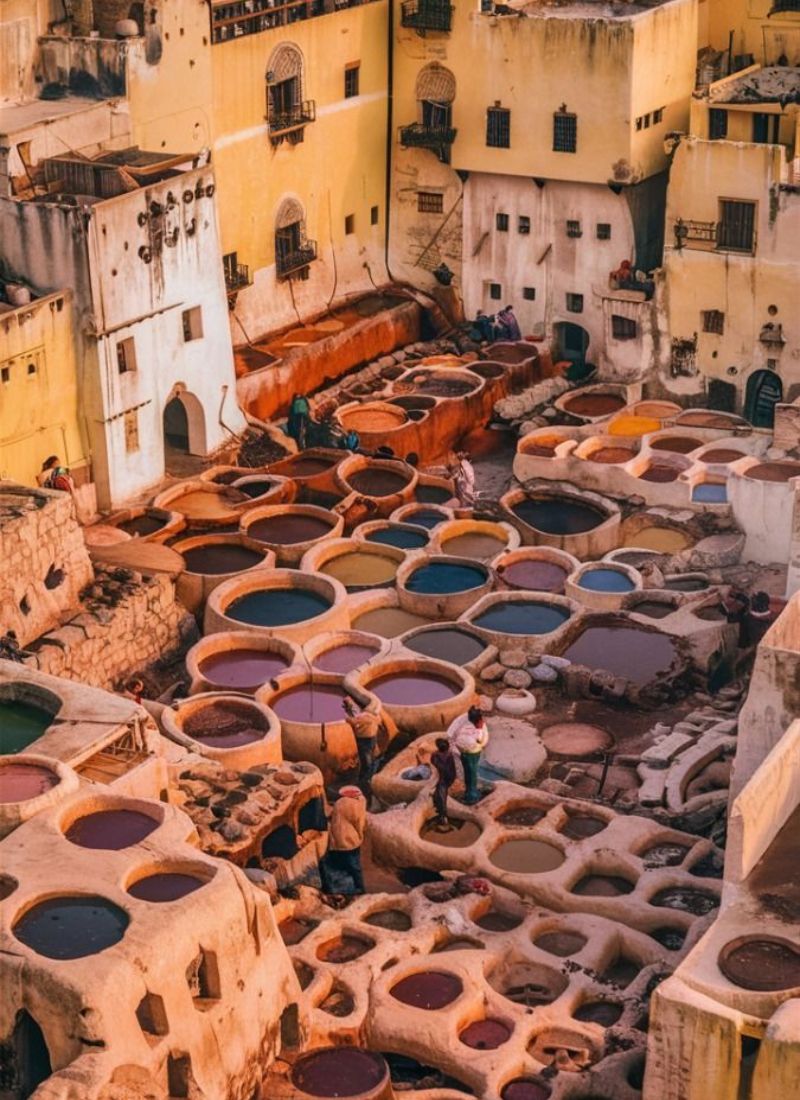
If you visit Chouara Tannery, remember that it is a working craft district. Access, viewpoints, and activity vary, and the smell may be strong. Ask before photographing workers or entering private spaces. A tannery visit can explain part of the production chain, but it does not prove that a particular item nearby was made from hides processed there. For practical purchasing advice, read the genuine Moroccan leather guide and ask sellers for product-specific details.
Rugs, carpets, and woven textiles
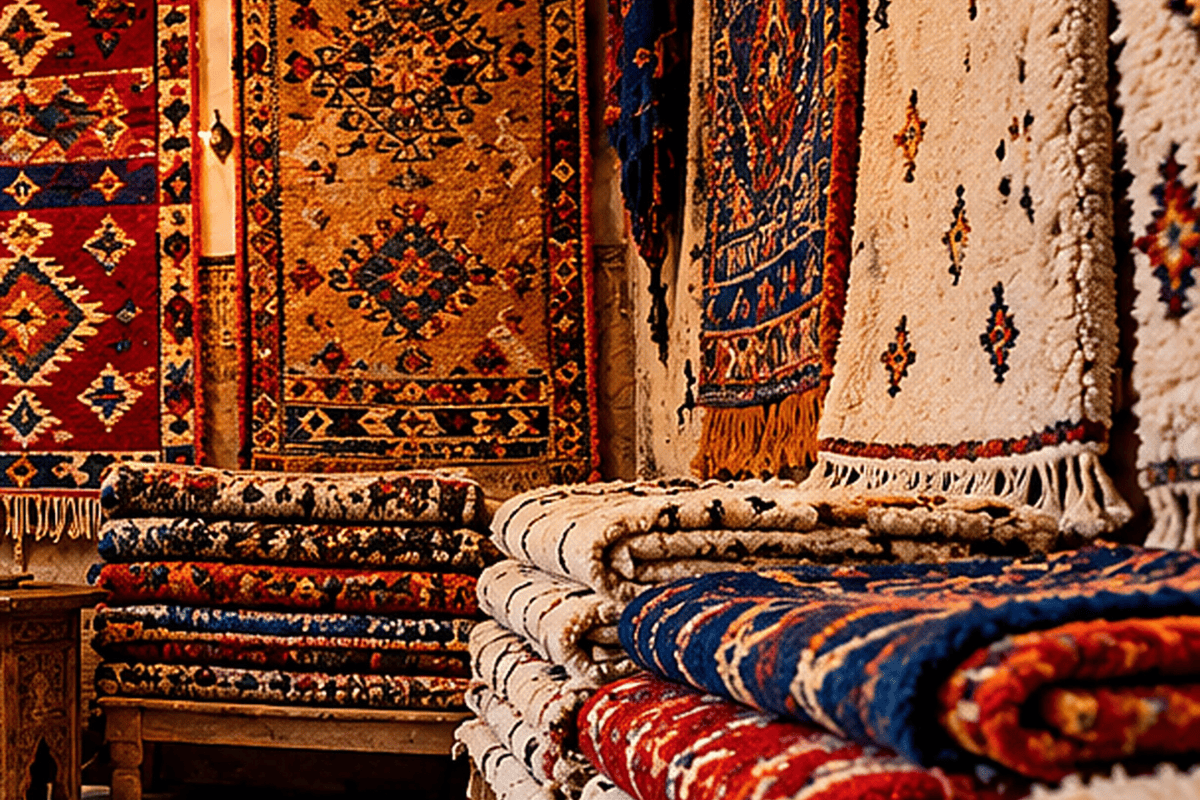
Moroccan rugs vary in weave, pile, fibre, pattern, and regional association. In Fes, shops may offer carpets and textiles from different parts of the country. Some pieces have a neutral palette and plush wool pile; others feature saturated colour, geometric motifs, or flatter construction. Rather than assuming all rugs sold in Fes are made locally, ask about the rug’s origin, fibre content, weaving method, condition, and care. The regional name can be useful, but the individual piece deserves inspection.
Textiles can be practical purchases as well as decorative objects. A rug must fit a room and suit its traffic level; a small woven item may be easier to pack than a large carpet. Check the front and back, edge finishing, loose yarns, repairs, and whether the rug lies flat. If buying a high-value piece, get the description and shipping terms in writing. Compare the Beni Ourain, Azilal, and Boujad rug guide before choosing a style.
Ceramics and the blue-and-white tradition
Fes is associated with ceramic work and blue decoration, including tiles and tableware. Small bowls, plates, and decorative pieces can be attractive gifts, but quality depends on more than the painted surface. Check for chips, hairline cracks, sharp edges, and an unstable base. If the piece is intended for food, ask whether the glaze and decoration are suitable for food contact and whether it can be used in a dishwasher or microwave. Decorative pieces should not automatically be treated as kitchenware.
Packing is part of the purchase. Ask for individual wrapping, cushioning around handles and rims, and protection between stacked pieces. If you are buying multiple items, make sure they cannot knock together in transit. Handmade pieces may show small variations in glaze or pattern, but cracks and unsafe edges are different matters. Ask what the seller recommends for cleaning and display. For travellers with limited luggage, a small tile or dish may be easier to carry than a large platter or full set.
Zellige and architectural decoration
Zellige is a form of geometric mosaic tilework used in Moroccan architecture and decorative objects. Its visual complexity comes from the relationship between individual shapes, colour, and the overall pattern. A visitor may see zellige in courtyards, fountains, doorways, and decorative panels, as well as smaller items made for sale. If buying a tile or panel, ask whether it is handmade, cut from traditional tile, or a modern decorative reproduction. Those products can all be attractive, but they are not the same thing.
Consider the object’s intended use and weight. A loose tile may be suitable as a decorative piece, while a panel intended for installation may require careful packing and professional fitting. Check the back, edges, and surface for cracks or weak points. If you plan to install a piece at home, ask for dimensions, thickness, installation guidance, and whether the item is suitable for the location. The best souvenir is one that you can safely transport and use as intended.
Fes craft categories and buying checks
| Craft | Examples | Key buying check |
|---|---|---|
| Leatherwork | Bags, babouches, wallets, poufs | Material, stitching, edges, lining, hardware |
| Rugs and weaving | Carpets, kilims, small textiles | Fibre, weave, origin, condition, size |
| Ceramics and zellige | Bowls, tiles, plates, panels | Cracks, glaze, intended use, packing |
| Metalwork | Trays, lanterns, bowls, teapots | Material, joins, sharp edges, care |
| Woodwork | Boxes, carved objects, panels | Joinery, finish, wood type, import rules |
| Clothing and textiles | Scarves, garments, embroidery | Fibre, seams, fit, washing instructions |
Copperware, brass, and decorative metalwork
Metalwork in Moroccan cities includes trays, bowls, teapots, lanterns, mirrors, candleholders, and engraved decorative objects. Some are made from copper, some from brass, and some have plating or mixed components. Ask what material is used and whether the surface is lacquered or treated. Inspect joins, edges, handles, feet, and moving parts. A tray with sharp unfinished edges or a lantern with loose glass may be less suitable for everyday use even if its decoration is beautiful.
Metal objects can be heavy and awkward to pack, so think about transport before buying a large piece. If you intend to use a vessel for food or drink, ask whether it is made and finished for that purpose. Decorative brass or copper may tarnish and may need specific care; aggressive polishing can damage a finish. Smaller items such as candleholders or compact bowls can be easier to transport. For more detail, use the Moroccan copperware guide as a product-specific checklist.
Woodwork, carving, and small decorative objects
Woodworking can appear in doors, furniture, boxes, carved panels, and smaller objects. Look at joinery and the way surfaces meet, not only the carving on the front. A well-made box should open and close smoothly, sit securely, and have edges finished for handling. Ask what type of wood is used and whether the item has been treated or coated. If it is sold as a rare or old piece, request a clear explanation rather than relying on appearance alone.
Wood and plant-based souvenirs may be subject to import rules, particularly if untreated or containing bark, seeds, or other plant material. Travellers to the United States should consult official APHIS guidance, and travellers entering Canada should check Canadian Food Inspection Agency and CBSA rules. These rules can vary by material and destination, so do not assume a product is permitted simply because it is sold in a tourist market. Keep the receipt and product description.
Textiles, clothing, and wearable crafts
Textiles and traditional clothing can include woven fabrics, embroidery, scarves, slippers, and garments inspired by Moroccan styles. When buying clothing, check fibre content, seams, lining, fit, and how the item should be washed. A garment that looks attractive on a hanger may need alterations or may be made from a fabric that requires special care. Ask whether the item is ready-to-wear, made to measure, or intended mainly for ceremonial use.
Small textile gifts are often easier to pack than ceramics or metalwork, but they still deserve a quality check. Inspect hems, loose threads, colour transfer, and whether decorative elements are securely attached. If you are buying a made-to-measure item, agree on measurements, delivery date, fitting arrangements, and what happens if the finished garment needs changes. For more on traditional dress, see the existing traditional Moroccan clothing guide.
How to visit workshops respectfully
A workshop visit can provide useful context, but it should be treated as access to a workplace, not a performance arranged for every passing tourist. Follow the host’s instructions, do not touch tools or unfinished items without permission, and ask before taking photographs. If workers are busy, keep the visit brief. Some workshops welcome questions and demonstrations; others may not have the time or space. Respecting that difference is part of responsible cultural travel.
Ask questions that help you understand the craft: what material is used, which steps are done by hand, how long a typical item takes, and how the finished object should be cared for. Avoid demanding a dramatic story or assuming every maker uses the same method. If you buy directly from a workshop, confirm price, delivery details, and receipt. If you do not buy anything, a polite thank-you is still appropriate.
Choosing a meaningful purchase
Think about whether you want a useful item, a decorative piece, or a gift that tells a story. A leather wallet may be used daily, a small ceramic dish may fit a shelf, and a rug may become part of a room for years. Choose according to your needs rather than the pressure to buy something from every craft category. One well-chosen item can be a better memory than several purchases you cannot carry or maintain.
Consider the full cost, including packing, shipping, cleaning, and care. For fragile or large goods, ask how they will be protected in transit. Keep receipts and written descriptions for expensive purchases. A good seller should explain the product clearly and give you enough time to decide. You can appreciate the craft without treating price as the only measure of value. Fes’s craft traditions are best encountered with curiosity, patience, and respect.
Practical checklist
- Choose one or two craft categories to explore rather than trying to buy everything in one visit.
- Ask where the item was made and which parts were handmade, especially for higher-value goods.
- Inspect the reverse side, seams, edges, joins, and functional parts before paying.
- Ask how the product should be cleaned, stored, displayed, or used.
- Photograph people or workshop interiors only after getting permission.
- Keep receipts and check destination-country rules for wood, plant, animal, or wildlife-derived materials.
Questions readers often ask
What crafts is Fes known for?
Fes is associated with leatherwork, weaving, pottery, zellige, metalwork, and other traditional crafts. The exact origin of an item sold in the city should be checked with the seller.
Are workshops in Fes open to visitors?
Some workshops or viewpoints welcome visitors, while others are private working spaces. Ask before entering and follow the host’s instructions.
What is the best craft souvenir from Fes?
It depends on your needs. Small leather accessories and textiles may be easy to pack; ceramics, rugs, and metalwork may need more care or shipping.
How can I shop responsibly?
Ask clear questions, respect photography boundaries, compare products calmly, and keep written terms for expensive purchases.
Is every item sold in the medina handmade?
No. Shops can carry handmade, partly handmade, machine-made, contemporary, and imported items. Ask for a clear product description.
Where can I find reliable information about Fes crafts?
Use the official Fes medina guide and the Moroccan National Tourist Office’s craftsmanship overview.
Additional practical notes
If you want to support local makers, look for clear descriptions of who made the item and where the workshop is located. Buying directly from a maker can be rewarding, but a shop may also provide useful services such as finishing, packaging, repairs, and shipping. The key is transparency rather than assuming one type of seller is always more ethical than another. Ask what you need to know and decide based on the actual product and terms.
Craft traditions are not static. Designers may reinterpret old patterns, introduce new colour combinations, or make objects for contemporary homes and international buyers. A modern piece inspired by zellige or weaving can still be a legitimate expression of craft, even if it is not an antique. Ask the seller to distinguish traditional technique from modern styling. This helps you understand the object without forcing every product into a simplistic authentic-versus-fake category.
Visitors should consider the limits of what a short visit can teach. A few minutes watching a craft process can provide an introduction, but it cannot replace the years of practice required to master a skill. Be careful with claims that a single workshop represents all Moroccan production. Different regions, materials, and makers have their own approaches. A good guide leaves room for that diversity and encourages you to keep learning after the trip.
One of the most useful questions to ask about a craft object is “Which part of this item was made here?” The answer can reveal whether the shop is selling locally made goods, products finished in the city, or objects sourced from another region. These are different supply chains, and each can be valid if described honestly. This question also avoids assuming that a seller personally made every item in the shop. Clear information lets you appreciate the object without inventing a story about its origin.
Visitors often encounter crafts as finished products, but the materials and skills behind them are worth noticing. A tile depends on shaping, glazing, and firing; a leather bag depends on material preparation and construction; a metal tray depends on shaping and finishing; a woven rug depends on fibre, structure, and labour. The details vary by maker and product, so use these examples as prompts for questions rather than as a complete technical account. A short conversation can make a purchase more meaningful.
Think about how the craft will be used after the trip. Decorative tiles may need a display stand, textiles may need careful washing, metalwork may need gentle cleaning, and leather may need protection from moisture. Ask for the care guidance while you are still in the shop, then save it with the receipt. If the object requires a specialist installation or repair, find out before paying. A souvenir is more rewarding when it remains useful or attractive long after the journey ends.
A respectful craft visit can also be educational for children and first-time visitors when expectations are clear. Explain that tools and materials belong to people at work, ask permission before entering a workshop, and give makers room to continue their tasks. Choose a small number of stops and allow time to observe without pressure to purchase. This approach supports a calmer visit and helps visitors see craftsmanship as skilled work rather than as a performance arranged for tourists.
Official sources and further reading
- Moroccan National Tourist Office: Fes
- Moroccan National Tourist Office: Traditional Craftsmanship
- UNESCO: Medina of Fez
Final thoughts
Fes is best explored as a living craft city, where traditional skills, modern designs, local commerce, and everyday life overlap. Learn about the material before you buy, ask how a product was made, and give yourself time to compare. A thoughtful visit can deepen your understanding of the medina even if you leave with only one small souvenir—or none at all.
