


Table of Contents
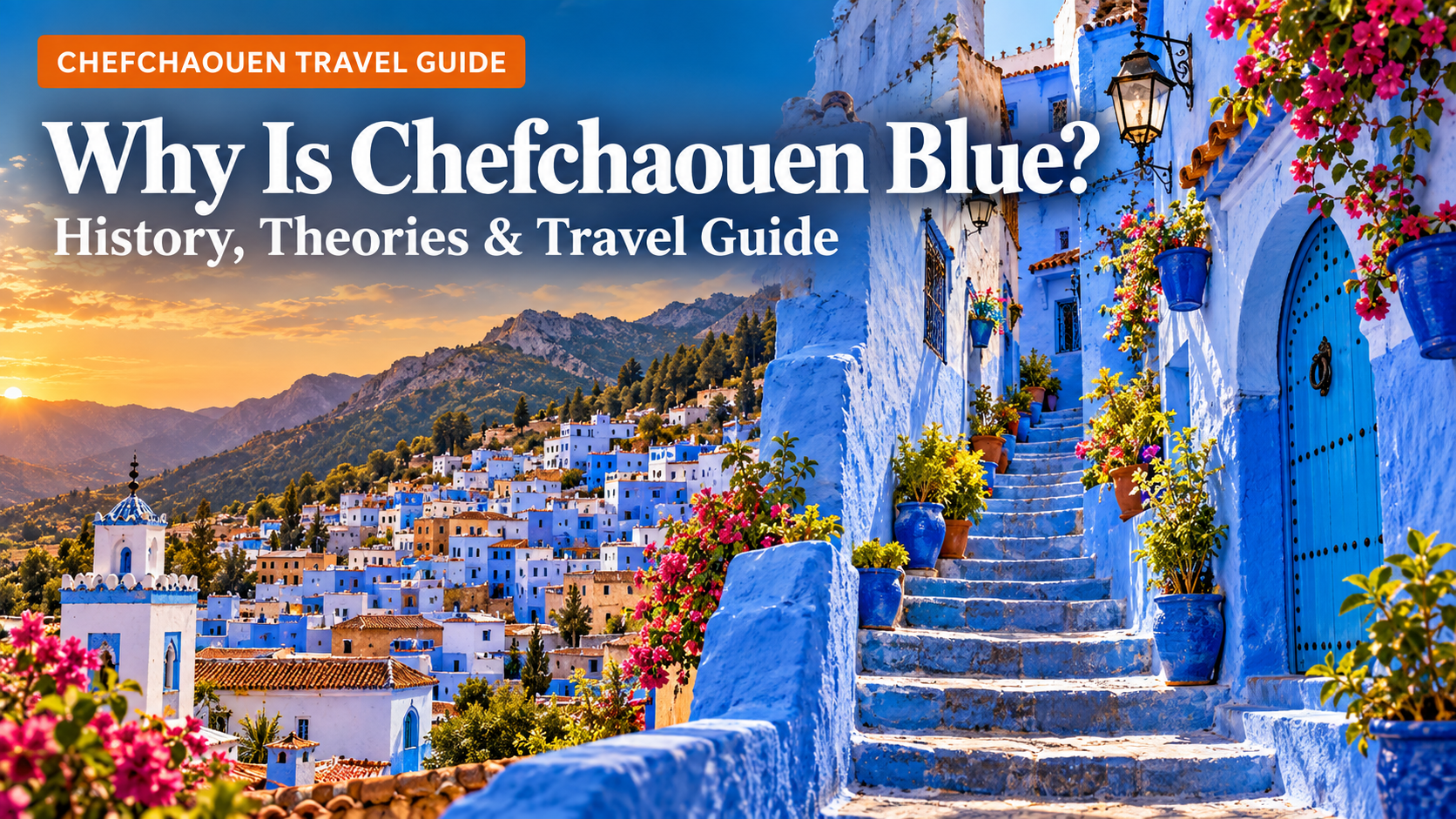
Why is Chefchaouen blue? There is no single universally proven explanation for why so much of Chefchaouen’s Medina is painted in shades of blue. Several stories are repeated, including religious symbolism, Jewish cultural influence, cooling effects, mosquito deterrence and later tourism identity. What is certain is that the blue-painted streets have become the defining visual symbol of Chefchaouen.
The Moroccan National Tourist Office describes Chefchaouen as a “blue diamond” with blue-rinsed houses and narrow streets. Official tourism sources celebrate the appearance but do not present one definitive historical origin story. That is important, because online explanations often turn one theory into fact with impressive confidence and very little evidence, humanity’s favorite research method.
Why Is Chefchaouen Blue? The Short Answer
Chefchaouen’s blue color probably developed through a combination of tradition, community practice and later reinforcement as the city’s identity. Different explanations may apply to different periods.
The safest historical conclusion is not “this exact event made the whole city blue forever.” Instead, the color became increasingly associated with the Medina and is now deliberately maintained because it forms part of Chefchaouen’s character and visitor appeal.
Theory 1: Jewish Tradition and Spiritual Symbolism
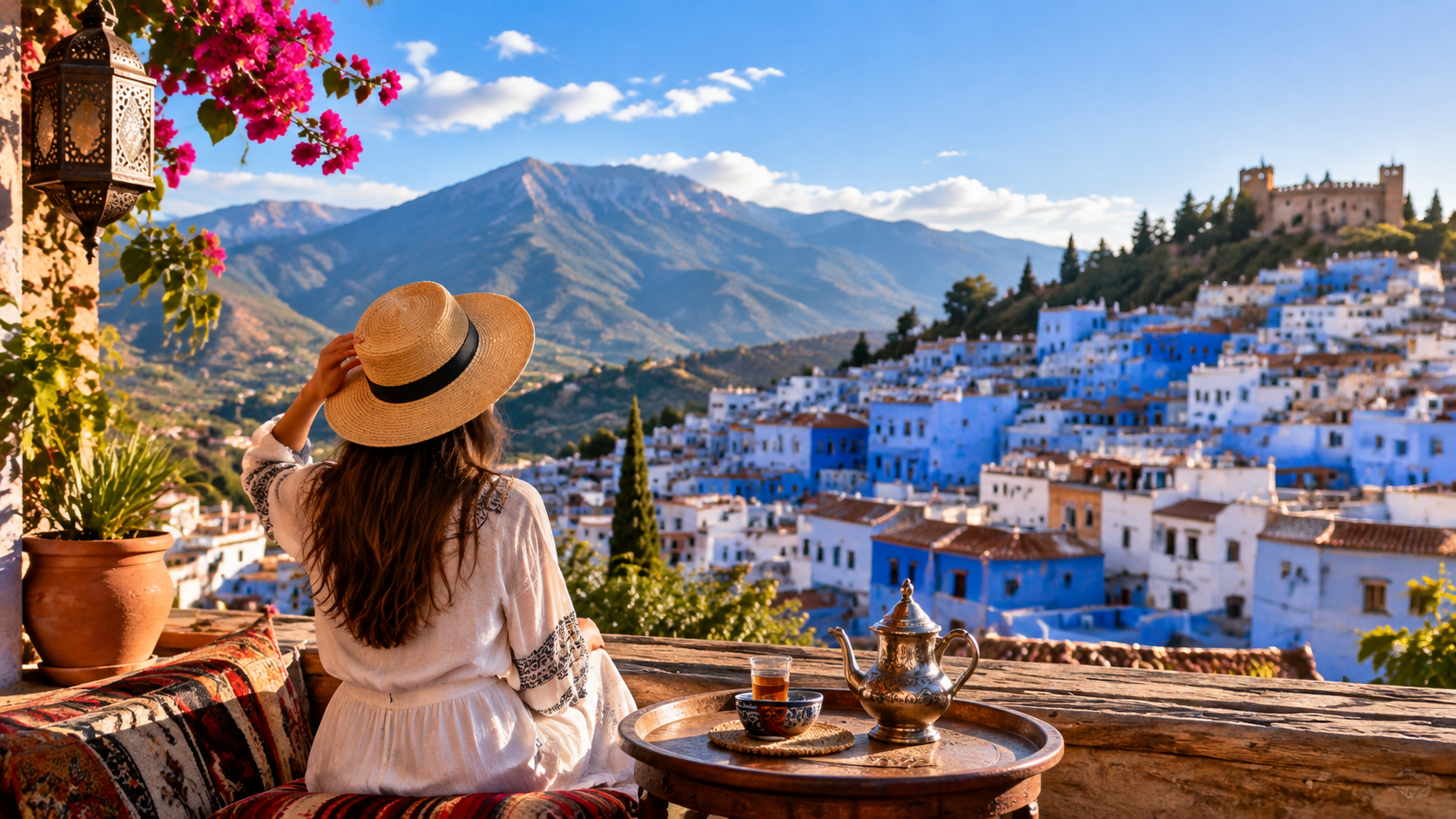
One of the most widely repeated theories links blue paint to Jewish residents and religious symbolism. In this version, blue represented the sky and heaven, serving as a reminder of God.
Chefchaouen did have Jewish communities as part of its historical population, so the theory is not invented from nothing. The problem is that simplified travel articles often present it as the one proven explanation for every blue wall in the city. Historical development was likely more complex.
Theory 2: Blue Helps Keep Buildings Cool
Another theory says lighter blue and white surfaces help reflect sunlight and make streets or houses feel cooler. Light-colored walls can obviously reduce heat absorption compared with very dark colors, but this does not by itself explain why Chefchaouen became so specifically associated with blue.
Whitewashed buildings are common around the Mediterranean and North Africa. Chefchaouen’s special identity comes from the scale and variety of blue tones, not simply from the use of light paint.
Theory 3: Blue Repels Mosquitoes
You will also encounter claims that blue paint was intended to repel mosquitoes. This is one of the most frequently repeated explanations online, but it is difficult to treat as a complete historical answer.
Even if local beliefs about color and insects influenced some painting practices, the mosquito story alone does not adequately explain the city’s long cultural attachment to blue.
Theory 4: Water and Sky Symbolism
Some explanations connect blue with water, sky, calmness or spiritual purity. These interpretations fit the emotional effect of Chefchaouen’s streets, especially because the town is surrounded by mountain landscapes and traditionally depended on local water sources.
Again, symbolism is easier to describe than to prove as a single historical cause. It is best understood as part of the cultural storytelling around the city.
Theory 5: Tourism Reinforced the Blue Identity
Whatever the earliest origins, tourism has clearly helped reinforce Chefchaouen’s modern image as Morocco’s blue city. The color is now a central part of how the city is photographed, promoted and remembered.
Residents repaint walls and lanes, and the blue palette has become an economic and cultural asset. Visitors arrive specifically to walk through the blue Medina, which gives the tradition a strong reason to continue.
Was Chefchaouen Always Blue?
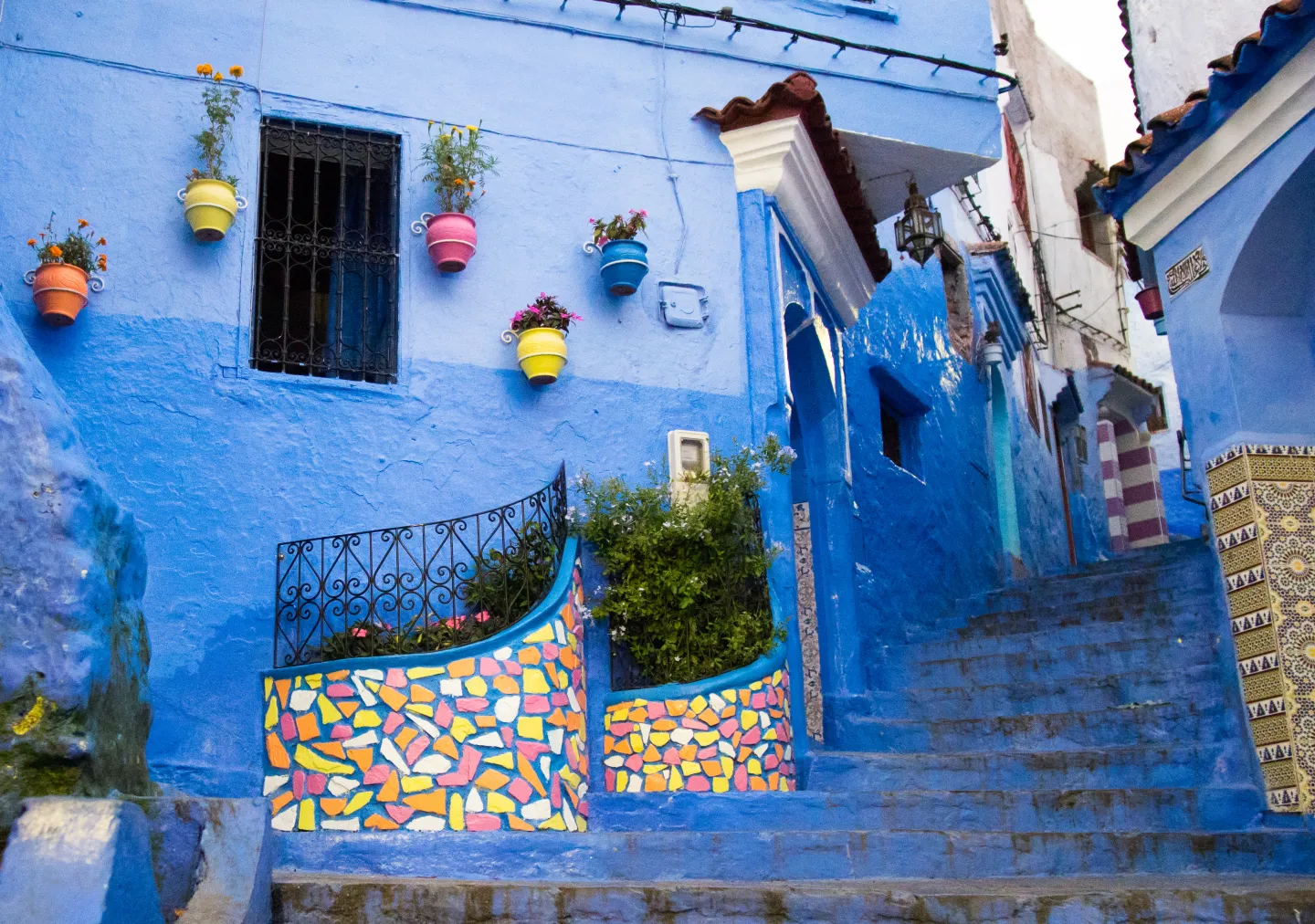
It is unlikely that every street and house looked exactly as they do today throughout the city’s entire history. Chefchaouen was founded centuries before modern tourism, and the Medina has changed over time as communities, building practices and decorative traditions evolved.
The modern visual uniformity travelers expect is partly a maintained aesthetic. Different alleys still show different intensities of blue, white and natural architectural materials.
Is the Whole City of Chefchaouen Blue?
No. The famous blue areas are concentrated mainly in the historic Medina. Chefchaouen is a functioning Moroccan town, not a theme park where every object has been issued a mandatory blue paint bucket.
Outside the most photographed lanes, you will find ordinary urban areas, roads, markets and neighborhoods. The Medina is the main reason visitors associate the entire city with blue.
Where Are the Best Blue Streets in Chefchaouen?
The Medina contains blue alleys throughout its pedestrian network. Rather than chasing one famous Instagram staircase with everyone else, spend time wandering smaller lanes around the old town.
The Kasbah and central areas provide useful orientation points. The Moroccan National Tourist Office specifically highlights the Medina, winding alleys and Kasbah as core Chefchaouen experiences.
Our Chefchaouen travel guide covers the wider destination.
Best Time to Photograph Chefchaouen
Early morning generally gives you quieter lanes and softer light. Late afternoon can also produce attractive tones as sunlight changes on the painted walls.
Midday may create stronger contrast and harsher shadows, although narrow alleys often remain shaded. If photography matters, stay overnight rather than relying only on a rushed day trip.
How Many Days Do You Need in Chefchaouen?
One full day covers the Medina highlights for many travelers, but two nights create a much more relaxed visit. Staying overnight lets you see the streets before day visitors arrive and after they leave.
Chefchaouen fits naturally between Tangier and Fes. If you are planning a northern route, see our Morocco itinerary from Tangier.

Where to Stay in Chefchaouen
Staying close to or inside the Medina is convenient for early-morning walks and evening atmosphere. Compare:
- Where to stay in Chefchaouen
- Best hotels in Chefchaouen
- Best riads in Chefchaouen
- Cheap riads in Chefchaouen
- Best areas to stay in Chefchaouen
Respecting Residents While Taking Photos
Chefchaouen’s blue streets are residential spaces. Do not block doors, photograph people at close range without permission or treat private homes as studio props. Some decorated spots may involve small local fees or expectations; follow signs and ask politely.
The city is more enjoyable when you remember that people actually live behind the famous doors everyone is photographing.
Frequently Asked Questions About Chefchaouen’s Blue Color
Is there one proven reason Chefchaouen is blue?
No single explanation is universally established. Several historical and cultural theories are repeated, and the blue identity has also been reinforced over time.
Did Jewish residents paint Chefchaouen blue?
Jewish cultural influence is one commonly cited theory, but it should not be treated as the only conclusively proven explanation for the entire Medina.
Is Chefchaouen worth visiting?
Yes for travelers interested in historic medinas, mountain scenery, photography and a slower atmosphere than Morocco’s largest cities.
Is Chefchaouen close to Marrakech?
No. Chefchaouen is in northern Morocco, while Marrakech is much farther south. Chefchaouen combines more naturally with Tangier and Fes.
Can you visit Chefchaouen as a day trip?
Yes from some northern cities, but an overnight stay gives you quieter streets and more time to explore.
Official Chefchaouen Sources
See the Moroccan National Tourist Office’s official Chefchaouen destination page and Chefchaouen Medina guide.
Planning Tip
Use this article as part of a wider Morocco plan rather than as a standalone fact sheet. Morocco is easiest to enjoy when transport, accommodation and geography are planned together. Compare the Morocco trip itinerary, where to stay in Morocco and Morocco tours hubs before finalizing your route.
