


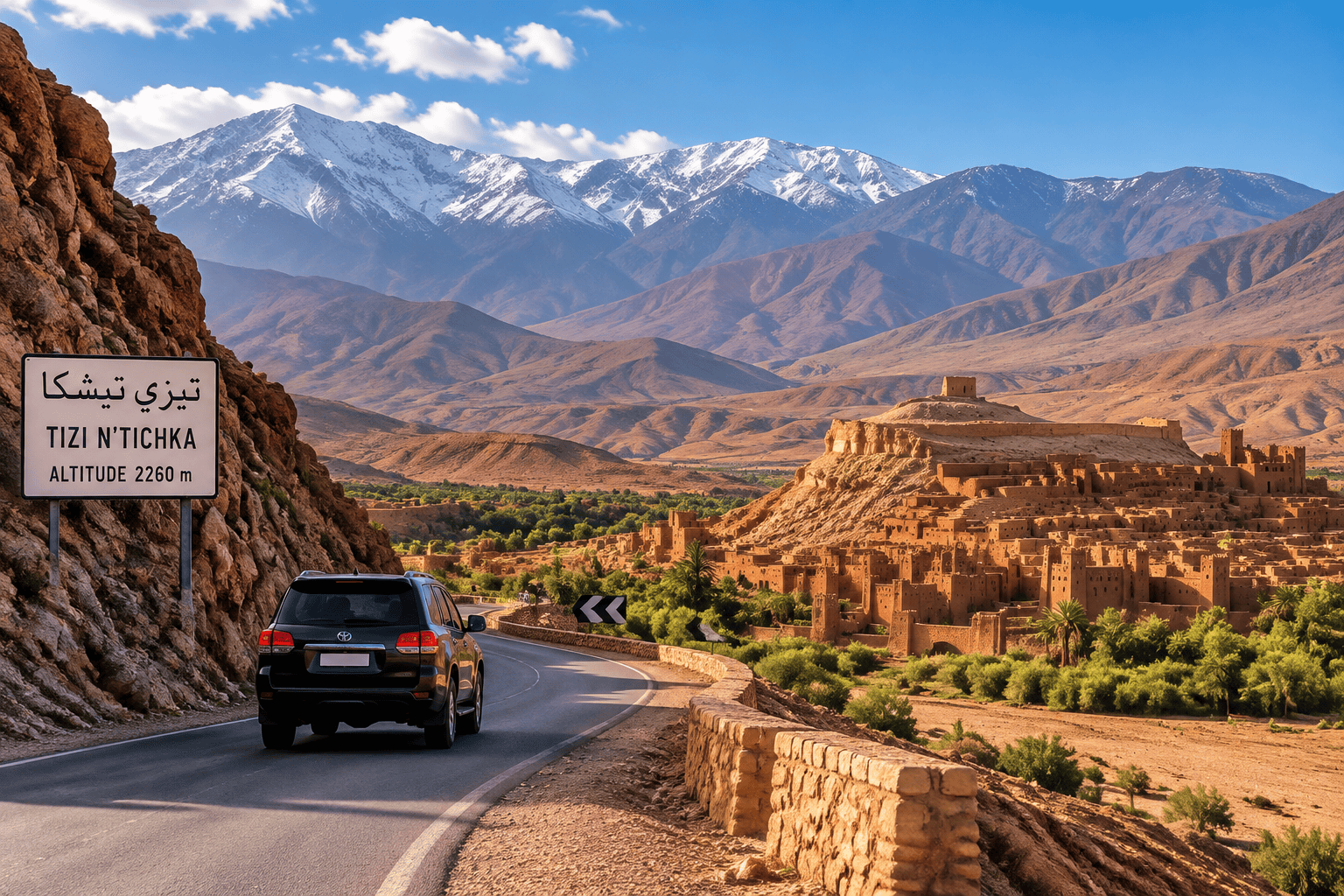
Dades Valley Morocco is one of the most rewarding sections of the road between Marrakech and the Sahara. Red cliffs, green river gardens, traditional villages, unusual rock formations and dramatic mountain roads make the valley much more than a place to sleep between Ait Ben Haddou and Merzouga.
Many travelers rush through in a three-day desert itinerary, see the famous switchbacks, take a photo and leave. That works if time is limited, but Dades becomes far more memorable when you understand the geography and give yourself enough time to walk, stop in villages and watch the colors change across the cliffs.
Quick answer: Dades Valley lies east of Ouarzazate on the route toward Todra Gorge and Merzouga. One night works for a classic desert tour; two nights are better for hiking and slower travel.
Table of Contents
- Where is Dades Valley?
- Why visit Dades
- Dades Valley vs Dades Gorge
- The famous Dades road
- Best things to do
- Hiking and viewpoints
- Where to stay
- Best time to visit
- Marrakech to Dades
- Dades to Todra and Merzouga
- Practical tips
- FAQ
Where Is Dades Valley in Morocco?
The Dades Valley runs through southeastern Morocco along the Dades River, with Boumalne Dades acting as the main service town for travelers. It sits between the Ouarzazate-Skoura area to the west and the Tinghir-Todra region to the east.
This position makes the valley a natural overnight stop on Marrakech desert tours. From Marrakech, travelers normally cross the High Atlas, visit Ait Ben Haddou, continue toward Ouarzazate and Skoura, then reach Dades before heading to Todra Gorge and Merzouga.
Why Visit Dades Valley?
The appeal comes from contrast. Dry red and ochre slopes rise beside cultivated strips of figs, almonds, walnuts and other crops along the river. Villages blend into the earth tones of the landscape. In spring, vegetation softens the valley; in late afternoon, rock faces take on deeper orange and red colors.
Dades is also less dominated by a single landmark than Ait Ben Haddou or Todra. The pleasure is in the journey itself: roadside views, small kasbahs, quiet walks and the sense of moving gradually from the High Atlas foothills toward desert country.
Dades Valley vs Dades Gorge
The terms are often used interchangeably, but the valley is broader than the gorge. Boumalne Dades sits near the entrance to the scenic road that follows the river north into increasingly dramatic terrain. The deeper sections contain narrow canyon walls, rock formations and the well-known hairpin road.
If your itinerary says “Dades Gorge,” check what it actually includes. Some fast tours simply overnight near Boumalne and leave early the next morning. Others drive farther into the valley for viewpoints and short walks.
The Famous Dades Switchbacks
One of the valley’s most photographed roads climbs in tight bends above the river. The viewpoint from above shows the road folding back on itself against barren mountain slopes. It is dramatic but should be treated as a real mountain road rather than a photo set.
If driving yourself, take corners slowly, expect local traffic and avoid stopping in the roadway for photographs. Use designated pull-offs or safe areas. Weather can affect minor roads, particularly after heavy rain.
Best Things to Do in Dades Valley
Drive beyond Boumalne into the gorge, stop at panoramic viewpoints and explore villages at a slower pace. The “Monkey Fingers” rock formations near Tamellalt are a popular stop, named for the rounded shapes of eroded rock. Short walks reveal irrigation channels, orchards and views that are invisible from the main road.
Architecture is another reason to stop. Earthen houses and fortified structures connect the valley to the wider kasbah landscapes of southern Morocco. Read our what is a kasbah guide before the trip and the buildings begin to make much more sense.
Hiking in Dades Valley
Walks range from easy village paths to more demanding routes through rock formations and side valleys. A local guide is useful if you want to leave obvious trails, enter canyon systems or understand irrigation and village life rather than simply following a phone map.
Carry more water than you think you need and protect yourself from the sun. Temperatures in exposed terrain can rise quickly, while shaded canyon sections may feel cooler. Good shoes matter because loose rock and uneven surfaces are common.
Where to Stay in Dades Valley
Accommodation ranges from simple guesthouses to comfortable kasbah-style hotels. Staying in or just beyond Boumalne provides convenient road access, while properties farther into the valley can offer quieter views and easier access to walks.
For a one-night desert-route stop, choose a property that avoids unnecessary backtracking. For two nights, prioritize scenery and walking access over being directly on the highway. Dinner is often served at the accommodation because options become more limited away from the town center.
Best Time to Visit Dades Valley
Spring and autumn are usually the easiest seasons for hiking and road travel. Days are pleasant and landscapes can be particularly attractive in spring. Summer afternoons may be hot, though higher sections can feel cooler than low desert areas. Winter can bring cold nights and snow to nearby mountains.
Because Morocco contains several climate zones, use our best month to go to Morocco guide when planning a longer route.
Marrakech to Dades Valley
The drive from Marrakech is long enough that sightseeing stops matter. The Tizi n’Tichka route crosses the High Atlas before descending toward the Ounila and Ouarzazate areas. Ait Ben Haddou is the classic cultural stop, while Skoura introduces palm groves and kasbah architecture before Dades.
Trying to combine every landmark in one day can turn the route into a sequence of rushed parking stops. If you have flexibility, spend a night around Ouarzazate or Dades and let the journey breathe.
Dades to Todra Gorge and Merzouga
From Dades, most desert itineraries continue east toward Tinghir and Todra Gorge. Todra’s high limestone walls are visually different from Dades and deserve their own stop. After Tinghir, the road continues toward Erfoud, Rissani and finally Merzouga beside Erg Chebbi.
Our Marrakech to Sahara Desert and 3-day Marrakech to Merzouga pages explain how the whole route fits together.
Practical Tips for Dades Valley
Carry cash because card acceptance is not guaranteed in small villages. Fuel up before heading deep into side valleys. Download maps offline, but ask locally about road conditions rather than trusting an app after storms.
Dress in layers, bring sun protection and keep a light jacket for evenings. If photographing people or homes, ask permission. The valley is not an abandoned landscape built for road-trip content; it is home to communities whose fields, roads and courtyards you are passing through.
Frequently Asked Questions
Where is Dades Valley in Morocco?
Dades Valley lies in southeastern Morocco between Ouarzazate and the Todra Gorge region, on one of the classic overland routes toward Merzouga and the Sahara.
Is Dades Valley worth visiting?
Yes, especially if you enjoy mountain scenery, fortified villages, road trips and quieter landscapes. It also breaks up the long journey between Marrakech and Merzouga.
How many days do you need in Dades Valley?
One night is enough for a classic desert-route stop, but two nights give you time for hikes, viewpoints and slower exploration.
What is the difference between Dades Valley and Dades Gorge?
The valley is the broader region of villages, river landscapes and rock formations. The gorge refers to narrower canyon sections deeper into the valley.
Can you drive through Dades Gorge?
Road access reaches deep into the valley, including the famous switchback section. Conditions can change after storms, so ask locally before taking minor roads.
When is the best time to visit Dades Valley?
Spring and autumn usually offer comfortable temperatures. Summer can be hot at lower elevations, while winter nights can be cold.
Is Dades on the route from Marrakech to Merzouga?
Yes. Many three-day Marrakech to Merzouga tours overnight around Dades or nearby Boumalne before continuing toward Todra Gorge and Merzouga.
What should I wear in Dades Valley?
Bring layers, sturdy walking shoes, sun protection and a light jacket. Temperatures can change noticeably between sunny afternoons and evenings.
Additional Practical Planning Notes
Driving Dades Independently
A rental car gives you freedom to stop at viewpoints and villages, but do not underestimate mountain driving. Avoid racing sunset on unfamiliar roads, keep fuel above a comfortable minimum and confirm that your rental insurance covers the route you plan to take.
Traveling With Children
Families can enjoy Dades because the road journey is broken by viewpoints and short walks. Supervise children near cliffs and roadside drop-offs, carry snacks and choose accommodation with easy parking. A slower itinerary is usually more enjoyable than a marathon Marrakech-to-Merzouga push.
Responsible Travel in the Valley
Use local guesthouses, guides and restaurants when possible. Stay on established paths through cultivated areas and do not enter orchards or irrigation channels without permission. The green strips that make the valley beautiful are working agricultural land, not public parks.
How to Use This Guide in Your Morocco Itinerary
Do not treat a single article as a substitute for checking opening hours, weather, road conditions or current regulations close to the date of travel. Morocco changes by region and season. Build the topic into the wider route, compare distances honestly and leave margin for meals, prayer times, traffic and spontaneous stops. Travelers who schedule every hour usually discover that the country has not signed their spreadsheet.
Local Guides and Independent Travel
Independent travel works well in many Moroccan cities and on major roads, while a local guide adds value when interpretation matters. Choose licensed or well-reviewed professionals, agree on price and scope in advance, and clarify whether shopping stops are part of the tour. A good guide should improve your understanding rather than simply accelerate your movement between souvenir shops.
Photography and Respect
Ask before taking close photographs of people, especially children, craftspeople at work and residents in small communities. Religious spaces may restrict photography or entry. A landscape may be public, but a doorway, courtyard or family moment is not automatically content. Respect makes better travel and usually better photographs too.
Budgeting and Cash
Keep small cash available for cafés, tips, taxis and minor purchases, but avoid carrying your entire travel budget. ATMs are common in cities, less dependable in remote areas and sometimes subject to withdrawal fees. Carry a backup card stored separately and tell your bank about travel if necessary.
Final Planning Advice
The best Morocco trips balance preparation with flexibility. Reserve important accommodation and long transfers, understand the cultural context, then leave enough room to change pace. The places travelers remember most are often not the ones that occupied the largest box in the itinerary.
