


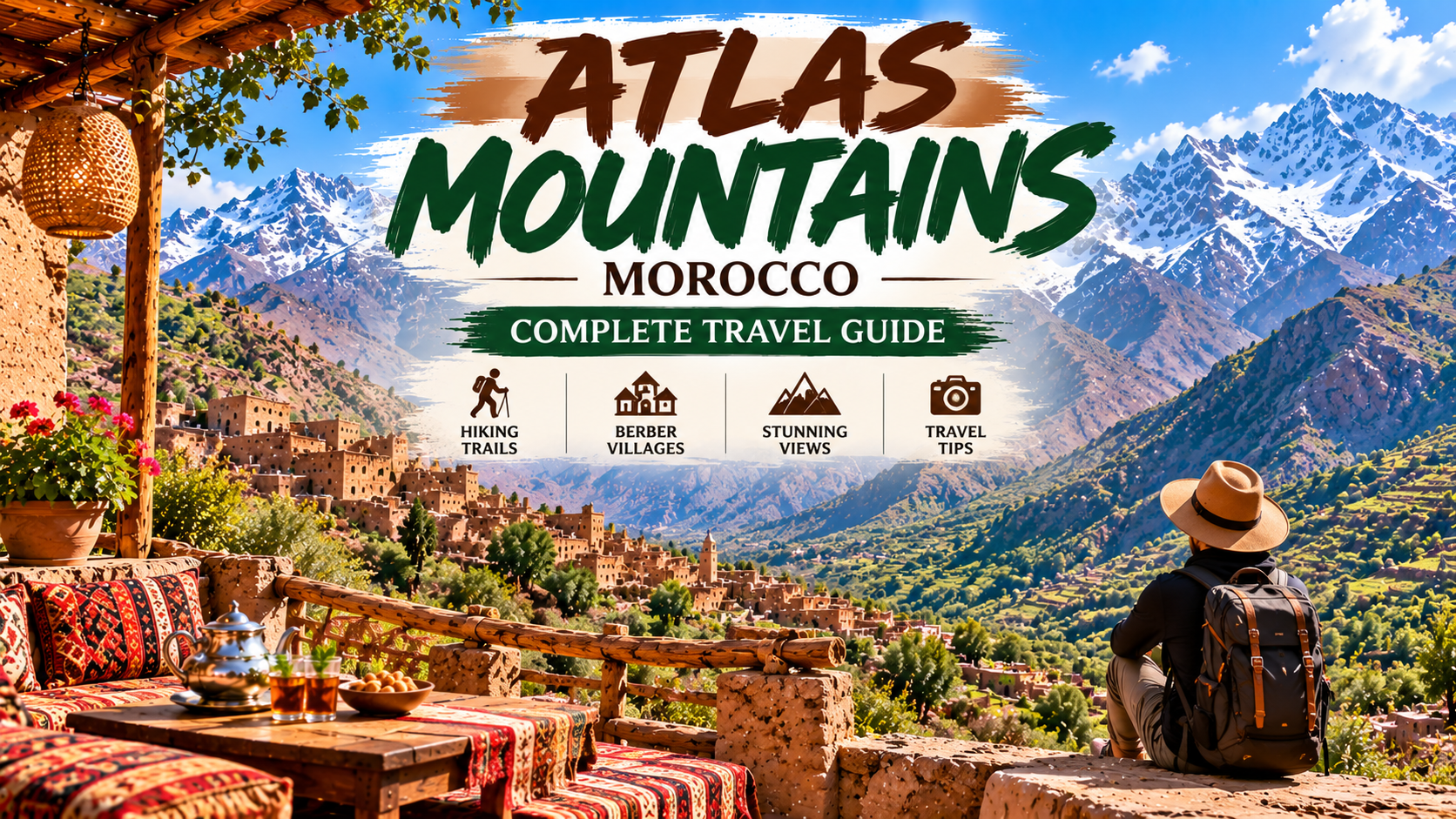
The Amazigh people of Morocco are central to the country’s history, languages and regional cultures. Travelers encounter Amazigh heritage in the Rif, Atlas Mountains, Souss, desert-facing valleys, music, architecture, weaving, food and place names, yet travel marketing often compresses all of that diversity into the outdated image of a single “Berber village.”
A better starting point is to understand that Amazigh identity is broad and contemporary. Amazigh communities live in cities as well as mountains, use several language varieties, participate in every part of modern Moroccan life and maintain traditions that differ substantially from region to region.
Terminology: Many people prefer Amazigh (plural: Imazighen) rather than “Berber.” This guide uses Amazigh as the primary term while mentioning Berber where it helps readers understand common search terminology.
Table of Contents
- Who are the Amazigh?
- Amazigh vs Berber
- Amazigh languages
- Amazigh regions of Morocco
- Historical overview
- Culture and traditions
- Clothing, jewelry and weaving
- Architecture and villages
- Music and festivals
- Amazigh identity today
- Responsible cultural travel
- FAQ
Who Are the Amazigh People?
The Amazigh are Indigenous peoples of North Africa whose history predates the Arab conquests and modern national borders. Communities are found across Morocco, Algeria, Tunisia, Libya and parts of the Sahara and Sahel.
There is no single Amazigh culture. Language, clothing, music, architecture and local history vary between the Rif in northern Morocco, the Atlas ranges, Souss and southeastern oasis regions. Treating all Imazighen as one tribe is inaccurate.
Amazigh vs Berber: Which Term Should You Use?
“Berber” remains common in English-language travel material and in many historical sources. However, many people prefer Amazigh, the self-designation associated with Indigenous North African identity. Imazighen is the plural.
Using Amazigh does not mean pretending the word Berber disappeared. Travelers will still see “Berber carpet,” “Berber camp” and “Berber village” in tourism. The respectful approach is to recognize local preference rather than turning terminology into a performance.
Amazigh Languages in Morocco
Amazigh is an official language of Morocco alongside Arabic. Major varieties include Tashelhit in the south and Souss, Central Atlas Tamazight, and Tarifit in the Rif. Tifinagh script appears on public signage, institutions and educational materials.
Many Amazigh Moroccans are multilingual, using Darija, Arabic, French or other languages depending on context. Our languages spoken in Morocco guide explains the broader linguistic picture.
Where Do Amazigh People Live in Morocco?
The Rif Mountains have strong Tarifit-speaking communities. The Middle and High Atlas include Central Atlas Tamazight-speaking areas, while Tashelhit is important across Souss, the Anti-Atlas and parts of the south. Southeastern valleys also have long-established Amazigh communities.
Migration and urbanization mean these identities are not confined to rural regions. Casablanca, Agadir, Marrakech and other cities include large populations with Amazigh family roots.
A Short History of Amazigh Morocco
Amazigh history spans ancient North African kingdoms, Roman-era interaction, the spread of Islam, major dynasties and centuries of regional political change. Powerful Moroccan dynasties including the Almoravids and Almohads emerged from Amazigh contexts.
The history cannot be reduced to a simple sequence of “Berbers before Arabs.” Population, language and identity interacted over centuries through trade, intermarriage, migration, religion and politics. Modern Morocco reflects those layers.
Amazigh Culture and Traditions
Hospitality, agricultural practices, oral poetry, storytelling, communal celebrations and craft traditions vary between regions. Food also reflects local crops and climate, from barley and mountain products to argan in the Souss and dates in oasis zones.
Travelers should be cautious with claims that a single dish, dance or symbol represents every Amazigh community. Regional specificity makes the culture richer, not more complicated.
Clothing, Jewelry and Weaving
Textiles and silver jewelry are among the most visible expressions of Amazigh craft traditions. Weaving patterns, colors and garment styles can indicate regional techniques and aesthetics. Historic fibulae, necklaces and headdresses are displayed in museums and worn in ceremonial contexts.
For a wider clothing overview, see our traditional Moroccan clothing guide. When buying “Amazigh” crafts, ask where they were made and by whom rather than assuming any geometric pattern guarantees origin.
Architecture and Mountain Villages
Local building materials respond to climate. Earthen kasbahs and ksour characterize many southern valleys, while stone and earth construction appears across mountain regions. Villages are organized around water, farmland, routes and social relationships rather than tourist viewpoints.
Our Atlas Mountains Morocco and kasbah guide provide useful architectural context.
Music, Dance and Festivals
Amazigh musical traditions include regionally distinct instruments, rhythms and collective performances. Ahwash in southern Morocco and Ahidous in parts of the Atlas are often cited examples, though performance styles and meanings differ by community.
Festivals can be valuable cultural experiences when approached as community events rather than staged background for visitors. Follow local rules for photography and give performers space.
Amazigh Identity in Modern Morocco
Amazigh identity is visible in education, public signage, television, music, literature and cultural organizations. The Tifinagh alphabet appears on official buildings and road signs, making language recognition part of everyday public life.
Young artists and creators mix Amazigh languages and symbols with contemporary music, design and digital media. Culture is therefore not something preserved only in rural villages; it is continually produced and debated.
How to Experience Amazigh Culture Respectfully
Use locally run guesthouses, mountain guides and cooperatives. Ask specific questions about the region rather than requesting a generic “Berber experience.” Learn the name of the valley or community you are visiting.
Do not photograph people without permission or distribute sweets to children as if villages were attractions. Buy crafts when you genuinely value them, pay guides fairly and understand that a family’s daily life is not an ethnographic exhibit.
Understanding Amazigh Culture Beyond Tourism
Amazigh Identity Is Regional
People from the Rif, Souss, Middle Atlas and southeast may all identify as Amazigh while speaking different language varieties and maintaining different musical, culinary and clothing traditions. Asking which region a custom comes from is more useful than labeling everything “Berber.”
Place Names Carry Language History
Many Moroccan place names have Amazigh roots. Travelers who pay attention to road signs will notice Tifinagh script beside Arabic and often French or Latin transliterations. This multilingual signage is one of the clearest everyday expressions of Amazigh language recognition.
Craft Cooperatives
Women’s weaving and argan cooperatives can provide income and preserve skills, but the word “cooperative” is also used in tourism marketing. Ask how revenue is distributed, whether artisans work on site and whether prices are fixed. Buying directly is valuable when the organization is genuinely connected to producers.
Food Traditions
Regional Amazigh cooking reflects available grains, livestock, herbs, argan, dates and seasonal vegetables. Bread, couscous and tagine appear across Morocco, but ingredients and preparation differ by region. Food is therefore a useful way to learn about geography rather than searching for one supposedly universal Amazigh dish.
Hospitality and Boundaries
Visitors are often impressed by hospitality in mountain and village settings, but generosity should not be confused with unlimited access. A home invitation is personal. Ask before taking photographs, follow your host’s cues and do not post identifiable family images without consent.
Why Accurate Language Matters
Travel writing has a long habit of describing Indigenous communities as timeless, isolated or exotic. Those words can erase contemporary life. Amazigh culture includes smartphones, universities, pop music, entrepreneurship and urban migration alongside weaving, oral traditions and village festivals. Both are real.
Yennayer and the Amazigh Calendar
Yennayer, the Amazigh New Year, is an important cultural reference across North Africa and is celebrated in different ways by families and communities. Food, gatherings and cultural events can vary by region. Travelers should treat celebrations as living traditions rather than scheduled performances and check local programs if visiting in January.
Frequently Asked Questions
Who are the Amazigh people?
The Amazigh are Indigenous peoples of North Africa with diverse communities, languages and regional identities across Morocco and neighboring countries.
Are Amazigh and Berber the same?
Berber is an older exonym widely used in European languages. Many people prefer the self-designation Amazigh, with Imazighen as the plural.
What language do Amazigh people speak in Morocco?
Morocco recognizes Amazigh as an official language. Major varieties include Tashelhit, Central Atlas Tamazight and Tarifit, alongside Arabic and other languages.
Where do Amazigh people live in Morocco?
Amazigh communities live throughout Morocco, including the Rif, Middle Atlas, High Atlas, Anti-Atlas, Souss and southeastern regions, as well as major cities.
What religion are Amazigh people?
Most Amazigh people in Morocco are Muslim today. Amazigh history, however, extends across many centuries and different religious periods.
What does the Amazigh symbol mean?
The ⵣ character, yaz, is a letter in the Tifinagh script and is widely used as a cultural symbol associated with Amazigh identity.
Is Amazigh culture only rural?
No. Amazigh identity and language are present in cities, media, education, music, politics, business and contemporary cultural life.
How can travelers experience Amazigh culture respectfully?
Stay with locally run businesses, learn a few respectful terms, listen to guides, avoid reducing communities to costumes and ask permission before photographing people.
More Practical Planning Advice
Museums and Cultural Institutions
Museums in Rabat, Marrakech, Agadir and regional centers can provide context for jewelry, textiles, archaeology and language. A museum visit before a mountain trip helps you recognize regional differences.
Avoiding Stereotypes
Not every Amazigh person is a nomad, weaver or mountain villager. Doctors, teachers, business owners, artists and urban families may identify as Amazigh. Contemporary identity should not be frozen into a tourism brochure.
Learning a Few Words
Language varies by region, so ask your guide which Amazigh variety is spoken locally. Even simple interest in the correct local name of a place can create a better conversation than memorizing a generic phrase from the internet.
Build Realistic Travel Time Into the Day
Road distances in Morocco can look modest on a map but take longer because of mountain bends, village traffic, construction and worthwhile stops. Do not build an itinerary around perfect driving conditions. Add margin for meals, photography and unexpected delays.
Use Local Knowledge
Hotel staff, licensed guides and experienced drivers can provide current information about road conditions, seasonal closures and local events. Verify important logistics close to travel rather than assuming an older blog post is still exact.
Travel With Respect
Ask before photographing people, support local businesses and avoid treating residential areas as open-air sets. Morocco is easy to enjoy when curiosity is paired with basic courtesy.
